Tag Archives: tcm

Olivia de Havilland vs. FX: On Opinions, Arguments, and Accuracy

la-et-mn-olivia-de-havilland-101-birthday-20170701

In the aftermath of the Olivia de Havilland oral arguments yesterday, I have seen many reports about what happened during the hearing, and opinions about the case from varied sources. As one who was in the courtroom as it happened, I would like to address a few things that I’ve been seeing frequently over the past 24 hours.

The case is ultimately about holding the powerful accountable to the truth. FX, a big and powerful corporation, took immense liberties with de Havilland’s characterization in Feud, putting vulgar words in her mouth and attributing lines to her that she would not have said, nor signed off on, should she have had the privilege of seeing a script first.  It is true that if the characterization were truthful and accurate, by the standard that we use to judge credible news stories, FX would be well within its legal rights to use her image and likeness. But the false or misleading statements attributed to de Havilland in the series are a disservice not only to de Havilland, but also to the viewers of Feud. No one likes to be lied to or misled, and as I have mentioned before, I myself was misled by the interview that framed the series. I thought it was a real interview that I had missed–I went looking for it, and only when I couldn’t find it did I realize that it was created by the series. I’ve seen just about everything she’s ever done. Can we imagine a passive viewer, who had never heard of de Havilland before, watching Feud? I shudder to think how many passive viewers of Feud are out there who now think that de Havilland gave that interview, and called Joan Fontaine a “bitch” to industry professionals.

This morning, a piece appeared in Vanity Fair whose headline ran “Olivia de Havilland Tries to Prove in Court That She’s Never Used the Word ‘Bitch.'” The first line ran: “You’ll never hear a recording of Olivia de Havilland using the word ‘bitch.’ At least, that’s what her lawyers are arguing now in their ongoing case against FX and its portrayal of the Oscar-winning actress in the series Feud.” This upset me on two levels–first, the gross misrepresentation of the argument (the argument is not that de Havilland has never used the term, but rather she never used it to refer to her sister to industry professionals, the way Feud depicts), and second, the way the article uses shock value and half truths in a similar way to Feud. I did write to Vanity Fair about this, and whether it was due to my input or an independent decision, the article has since been clarified.

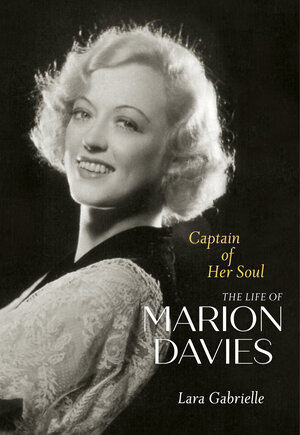
But this is what we have come to expect of news and informational sources, of which Feud is one. Another argument I have seen frequently over the past day is one that says “Feud is entertainment, I don’t watch it for historical accuracy.” Entertainment that depicts real people, especially living people, has a responsibility to historical accuracy. Those of us who write about film are inundated regularly with people who believe fictionalizations of real people are rooted in fact. As I work on my biography of Marion Davies, The Cat’s Meow (a fantasy piece about what happened to Thomas Ince on William Randolph Hearst’s yacht) has been a fire that I’ve had to put out every time I give a talk. People love scandal, and if there’s a scandal, they tend to believe rumor above and beyond the facts that disprove it. In addition to the right of publicity claims that de Havilland is fighting for, shows like Feud that add artistic license to real personalities make our lives as film writers that much harder.

In terms of de Havilland and Fontaine, I frequently find myself correcting or defending. One of the things that irked me the most in the courtroom yesterday was the opposing counsel repeatedly referring to the relationship between de Havilland and Fontaine as a “feud.” I highly dislike that term to describe them. They were sisters, who had their ups and downs and good times and hard times. Theirs was a very complex relationship, one that no one understood but them. I make it a point never to judge one sister for her actions regarding the other. Because all we know is the tip of the iceberg of what drove their relationship to be what it was–and it’s truly none of our business anyway. For Feud to touch on that relationship at all, much less without talking to de Havilland first, was inappropriate.

73f65db750c2ceabe34d6189191f7d8c

My favorite picture of the de Havilland sisters, on the night Joan Fontaine won the Best Actress Oscar for Suspicion.

I’ve been seeing many comments expressing the viewpoint that if de Havilland wins, it’s going to change the way docudramas are made. It won’t–it will simply hold studios accountable to the truth when the docudrama involves a living person. If the studio is not willing to do accurate research using reliable sources (non-salacious biographical books with endnotes, newspapers, documentaries, interviews), perhaps that living person should not appear in the docudrama. The Divine Feud, the book by Shaun Considine that Feud references in the case as a research tool, is very salacious and I was surprised to see it in FX’s list of sources.

51USyjlFtZL._SX327_BO1,204,203,200_

California law is explicit in its different applications of the law to the living and to the deceased, and de Havilland’s right of publicity stands for fictionalized works. If she were deceased, a separate statute exists that exempts fictionalized works like movies, books, and plays from having to answer to right of publicity suits. But Olivia de Havilland is alive, and she has a right to be heard.

#odehvfx

Olivia de Havilland vs. FX: Oral Arguments on Appeal 3/20/18

04HAVILLAND-superJumbo

Courtesy of the New York Times, Olivia de Havilland at her home in Paris last month.

As many of you know (certainly those following my Twitter account over the past 24 hours), today I was privileged to attend the oral arguments at the University of Southern California in the case of Olivia de Havilland vs. FX. It was a fascinating day, and a major coup for Backlots to get one of the very limited press seats. I’m pleased to be able to bring you the events as they happened.

usc2

The main law building at USC.

The case was heard in the USC Gould School of Law building, and the hearing was part of an agreement between the law school and the 2nd District Appellate Court. Once a year, the court moves its proceedings to USC, in order to give students a taste of what it’s like to be in the courtroom. Before the Olivia de Havilland case was brought before the court, there was another that we heard regarding the firing of a social worker who was negligent in his duties regarding a family in which a child died from abuse. It seemed quite heavy and disturbing. I don’t know enough about that case to have drawn meaning from what was being said by the appellants and defendants, but it was interesting to watch how both sides approached something as sensitive as this, in their body language and word choice.

The de Havilland case came before the court immediately after the final argument in the previous hearing. Three judges sat before the attorneys and questioned them on the intricacies of their arguments–starting with FX, followed by the amicus curiae for FX, followed by de Havilland’s side. The attorney for FX, Kelly M. Klaus, made the argument that de Havilland’s claims do not meet the requirements for “actual malice,” which he defined as necessarily “deliberate” or encompassing “reckless disregard.” He said that FX’s intentions were not bad, and thus they should be protected from claims of portraying Olivia de Havilland in a false light. Jennifer Rothman, the amicus curiae for FX (and the author of the Los Angeles Times op-ed piece “What Does Olivia de Havilland Have Against Allison Janney, to which I responded with this post), cited the Guglielmi case (in which the heir of Rudolph Valentino objected to a fictionalized version of his life) as evidence that biographical films are protected under the First Amendment. She asserted that any decision in de Havilland’s favor would be “devastating” to creative expression.

Finally, de Havilland’s lawyer, Suzelle Smith, came up to speak. Addressing the Guglielmi case, Smith noted that California applies right of publicity cases differently to those who are dead and those who are alive, and that the arguments referred to in the Guglielmi decision are irrelevant to what is at hand in this case. Additionally, when pressed on whether or not FX would have had to procure de Havilland’s permission if the depiction was not defamatory, Smith said no. She argued that the First Amendment does not permit right of publicity claims for accurate, non-defamatory representation. The portrayal of de Havilland, she said, was not accurate, and cited Eastwood v. Superior Court (National Enquirer Inc.) to say that one knowingly false statement can discredit the whole work.

Indeed, if I may interject here as a non-lawyer and the author of an upcoming biography, if I see one glaring mistake in a research piece, it does create a sense of distrust of anything else the author might say. The idea of a work being discredited after one false statement is not only a legal matter, but it’s one that affects us all as laypeople. When I watched Feud, I noticed several glaring errors and those errors changed the way I viewed the rest of the show.

After Smith’s argument, FX was given time for a rebuttal, in which Klaus reasserted the network’s claim that de Havilland hadn’t proven actual malice, and FX should be granted First Amendment protections. The court was adjourned shortly after 4:00.

Smith closed her argument with something I think is quite necessary to point out. This is a lawsuit about the truth, and representing fact as fact, fiction as fiction. We are living in an era in which facts don’t seem to count, and we’ve become accustomed to a gray area that leaves us unsure of what the truth is, or how to root it out. When we become numb to the highest powers in our country feeding us falsities, we hardly blink an eye when a docudrama does it. We should hold the powerful accountable to lies–whether that be from those in political office, or those in corporate America telling the stories we see on our televisions.

We will likely hear a decision in the next two weeks. With this lawsuit, Olivia de Havilland stands up to power–and no matter the outcome of this case, I am proud that we have in our midst a strong 101-year-old woman who’s not afraid to be on the front lines of protecting the truth.


Screen Shot 2018-03-20 at 9.13.44 PM

OLIVIA DE HAVILLAND VS. FX: Date Set for Oral Arguments on Appeal

GTY-oliva-de-havilland-jpo-170623_4x3_992

Hello dear readers, there isn’t terribly much to say about this, but I’ve promised to keep everyone on the pulse of the Olivia de Havilland case as much as I can, so I wanted to make a brief post. A few days ago, I noticed an unusual update on the court website and wasn’t entirely sure what it meant. It noted that there was a “calendar date set” at USC, and nothing else. Today, I learned that this was the date of the oral arguments to determine the outcome of FX’s appeal.

On March 20, lawyers will meet at the University of Southern California to argue the merits of their respective sides. It is unusual that the arguments will take place outside a courtroom, but lawyers assure that it will be just as official as it would be in court. The purpose of the unusual setting is to allow USC students to view the proceedings in real time, allowing them a window into the beginnings of a potentially landmark First Amendment case.

For a timeline of the case thus far and an explanation of what it all means, check out my last blog post on the subject. I will continue to report on anything that I learn.

Thanks for reading!

#odehvfx

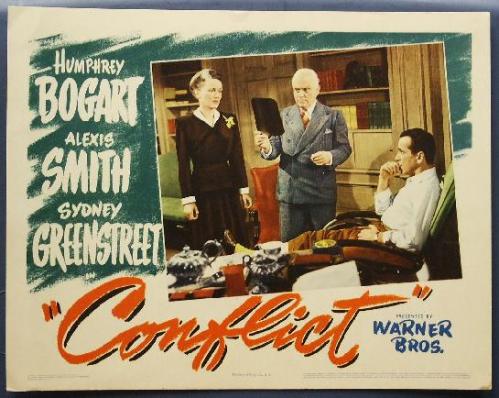
CONFLICT (1945) at Noir City 16

Bogart_Conflict2

Noir City 16 comes to a close tonight, and as usual, it was a delightful week packed with great movies and great audiences. The Castro Theatre is unlike any other theater I’ve experienced in its audience enthusiasm and positivity. Watching a movie at the Castro is like having a movie night with 1,400 of your friends. The audience laughs at all the “right spots,” but there are also knowing laughs and claps when someone makes an unintended innuendo, when a character is overly dramatic, or when there is a connection between a line in the movie and present-day life. The Castro is San Francisco’s historically gay district, and it has a long legacy of loyal neighborhood support and camaraderie. When you watch a movie at the Castro, you are welcomed and accepted into a warm and loving community.

Noir City is similar. Passionate noir fans come from all over the country to attend this festival, and many dress up in 1940s attire for the occasion. The atmosphere is one of friendliness and acceptance. Noir fans tend to be an intellectual crowd, with deep knowledge of the genre, its movies, and its stars. They’re fun to be around, and in combination with the venue of the Castro Theatre, the festival is irresistible. This year’s theme was “1941-1953: Classy A’s and Trashy B’s,” each day presenting a double bill featuring one of each.

NC16

Conflict (1945), screened on Monday, has been my favorite movie of the festival thus far. It is reminiscent of The Two Mrs. Carrolls and even Alfred Hitchcock’s Rebecca in its haunting tone, telling the story of a man (Humphrey Bogart) who has fallen in love with his wife’s much younger sister, and the man plots to kill his wife and cover up the crime. When he thinks his wife is dead, he goes about pursuing the sister. But soon, eerie things begin to happen…and his plan slowly unravels.

It is relatively easy to spot a good noir, and Conflict is a really good noir. There are several features that, when done well, contribute to a movie that keeps you on the edge of your seat and glued to what’s happening on the screen. A tightly woven plot where every event and every word forms a chain leading to the ultimate conclusion, with plenty of suspense and cunning, intelligent, meticulous characters. Conflict features all of these. Often, a good noir will have what Hitchcock termed a “MacGuffin,” an external motivator that drives the actions of the main character. MacGuffins are usually used as framing devices, but are not the true focus of the movie (examples are “Rosebud” in Citizen Kane, and the falcon in The Maltese Falcon). The MacGuffin in Conflict, I would say, would be Bogart’s desire for the younger sister. It drives him to murder, and then it continues to be relevant throughout the movie, popping up again at a key moment later. But it’s not the focus, though we initially think it’s going to be.

Conflict was actually filmed in 1943 but released in 1945, which perhaps was a detriment to the film’s legacy as the genre was already well established by 1945. Conflict is relatively rare, but its inaccessibility is at odds with how brilliant this movie is. Had it been released in 1943 as originally intended, Conflict may have been considered one of the great noir classics.

In his introduction, “Czar of Noir” Eddie Muller noted that despite the quality of the movie, Conflict was one of Bogart’s least favorite movies, due to the fact that it somewhat reflected his real life situation. Much like Katharine Hepburn, Bogart always seems to play Bogart. Whether he’s acting in a comedy or a drama, the Bogart character usually remains the same type–a stoic, crusty type who generally tolerates people. Audiences felt that what they saw on the screen was what Bogart was like in real life. In 1945, Bogart had fallen in love with a much younger woman (Lauren Bacall) and was in the process of divorcing wife Mayo Methot. He was uncomfortable with the idea that the audience might associate him with spousal murder during this rocky time in his life. He needn’t have worried–Bogart and Mayo divorced and he soon married Lauren Bacall, remaining married to her until his death in 1957.

Screen Shot 2018-02-04 at 11.22.55 AM

Humphrey Bogart and Lauren Bacall at their wedding.

Thanks for reading! If Noir City is coming to a town near you, be sure to check it out. Once again, here are the tour dates and cities:

NOIR CITY SF: January 26-February. 4, 2018
NOIR CITY Seattle: February 16-22, 2018
NOIR CITY Denver: March 23-25, 2018
NOIR CITY Hollywood: April 13-22, 2018
NOIR CITY Austin: May 18-20, 2018
NOIR CITY Boston: June 8-10, 2018

2018 dates for NOIR CITY Chicago, Detroit, and Washington, D.C. TBD

Noir City 16: DESTINY (1944) and FLESH AND FANTASY (1943)

Dear readers, if you’ve been following my Twitter feed over the past few days, you know that I’ve been attending the 16th annual Noir City festival–a weeklong smorgasbord of film noir favorites and rarities, on the big screen at the Castro Theatre in San Francisco. It’s been a fascinating few days thus far, and I’ve enjoyed everything I’ve seen.

I’ve been asked several times over the course of this festival, including by my various Lyft drivers and friendly employees at Hot Cookie (San Francisco’s greatest cookie establishment, right next door to the Castro), for an explanation of what exactly film noir is. It’s a bit hard to pin down. Noir is a genre of film that rose up around the time of America’s entrance into World War II, involving dark, shadowy stories that often tease the limits of the Motion Picture Production Code. It has several key elements–noir films deal with crime, shady figures, powerful and seductive women, and the creative use of light and shadow. Frequently, voiceover narration is employed, as in the cases of the classic noirs Gilda (1946) and Double Indemnity (1944).

There is some debate as to whether Hitchcock movies count as noir. Hitchcock somewhat defies categorization, but the storylines, characterizations, and uses of lighting that have become signatures of Hitchcock’s work are also typical of the noir genre. Noir City takes a liberal definition of the genre, and on Saturday night festivalgoers were treated to a showing of Hitchcock’s fantastic Shadow of a Doubt.

The festival is hosted by Eddie Muller, known as the “Czar of Noir” among film fans, and before each screening Muller gives an intro that whets the viewer’s appetite for what’s to come. I was excited to see a Barbara Stanwyck movie on the program this year, as I have a particular fondness for Stanwyck and I know Eddie Muller does, too. I’ve seen nearly all her movies–but this one, Flesh and Fantasy, was one I hadn’t seen. I decided to attend the movie beforehand as well, and I’m glad I did.

Jean and Curtis in Destiny

The movie that came before Flesh and Fantasy, an hour long story about an accomplice to a bank robbery and his journey of escape entitled Destiny, was originally intended as the first vignette of Flesh and Fantasy, but instead it was cut off the final version and released as a movie of its own the following year. Destiny has some very interesting elements to it, including treatment of a blind character that, in some ways, was quite modern. The ending was important to understanding the beginning of Flesh and Fantasy, and had I not seen Destiny and heard Eddie Muller’s intro, the first part of Flesh and Fantasy wouldn’t have made much sense.

Flesh and Fantasy is comprised of a series of vignettes that explore the human mind and its relationship to fate and destiny. The movie features a stellar cast, and the stories are reminiscent of The Twilight Zone in their eerie twists on reality.  Providing a bit of comic relief and introductions to the vignettes are two friends, played by the delightful Robert Benchley, a humorist and one of the original members of the Algonquin Round Table, and David Hoffman, in one of his first film roles (he would go on to have a more prolific career in television). The first vignette introduced by Benchley and Hoffman tells the story of a woman who finds herself unattractive, and she interacts with the world with bitterness and scorn. Putting on a mask of a beautiful woman, she goes to a dance and falls in love with a man who assures her that he would love her no matter what she looks like under the mask. The final scene is comprised of several twists and turns that made the audience gasp with surprise and delight.

Снимок экрана 2018-01-30 в 12.43.00 PM

The second vignette involves a man (played by Edward G. Robinson) who is told by a palm reader that he is destined to commit a murder. He can’t get his mind off it…and plots a murder to try to outwit his fate. This story reminded me of Ray Bradbury’s short story “The Illustrated Man,” in the way that the body is used to show an unavoidable future.

The third vignette is where Barbara Stanwyck comes in, acting alongside Charles Boyer. Boyer plays a trapeze artist who dreams that he falls off the trapeze and onto a woman (Stanwyck) wearing very distinctive earrings, shaped like lyres. The dream affects him so much that it throws him off his act that evening, and he wonders if he can ever recover. When the circus sails for a foreign show, Boyer meets a woman on the boat…the same woman he saw in his dream. They fall in love…and she wants to come watch him perform.

hqdefault

Each story was very compelling, and the concept was amazingly forward-thinking for 1943. Directing was the great French director Julien Duvivier, known as one of the role models for French New Wave filmmaker Jean Renoir. Duvivier was clearly ahead of his time, not only with his explorations of dreams and fate, but also in bookending the vignettes–one leading directly into the next. This, perhaps, contributed to the fact that the movie isn’t better known. No one had anything to compare it to–now we have The Twilight Zone and a whole generation of similar TV shows and movies that make Flesh and Fantasy a truly fascinating piece.

After it was over, the audience was tittering with excitement over what they had just seen. I was left with the feeling of how sad it is that the movie is not more accessible–and how lucky we are that festivals like Noir City exist to expose us to such rarely seen gems as this one.

Noir City is traveling this year–here are the dates when the festival may be in a town close by:

NOIR CITY SF: January 26-February. 4, 2018
NOIR CITY Seattle: February 16-22, 2018
NOIR CITY Denver: March 23-25, 2018
NOIR CITY Hollywood: April 13-22, 2018
NOIR CITY Austin: May 18-20, 2018
NOIR CITY Boston: June 8-10, 2018

2018 dates for NOIR CITY Chicago, Detroit, and Washington, D.C. TBD

And keep your eye out for Flesh and Fantasy. You won’t regret it.

I’ll be back with more updates from Noir City later on this week. Thanks for reading!

Amici Curiae Briefs Filed in Olivia de Havilland Case

_96760680_8d2906b1-668e-4dd8-8745-cb6b23bcedca

As promised, readers, I’m here to provide another update on the Olivia de Havilland case. On Wednesday, a group of intellectual property professors applied to file an amicus curiae brief with the court in support of FX, and today, several more amici curiae briefs were filed, including one from SAG/AFTRA in support of de Havilland.

Amici curiae briefs (“friend of the court” briefs), as I understand them, are statements from third parties with nothing to gain, in support of one side of a court case. Courts can choose to take them under review or not, and I don’t know what the court will do here. But it does look like we may be looking at another delay.

To bring you up to speed on where we are in the process, here is the timeline of the case thus far:

March 2017Feud: Bette and Joan airs, which contained a portrayal of Olivia de Havilland by Catherine Zeta-Jones. FX did not consult with Olivia about the show or her character.

June 30, 2017: Olivia de Havilland sues FX on four counts–infringement of common law right of publicity, infringement of the California Civil Code on right of publicity, invasion of privacy, and unjust enrichment. Trial set to start November 27.

August 29, 2017: FX files an anti-SLAPP motion (an assertion that a case is frivolous and should be thrown out) for Judge Holly Kendig to consider. They assert that the case is based on protected First Amendment rights. In order to be successful, Olivia’s side will have to show a probability of prevailing should the case go to court.

September 29, 2017: Judge Kendig finds that despite the free speech protections that are afforded to FX, Olivia’s side has proven that they could be successful if they went to court. Free speech protections are not absolutes, and FX’s actions may not be protected under the umbrella of free speech. Trial remains set to start on November 27.

November 17, 2017: FX appeals the decision. The case now goes to the appellate court.

Early December to early January, 2017/2018: Statements and replies are filed.

January 24: Amicus curiae from intellectual property professors

January 26: More amici curiae from Netflix, EFF, and MPAA in support of FX, and SAG/AFTRA in support of Olivia de Havilland.

The case is getting heated, and it will be interesting to watch from now on. Regardless of the ultimate outcome, with her landmark 1944 De Havilland Decision behind her and this case in the works, Olivia de Havilland is now able to say that she has been attached to two significant entertainment law cases in her lifetime.

bac732d4b4256e0342c194818a29748b

#odehvfx

Yet Another Olivia de Havilland Trial Update

Schermata 2017-11-30 alle 3.51.43 PM

Virginia Cunningham from The Snake Pit expresses the feelings of everyone following the de Havilland case, as we wait around for the trial to start.

Dear readers, if it feels like I’m posting frequent de Havilland trial updates, you are quite correct. Such is the nature of a court case, even before it begins. Here I am with another update, which I will keep succinct and to the point while giving you all the information I have.

The hearing of Olivia de Havilland vs. FX, for which I was planning to be in Los Angeles this week, is now in the appellate court. It was scheduled to begin on November 27, but just before Thanksgiving, FX filed an appeal to Judge Holly Kendig’s denial of FX’s request to throw the case out. This is staying the hearing until approximately February.

I’m not a lawyer, but I have been following the court documents closely. In the original motion to dismiss, Judge Kendig found that FX’s defense is indeed based on protected speech. Because of this, de Havilland’s side had to prove that their defense had enough merits to override FX’s First Amendment protections. Upon review of these merits, she found that de Havilland’s side had succeeded in meeting all their burdens showing that they would be successful in overriding those protections should the case go to court.

As a layperson, I would cautiously venture to say that it is unlikely that an appellate court would reverse a decision that found all burdens met. If I’m correct, we will see the case go to trial in early February.

What we are expecting now:

FX brief to be filed: December 4

Counsel to Olivia de Havilland’s brief to be filed: December 18

Appellate court decision: Late January

If appellate court denies appeal, trial to start: Early February. I will continue to follow the court documents closely and will attend the trial when it happens.

De Havilland has been granted expedited treatment due to her advanced age, so we can be confident that the court will work as quickly as possible to get the matter resolved.

Stay tuned!

#odehvfx

Update on Olivia de Havilland vs. FX

I wrote a post a few days ago detailing how I would be going to Los Angeles in the final days of the Olivia de Havilland vs. FX trial, and I have been paying close attention to the case ever since. An update to the case has recently been posted to the Los Angeles Superior Court website–FX’s motion to strike was denied by Judge Holly Kendig on September 30, but on October 10, FX filed an appeal.

The trial is still scheduled to start on November 27 as of right now, but I wanted to share the details of the pending appeal with you readers, and have a discussion about its merits.

FX asked for a motion to strike based on the fact that the case was based on protected rights. Kendig agreed, but said that de Havilland’s side could be successful in court, so she let it stand. In a declaration by James Berkley, FX’s senior research analyst for the case, FX disagrees. Berkley takes on de Havilland’s assertions that she “refused to use what she knew about the private or public lives of other actors (which was a considerable amount) to promote her own press attention and celebrity status” but “Feud creates the public impression that she was a hypocrite, selling gossip in order to promote herself at the Academy Awards.”

In his declaration, Berkley says that he has “uncovered numerous examples of [de Havilland] giving interviews in print or in video, appearing on television, and otherwise publicly discussing her life, her film career, the role of women in Hollywood, and her friendships with other Hollywood celebrities, including but not limited to her friendship with her fellow actress, Bette Davis.”

5823424d403a1__olivia-de-havilland-bette-davis

He names several online videos as examples, which I provide below. Now, readers, discussion time. Do you think these videos are examples of de Havilland “selling gossip,” or “promoting her own press attention or celebrity status?” Do the videos invalidate de Havilland’s statement, and does the appeal have merit?

Please leave comments with your thoughts, and let’s talk about this!

https://www.youtube.com/watch?v=WrF55yjCAJQ

https://www.youtube.com/watch?v=l4Q8tphR2xw

#odehvfx

The Motion Picture & Television Fund: Looking Out for the Film Industry

Screen Shot 2017-09-07 at 4.00.40 PM

Mary Pickford breaks ground on the new Motion Picture & Television Country House and Hospital, 1941.

Every Wednesday this month, Turner Classic Movies dedicates its programming to highlighting the Motion Picture & Television Fund, one of the great treasures of the film industry. Securing the livelihoods of countless people who work or have worked in motion pictures, the MPTF operates a hospital, a senior home for those who need those services, and a general fund to help elderly people remain in their homes or to provide a safety net for former film workers who have fallen on hard times.

The programming consists of movies introduced by the people who were a part of them, now residents of the Motion Picture Country House. I was thrilled to hear about this tribute, as I find that few people outside of the world of film and television know much about the MPTF, truly a labor of love and dedication to, as the slogan says, “Taking Care of Our Own.”


98985063

The history of the MPTF is a storied one. Mary Pickford, Douglas Fairbanks, D.W. Griffith, and Charlie Chaplin (the same group that created United Artists) saw a need to provide a fund for those working in movies who were down on their luck. To start it, they created a simple coin box system, in which people could donate their spare change to help their fellow Hollywood folk. In 1921, the fund was incorporated as the Motion Picture Relief Fund, with Joe Schenck serving as its first president, and Pickford serving as vice-president. No one served in an advisory capacity for very long–as an egalitarian organization, and one by the film industry and for the film industry, presidents served on a rotating basis and came from varying Hollywood backgrounds, including Harold Lloyd, Jesse Lasky, and Marion Davies.

Pickford campaigned tirelessly for the fund, gathering donations and organizing events and programs that would serve as benefits. The 1929 stock market crash combined with the coming of talkies to Hollywood had left many of the film colony without work, and the fund was needed now more than ever. She noted, to her frustration, that there were 20,000 people working in films, but only 400 people were signed up as contributors to the Motion Picture Relief Fund. In order to streamline her campaigning, she instituted the Payroll Pledge Program in 1932, in which a very small portion of an person’s paycheck from working in the movies went to the fund–much like a social security program or insurance policy for Hollywood workers. In the midst of the Depression, the Motion Picture Relief Fund saved 75 people from being evicted and purchased groceries for 2,500.

224_045476

Even as early as 1924, the need for a specialized senior care facility was on the minds of Pickford and those invested in the Motion Picture Relief Fund. In order to raise money for the construction, in 1939 Jean Hersholt (president of the fund at the time) came up with the idea of having a radio show in which many big name celebrities would appear, who would all donate their salaries to the Motion Picture Relief Fund. The plan worked, the radio show was a smash hit, and construction on the Motion Picture Country House (“house” instead of “home” because, as Pickford said, Hollywood people always consider themselves “between engagements”) began in 1941. Operations started in 1948, and among its more prominent residents over the years have been Norma Shearer, Bud Abbott, Mary Astor, Mack Sennett, Donald O’Connor, Joel McCrea, Edna Purviance, and countless others. Today, it is home to more than 100 long-term residents, and operates 6 outpatient facilities across Los Angeles.

article-doc-bf2j1-2x2xGTOt4G9a6dece395114e74f3-542_634x421

The dining room at the Motion Picture Country House today.

Upon a visit to the Motion Picture Country House a number of years ago to see a friend, it was clear what remarkable and important work the MPTF does. My friend is valued and respected, getting care that goes above and beyond the call of duty. I came away from the visit with a deep sense of appreciation for the MPTF and everything the organization does for the industry. I’m happy to see that TCM is helping to shine a light on their work.

Be sure to see residents of the Motion Picture Country House every Wednesday in September on TCM, introducing movies they had a part in. For more information on the activities of Mary Pickford surrounding the Motion Picture Relief Fund, please see Cari Beauchamp’s article for the Mary Pickford Foundation, from which much of this piece was drawn, by clicking here.

If you would like to donate to the current Motion Picture & Television Fund, you can do so online at http://mptf.com/donate or by mail:

MPTF Foundation
PO Box 51151
Los Angeles, CA 90051-9727

Thanks for reading!

TCM Classic Film Festival Wrap-Up, 2017

2017-tcmff-TLC-theater-1

The 8th annual TCM Classic Film Festival came to a close this weekend, and since Sunday night, fond memories and farewells have flooded social media. The photos of fans boarding their planes home, sadly telling their friends they’ll see them next year, tug at our hearts and serve as reminders of what this festival means to so many of us.

In day-to-day life, classic film fans of this caliber often have trouble meeting like-minded people. The chance of meeting a person on the street who can talk at length about the Motion Picture Production Code, the Best Actress Oscar winner for 1950, or the final scene of The Heiress is a slim one at best. “Thank goodness for the internet,” is an oft-repeated phrase among classic film fans. “I thought I was the only one.” At the festival, all of us “only ones” convene, creating what has lovingly been referred to as the “TCM vortex.” Nothing matters except the movies on the screen, and watching them with people who love them too. It’s a world all its own.

This was my 6th festival, my 5th with Backlots as a member of the media. I attended the press conference on Wednesday afternoon, which included TCM host Ben Mankiewicz, programmer Charlie Tabesh, vice president of branding/partnerships Genevieve McGillicuddy, and general manager Jennifer Dorian. We heard some very positive things from the conference, including word of the wild success of the Fathom Events screenings, which have sold over 2 million tickets so far this year. At the beginning of 2017, TCM partnered with Fathom Events to bring classic movies to the big screen once (and sometimes twice) a month nationwide, often playing at theaters in the AMC chain. From the beginning, I was excited about this partnership, hoping for its success. I’m very glad that it seems to be working out beautifully for all involved.

We also received word that the next free online course through Ball State University will be on the movies of Alfred Hitchcock. Ball State University partnered with TCM last year for a class on the history of slapstick, and before that for a course on film noir. The classes are always exceedingly popular, and based on the interest in Alfred Hitchcock within the TCM community, I predict that this class will be a great success. If you would like to sign up, here is the place to do it.

TCM does a marvelous job procuring top-notch guests for the festival–this year’s guests included Sidney Poitier and Norman Jewison for the opening night screening of In the Heat of the Night, Lee Grant for a discussion of her life and work in Club TCM, Carl and Rob Reiner for a hand/footprint ceremony at (what will always be) Grauman’s Chinese Theater, and celebrity family members Kate MacMurray (Fred MacMurray’s daughter) and Wyatt McCrea (Joel McCrea’s grandson) to be interviewed before movies. At the press conference, I asked if there was any method to their solicitation of festival guests. Charlie Tabesh responded that many guests are very eager to come, and ask on their own accord, while the festival has tried to get other guests for many years, but they’re not able to make it. Age seems to be very much a contributing factor to this–in recent years, the festival has been leaning toward children of stars more than stars themselves, due to the dwindling number of classic Hollywood stars who are still with us, and the physical frailty of those who are.

Among my group of friends, the schedule for this year’s festival was the most anticipated of any year, with such favorites as The Palm Beach Story (1942), The Awful Truth (1937), Red-Headed Woman (1932) and Theodora Goes Wild (1936). Factor in the nitrate screenings of Black Narcissus (1947) and Laura (1944), and it was one of the greatest programs in festival history, from my perspective.

Red-Headed Woman turned out to be one of my biggest festival joys, introduced by Cari Beauchamp, the author of Without Lying Down: Frances Marion and the Powerful Women of Early Hollywood. Beauchamp is a beloved presenter at the festival, the go-to expert on women in early Hollywood, and the introduction of Red-Headed Woman was a prime example of what I look for in an intro. The TCM Festival crowd is an intelligent one, and most of us know these movies well. Instead of relating plot points or trivia bits, the introduction to Red-Headed Woman focused on backstory and studio politics, and the effect of movies like it (featuring strong, unapologetically sexual women) on the strengthening of the Motion Picture Production Code in 1934. The pre-code era holds a special place in my heart, and an item of particular interest in the introduction was the difference between the way the Hays office (the earlier enforcement arm of the code) and the Breen office (that followed Hays) operated. The Hays office would actually see the movies, while the Breen office would only read the scripts–thus allowing filmmakers to get away with close to anything using costumes and lighting.

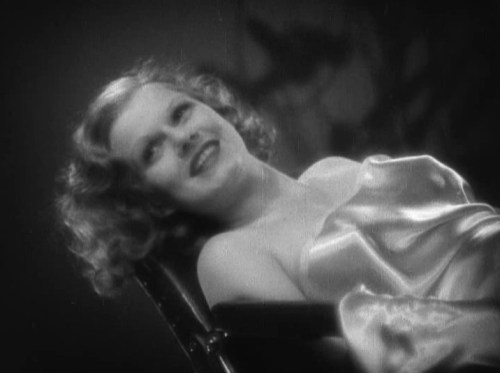
Among my favorite things to do in a theater when a classic movie is showing is to glance back at the audience. It gives me an indescribable feeling to see hundreds of people watching a person from 80 years ago, likely someone long gone from this earth, flicker on the screen. That pleasure seems especially meaningful when the movie features Jean Harlow, who died of degenerative kidney disease at the age of 26 at the height of her career, but has remained one of the most alluring stars of any era. Watching the audience watching Harlow seemed to embody what Beauchamp said when introducing the film: “Jean Harlow lives!”

32harlow

As for the overall feel of the festival, I noticed a few differences between this one and previous festivals. This year’s staff seemed larger, contributing to a few snags in communication relating to line management. It was a situation that could have easily have been rectified had there been about half the staff. Despite some initial discomfort and a few panicked moments, I did manage to get into everything I wanted and the line team was always gracious and pleasant in the midst of the pressing crowds and general chaos of impatient film fans. I struck up a conversation with a lovely young line staffer at the Chinese Multiplex while I was in line for Born Yesterday, and she knew who Marion Davies was. Instant friend.

I would like to send TCM a huge thank you for the change they made regarding the pre-codes this year. It made me very happy to see that the festival remembered the two sold out showings of Double Harness last year, and made sure to put the pre-codes in the big theaters. This time, instead of selling out in the small Chinese Multiplex theaters, the movies played at the huge Egyptian Theatre–to packed houses, but no turn-aways. The festival’s love for pre-codes was something that I and many others noted in our post-festival wrap-ups last year, and it was clear that they listened.

Thank you, TCM, for another great festival, thanks to all my festival friends for giving me such a beautiful community, and thanks to my readers for following along so diligently. Here’s to next year!

628x471