Tag Archives: classic movies

Summer Under the Stars Blogathon: LUCILLE BALL

gallery-1433961999-lucille-ball-young

On August 1, TCM began its annual summer tradition of Summer Under the Stars, a full month of specialized programming that honors one classic film star per day. Yesterday was devoted to the films of Edward G. Robinson, and the rest of the month will see days dedicated to such stars as Esther Williams, Ruby Keeler, Karl Malden, and Cyd Charisse. TCM fans look forward to Summer Under the Stars all year, and the announcement of the lineup is always a popular topic of discussion in the online classic film world.

Today we are watching movies starring a very familiar face–but those more versed in television may be surprised to see it on TCM. Before Lucy Ricardo, before the founding of Desilu and the immortal show that cemented Lucille Ball in our collective conscience, she was a rising star at RKO and later MGM, starring with all the big names of both studios and creating a reputation for herself as the “Queen of the B’s.”

Some of the highlights of today’s programming are windows into Lucille Ball’s career as few people know it–that of a talented dramatic actress whose foray into comedy was simply one of the many roads her career could have taken. Ball herself once said “I’m not funny. My writers were funny. My direction was funny. I am not funny. What I am is brave.” Her comedy was a manifestation of a woman driven not toward being funny, but toward perfection and success. Movies like The Big Street and The Dark Corner give us a glimpse into what Ball’s career could have been like had she chosen drama rather than comedy.

In The Big Street, Ball plays a singer who becomes disabled after being pushed down a flight of stairs by her jealous lover, and takes refuge with Pinks (played by Henry Fonda). After a series of circumstances that include being rejected by a former lover for being in a wheelchair, she lashes out at Pinks in a scene that merits Ball an Oscar for her raw, nuanced performance. Unfortunately, the clip does not exist online.

hqdefault

The Dark Corner features Lucille Ball in a film noir, one that is so steeped in the noir trope that it almost seems a parody of itself. Ball is the femme fatale, the beautiful secretary who unwittingly becomes involved in an intricate murder plot. Starring with Mark Stevens and Clifton Webb in a delightful thriller, this is Lucy as you’ve never seen her. She is a convincing and attractive femme fatale, possessing an energy that holds your eyes on her whenever she is onscreen. I first saw this movie at Noir City this past year, and it was a wonderful experience to see it on the big screen for the first time with hundreds of other fans.

DarkCorner

Other programming choices today like Best Foot Forward and The Long, Long Trailer show Lucille Ball in roles familiar to the I Love Lucy-loving public–involving raucous comedy and situational humor. But even here, the carefree nature of Ball’s comedy that has become her trademark is carefully planned and calculated to appear so.

The Long, Long Trailer, co-starring none other than Desi Arnaz, was filmed and released during the fourth season of I Love Lucy, and the influence of the show’s characters is clear in Lucy and Desi’s portrayals of their characters in this movie (in a less-than-subtle move, Desi’s character is even named “Nicky”). Talking with a friend of mine about this The Long, Long Trailer the other day, we came to the conclusion that The Long, Long Trailer is really just one big, extended episode of I Love Lucy, with similar characterizations and even similar gags used in each.

I was slightly surprised to see that TCM hadn’t programmed Dance, Girl, Dance this year for Lucille Ball day. It is one of my favorite roles of hers, and a marvelous example of how filmmakers circumvented the code to make the movies they wanted to make. Ball’s character of Bubbles in Dance, Girl, Dance is clearly a “kept woman,” in view of the massive amounts of furs, jewels, and fancy clothes that accompany her wherever she goes. And it features Lucy doing the hula, just about the most seductive dance that could ever have made it past the censors. It also sums up how Lucille Ball, despite her legacy as a comedic genius, was a woman whose genuine talent in many arenas and drive for success defied categorization.

I leave you with Lucille Ball doing the hula in Dance, Girl, Dance. Happy watching, readers!

This is an entry for the Summer Under the Stars blogathon, hosted by my friend Kristen Lopez. Check out the other entries at http://www.journeysinclassicfilm.com

Marilyn Monroe’s 90th Birthday–Celebrated With a Worthy Cause

da10e19d302bd2656aaff5bc6ab10291

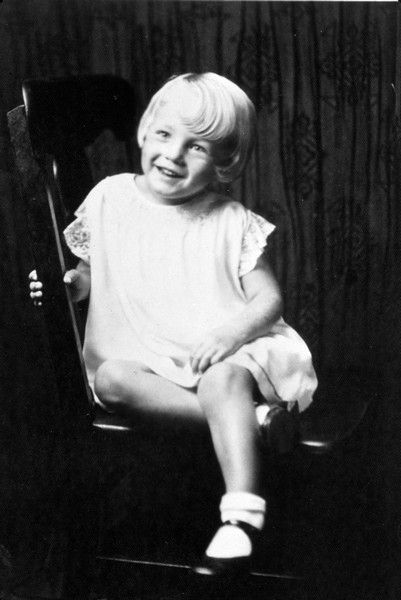
Norma Jeane Baker (Mortensen on her birth certificate), who would grow up to become Marilyn Monroe. Pictured here around the time when she lived at the Los Angeles Orphan’s Home Society, now known as EMQ FamiliesFirst Hollygrove.

June 1, 2016 marks what would have been Marilyn Monroe’s 90th birthday. Her early death has frozen her in time, making it difficult to fathom the idea of Marilyn Monroe being 90 years old at all–and further, while it is confounding to think of Marilyn Monroe as a 90-year-old, 90 is young enough that she might still have been alive today, if that night on August 4, 1962 had gone differently.
Marilyn Monroe is one of the most intricate and complex personalities in all of film history. I have been fascinated by her story ever since I was old enough to comprehend it. Her psychological demons consumed her, but she put forth a million dollar smile that belied her internal struggles. She was a gifted actress, but was stuck in the sex symbol roles that would bring 20th Century Fox the most profit. Childhood memories of living in an orphanage and in foster care, reminding her that she had been an unwanted child named Norma Jeane Baker, haunted her as she lived the life as the most sought-after actress on the screen. Ultimately, these dualities destroyed her.

The child who became Marilyn Monroe was born to a 24-year-old film cutter named Gladys Baker on June 1, 1926. Gladys had severe mental illness, and was unable to care for her new daughter. After living in several foster homes, she was placed at the Los Angeles Orphan’s Home Society in 1935, near the corner of Vine and Melrose. There, she lived in a girls’ residence hall that overlooked Paramount Studio alongside several dozen other children, many of whose situations were similar to hers. She stayed for 2 years before going back into foster care, living long term with the aunt of her mother’s best friend. She returned for visits several times over the course of her life, signing the guest book as “Norma Jeane Baker” on her first visit, and “Marilyn Monroe” every time after that.

Orph1

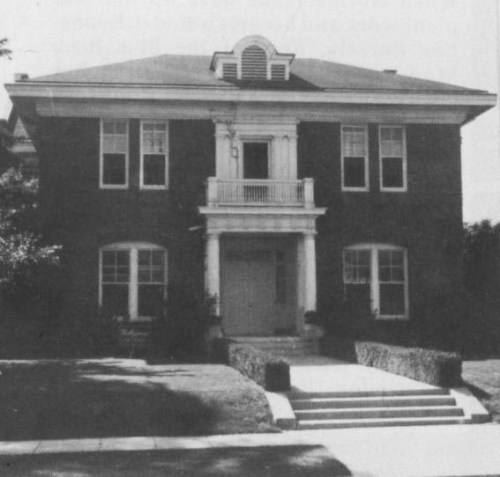
The Los Angeles Orphan’s Home as it looked in 1935.

The mission of the orphanage began to shift in the years following Norma Jeane Baker’s stay there, and became known as the Hollygrove Home For Children. It began to focus less on children who had no parents, and more on children like Norma Jeane who had parents who were unable to care for them. Its goals became more family-driven, providing resources and support to families in need of help. The home itself closed in 2005, but the organization continues to do great and needed work in the Los Angeles area.

On the anniversary of Marilyn Monroe’s 90th birthday, EMQ FamiliesFirst Hollygrove is holding a fundraising drive in her honor. The modern Hollygrove is a nonprofit organization dedicated to “the social-emotional, behavioral and mental health needs of young children, teens and their families,” and aims to “heal the whole child-and the whole family – through a full range of behavioral and mental health services.” It has thought of a lovely and fun way to participate in the fundraising drive–using the hashtag #ModernMarilyn, participants are encouraged to post a picture inspired by Marilyn Monroe, along with the link to the fundraising page.

If you are so inclined, contributing to this fundraising drive would be a wonderful way to honor Marilyn Monroe’s memory this year, and a great contribution to a vital Los Angeles institution. Please follow this link to contribute or share the page with someone who can, and honor a legend while at the same time honoring Los Angeles children and families.

Happy 90th birthday, Marilyn!

Hollywood Stars as Kids


2016 TCM Classic Film Festival Schedule, SATURDAY

Screen Shot 2016-04-20 at 11.14.37 AM

A recurring theme of this year’s festival is one that is familiar to anyone following current events–corruption in the media and the rise and fall of media superstars. Whether it’s the story of an unstable buffoon on the airwaves, a drifter who becomes a media sensation, or an exploration of the costs of covering a juicy news story, the theme speaks to audiences in this current political climate, as we can see similarities in each of these stories in relation to what is happening in the media today.

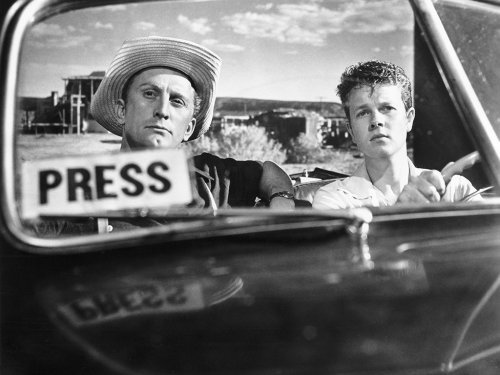
Ace in the Hole, playing Saturday morning at the Chinese multiplex 1, tells the story of a down-on-his-luck reporter who sees an opportunity to redeem himself via a report about a miner trapped in a collapsed cave. The public takes to it immediately, and it stays on the front pages of the paper. The bigger the story gets, the more the reporter’s life begins to disintegrate until several tragedies strike and we see the futility of greed and self-serving ambition. It is a pensive and symbolic story, and one whose message holds true over 60 years later.

71i3GVXW4pL._SL1024_

In any other time slot, Ace in the Hole would be one of the must-sees of the festival. Playing down the hall, however, is a celebration of 90 years of Vitaphone. When sound came to film for the first time in Don Juan (1926), the movie was screened alongside a bill of shorts that featured speech and song, recorded and synchronized by the Vitaphone company. Only a few survive. Since 1991, an organization called The Vitaphone Project, run by self-described “film buffs and record collectors,” has been dedicated to restoring and releasing these shorts that are so vital to understanding the history of sound on film. At the festival on Saturday morning, Ron Hutchinson of The Vitaphone Project will be on hand to discuss and screen some of the recently restored Vitaphone shorts, including some featuring George Burns and Gracie Allen, Baby Rose Marie, and Molly Picon.

For now:

MY CHOICE: 90 Years of Vitaphone

MY MIND MIGHT BE CHANGED BY: Ace in the Hole

The next time slot features several attractive choices. A Face in the Crowd, another timely movie fitting the theme of broadcast corruption, is showing at the Egyptian. Meanwhile, the always popular One Flew Over the Cuckoo’s Nest is playing at the Chinese multiplex 1. Intolerance, D.W. Griffith’s 3.5-hour silent masterpiece, will be at the Chinese multiplex 6 (and is recommended for dedicated fans only, as it spans several time slots). The brilliant Carl Reiner will be giving a talk at Dead Men Don’t Wear Plaid, in the beautiful Grauman’s Chinese Theater. But it will be at Club TCM, the gathering and lounging space at the Roosevelt Hotel for festival passholders, where many stars will gather on Saturday.

Last year, Cari Beauchamp released a book in which she assembled stories from actors, directors, and screenwriters about the first time they saw Hollywood. The book is a compelling read, and at this special presentation, the stories as presented by Beauchamp in the book will be read by such stars as Laraine Newman (Anita Loos), Nancy Olson (Colleen Moore), Bruce Goldstein (Ben Hecht), David Ladd (Robert Parrish) and Sue Lloyd (Harold Lloyd). This is my pick, as it is sure to be a meaningful glimpse into the world of classic Hollywood.

Also, if you haven’t had a chance to buy the book yet, Cari Beauchamp will be having a book signing in the Roosevelt Hotel lobby following the presentation.

MY CHOICE: My First Time in Hollywood

MY MIND MIGHT BE CHANGED BY: Nothing this time.


Screen Shot 2016-04-20 at 9.20.54 PM

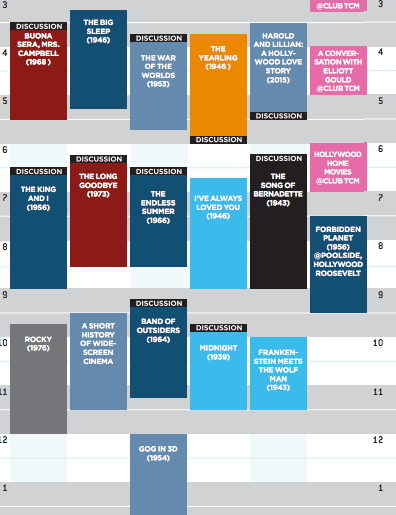
The TCM Festival is lucky in that it attracts some of the most legendary classic Hollywood stars to the festival for appearances and interviews. Last year the major guest was Sophia Loren, who gave an interview for the festival that will air on the channel on April 28. This year the festival continues the Italian theme with Gina Lollobrigida, who will introduce Buona Sera, Mrs. Campbell at Grauman’s Chinese Theatre on Saturday at 3:30. Down the road from Gina Lollobrigida at the Chinese multiplex 1 is The Big Sleep, one of Bogart and Bacall’s biggest hits and a noir classic, while The Yearling  will play at Chinese multiplex 6 and the 1953 version of Orson Welles’ radio program War of the Worlds will be at multiplex 4. Elliott Gould will also be giving a discussion at Club TCM. This is a tough one, but I think I’m going with The Big Sleep. There are few times when I can give up Bogart and Bacall on the big screen.

MY CHOICEThe Big Sleep

MY MIND MIGHT BE CHANGED BY: I don’t think anything, at this point.

Next up is The King and I, versus Song of Bernadette, versus Hollywood Home Movies. Along with the Shanghai Express/The More the Merrier issue, this is one of the more difficult choices of the festival. Having expected to see The King and I open the festival this year (and thus not be able to see it, with my media pass), I feel that I should see it–especially since Rita Moreno is introducing. But at Club TCM during this time slot is a truly fun annual program in which the festival brings in Hollywood home movies from the Academy and shows them to the crowd, assisted by the stories and memories of the people who are in them. The home movies program is a yearly tradition for me, and I can’t see both The King and I and the home movies due to their starting times. In previous years, I have left early from movies in order to catch the next one. But I have come to the conclusion that this is not “best practices” for the TCM Festival, so I will have to make a decision. Home movies will probably win out.

MY CHOICE: Hollywood Home Movies

MY MIND MIGHT BE CHANGED BY: The King and I.

dsc00253

Joan Fontaine between takes on the set of Gunga Din.

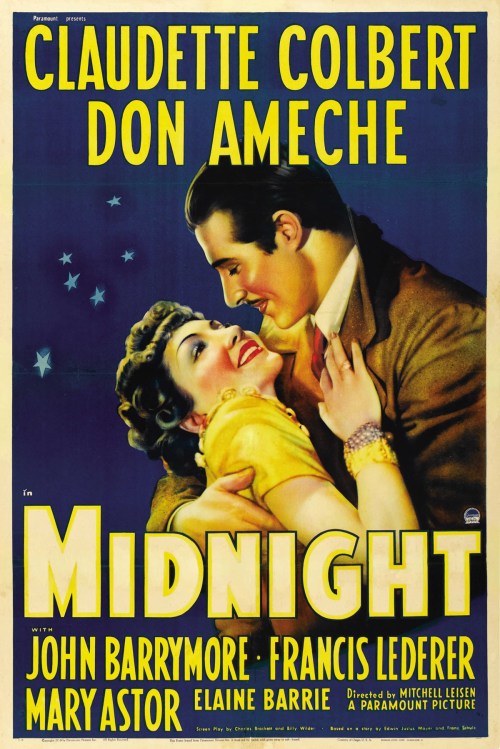
As for the last time slot of the day, I’m probably going to have to choose Midnight. I love Claudette Colbert too much for anything else there.

MY CHOICE: Midnight

MY MIND MIGHT BE CHANGED BY: Nothing.

midnight_1939_mp_1sht_1200_072620111018

See you back here for a rundown of Sunday!


2016 TCM Classic Film Festival Schedule FRIDAY

2692

Analysis of the TCM Festival schedule continues here at Backlots. Friday morning starts off as well as any Friday morning could start, but it is also a perfect example of the joyous difficulty TCM’s schedule poses for the attendee.

THE CHOICES

Screen Shot 2016-04-18 at 9.59.41 AM

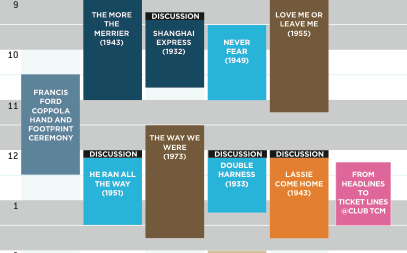
As happy as many of us are that Shanghai Express, The More the Merrier, and Love Me or Leave Me are all playing at the festival this year–we are faced with the dilemma that they are all playing at the same time, and we can’t be in three places at once.

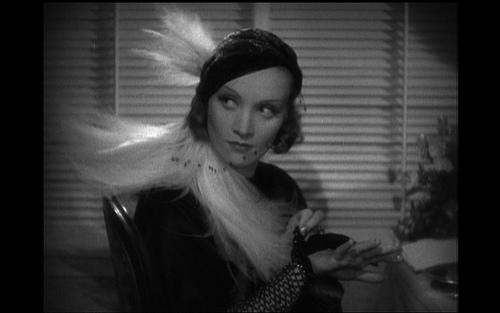
Shanghai Express, the 1932 pre-Code starring Marlene Dietrich, Clive Brook, and Anna May Wong, is exactly the kind of film that attracts a significant part of TCM’s demographic. TCM viewers and festival attendees seem to have a real fondness for pre-Codes–two years ago, Bruce Goldstein’s presentation on pre-Code Hollywood was packed to the gills with enthusiastic fans of the steamy, sensuous world of Hollywood between 1929 and 1934. Shanghai Express is a textbook pre-Code. Telling the story of Shanghai Lily, a sexually liberated woman (“It took more than one man to change my name to Shanghai Lily”) who meets a former lover on a train during the Chinese civil war, it is sure to draw a large crowd at the festival.

6082429140_fbece2e6f9

Love Me or Leave Me, the classic Doris Day musical, is another delightful choice for this time slot. An increasing number of people seem to be drawn to Doris Day in recent years, and the love is much-deserved. There is more to Doris Day movies than may meet the eye at first glance–this movie, for example, was nominated for 8 Academy Awards and won for Best Writing.

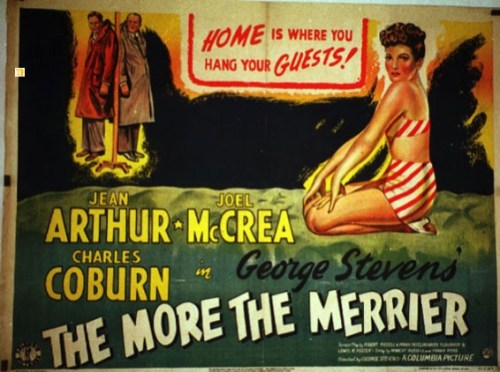
But both of these are playing opposite The More the Merrier, a movie that many of us have been trying to get to the festival for many years. Starring Jean Arthur, Joel McCrea, and Charles Coburn, The More the Merrier is a farce about the housing crisis during World War II, disguised as a hysterically funny screwball comedy. Coburn’s character finagles his way into sharing a room with Jean Arthur and then rents half of his room to Joel McCrea, creating a situation in which Coburn begins to act as a matchmaker for the two younger characters.

Additionally, The More the Merrier will be introduced by Cari Beauchamp, a major draw for festivalgoers herself. In addition to her regular presentations at prior TCM Festivals, she won over viewers of the channel this past year with her appearances on TCM’s “Trailblazing Women” series.

The fact that we have been trying to get The More the Merrier for several years, along with the delightfulness of the movie and Beauchamp’s introduction, makes this a must-see.

MY CHOICE: The More the Merrier

MY MIND MIGHT BE CHANGED BY: Nothing, although if it were in any other time slot, I would see Shanghai Express.

1c07681b49136748db6b3b57565eae54d8d39f8a1ee90d8722f3c973

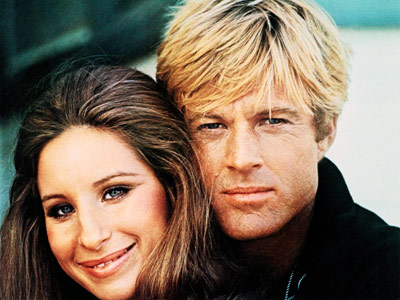
The next time slot at 11:30 is quite a lot easier on the decision-making front. I love The Way We Were, and once again, Cari Beauchamp is introducing. With her long history in politics and in the feminist movements of the 1970s, there is no one better to introduce this movie.

Nothing else in this time slot particularly grabs me. Lassie Come Home is sweet, but I don’t feel the need to see it on the big screen. The Way We Were it is.

MY CHOICE: The Way We Were

MY MIND MIGHT BE CHANGED BY: Nothing.

Screen Shot 2016-04-18 at 11.03.42 AM

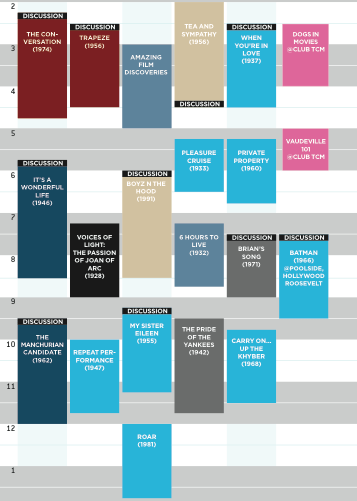
The Friday afternoon and evening slots provide a buffet of great choices once again. At 3:00 at Chinese Multiplex 1, Serge Bromberg will present a look at some of the newest discoveries and restorations in silent film, including new footage from Buster Keaton’s The Blacksmith and a previously lost Laurel and Hardy film, The Battle of the Century. Meanwhile, down the hall at the Multiplex 4, there will be a screening of the Deborah Kerr classic Tea and Sympathy, and for Coppola fans, a screening of The Conversation with Coppola present. For me, I’m torn between Tea and Sympathy and Serge Bromberg’s presentation. I’m not sure which will win out this time–my never-ending love for silent film, or my love for Deborah Kerr. Darryl Hickman, who plays Al in the film, will be a special guest, which is a plus. This one is a toss-up, but silent film may easily win out despite the pros to Tea and Sympathy.

MY CHOICE: Amazing Film Discoveries

MY MIND MAY BE CHANGED BY: Tea and Sympathy.

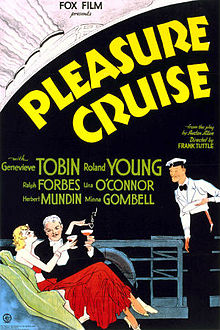
The evening hours commence with a choice between another pre-Code, an oft-screened uber-classic, a modern movie, a silent, and a Club TCM presentation about vaudeville. The pre-Code is Pleasure Cruise, a not terribly well-known movie and one that would be my first new-to-me pick of the festival. It’s difficult to go wrong with a pre-Code, and the new-to-me factor is a bonus.

MY CHOICE: Pleasure Cruise

MY MIND MAY BE CHANGED BY: Vaudeville 101

220px-Pleasure_Cruise_poster

The late evening is no contest. Despite the stellar lineup of movies in this time slot, including Pride of the Yankees and My Sister Eileen, Angela Lansbury is going to be at The Manchurian Candidate. That sells it for me.

MY CHOICE: The Manchurian Candidate

MY MIND MIGHT BE CHANGED BY: Nothing, unless Angela Lansbury can’t be there for some reason.

I’ll be back tomorrow with Saturday’s picks!

The Classic Movie Theaters of the 6ème Arrondissement

In light of the terrifying events in Paris yesterday, like the rest of the world I have been struggling with how to respond. I have deep ties to Paris, both personal and familial, and 2015 has been one of the city’s most terror-filled years in recent memory. Though all of my friends and relatives have responded to my inquiries and are, thankfully, unhurt, there are 127 families today who cannot say the same. The best way I can think of to fight the fear and shock of yesterday is to reiterate the love I have for Paris, and to tell of some of the wonderful cinematic moments that the city has given me.

In 2011, I spent 6 months in Paris as a student at the Institut Catholique de Paris. I was very excited to be there, but I wondered how I was going to get through 6 months with only the classic movies I had brought with me. I had managed to find a French version of Hold Back the Dawn (of all movies) at the DVD store in the Carrousel du Louvre, but other than that I was operating with the slim pickings that I could fit in my suitcase.

On my first day of class, my keen classic movie ear overheard a student talking about Casablanca across the room. I went over to contribute to the conversation, and the student mentioned that he had seen it in a theater in the 6th arrondissement and that this theater shows classic movies every night. Every night! He happened to have a flyer with him, and he gave it to me and told me I should check it out.

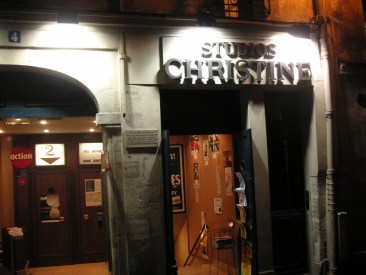
Well, check it out I did. That evening. Upon my arrival, I discovered that the theater in question was the Action Christine, tucked away on the tiny rue Christine near the Odéon metro stop. It has been a theater specializing in classic Hollywood since 1973, and is located inside a historic building with a carriage entrance from the 1600s. I was in love.

The movie they were playing that night was My Man Godfrey, and when I went to the ticket window, the woman on duty asked my age. I was 25 at the time, and the woman told me that guests under 26 get in for only 3 euros. So I filled out an application with some ID proving my age, and I got a discount card that let me in the theater for only 3 euros, each time I decided to come to the movies.

Needless to say, with a 3 euro price tag, I went nearly every evening. At the rue Christine I saw All About Eve, Tobacco Road, Leave Her to Heaven, It Happened One Night, Gentlemen Prefer Blondes, A Star is Born, Mildred Pierce, and countless others. It became my ritual after school to head east on the metro and get off at Odéon, sometimes get a frozen yogurt up the street and then go to the Action Christine.

Shortly thereafter, I saw a flyer at the Action Christine advertising a movie theater on the rue de l’École de Medecine, just up the street. The next day, I went to check it out and it was another Action theater, also playing Hollywood classics! This one was called the Action Desperado, located just a few blocks from the school of medicine, after which the street was named.

For the rest of my time in Paris, I kept schedules for both the Action Christine and the Action Desperado displayed prominently in my apartment. Sitting in those tiny, darkened theaters, watching “my people” on the screen, I felt so happy and joy-filled that I couldn’t stay away. I started to get homesick around month 4, and I credit the classic movies at the Action Christine and Action Desperado for giving me that dose of home that I so desperately needed.

Today, the theaters still run the classics. Glancing at the schedule for the Action Christine (now called Christine 21, as the owners have changed), there seems to be a Marilyn Monroe theme today, with The Misfits, All About Eve, The Seven Year Itch, and Bus Stop playing in those two tiny theaters that I know so well. They’re also having showings of Bringing Up Baby, The Scarlet Empress, Duck Soup, and The Informer.

On some of the darkest days of our history, movies have had the power to lift us up and carry us to a different, more decent world. So if you’re in Paris today, on a day when you can expect to be overwhelmed with grief, sadness, and tragedy, go to one of these theaters and be transported, while at the same time giving love and support to one of the hidden cinematic treasures of the beautiful city that is Paris.

HOLLYWOOD’S HISPANIC HERITAGE BLOGATHON: Rita Hayworth and the Loss of Hispanic Identity

In the above scene, we are presented with a dichotomy that may not be immediately apparent if one is not familiar with Rita Hayworth’s unique position in Hollywood. In The Loves of Carmen, Rita plays the legendary Carmen, made famous by the popular opera and Prosper Merimee’s book on which it was based. Carmen is a Spanish gypsy, in love with soldier Don Jose, and their love combined with Carmen’s wild nature turns tragic for them both. For Rita, playing Carmen should have been the role of a lifetime. She was fiercely proud of her Spanish blood, and her own grandmother had, like Carmen, been a Spanish woman working in a cigarette factory. But professionally, Rita was in constant limbo in regard to her identity as a Hispanic in Hollywood. The character of Carmen presents a particular irony, as Rita had been all but stripped of her Hispanic heritage within the Hollywood system.

Rita Hayworth was born Margarita Carmen Cansino in New York City to a Spanish father and an Irish-American mother. Her father had been a professional dancer in his hometown of Sevilla, Spain, and Margarita showed the same aptitude as a child. The family moved to California and she became her father’s dance partner at the age of 12. She spent her childhood performing traditional flamenco and Spanish folk dances with her father, up and down the coast between San Diego and Tijuana, Mexico. Steeped in the mixture of her father’s Spanish Roma traditions and the Mexican culture of the dance halls in which she performed, Margarita easily saw herself as Hispanic and identified with the Spanish-speaking locals of Tijuana as much as (or more than) she identified with her American peers.

Dancing with her father.

At the age of 16, Margarita garnered her first film role, a bit part in Cruz Diablo which was billed as a “Spanish Robin Hood.” From there, her career slowly grew, with small, stereotypically ethnic roles in Under the Pampas Moon, Charlie Chan in Egypt, and Paddy O’Day with Jane Withers. With her long, jet-black hair and low hairline, it was difficult for Hollywood to know where to place her in an industry dominated by white, non-Hispanic standards of beauty. In order for her potential to be realized in this milieu, shortly following her signing with Columbia in 1936, studio chief Harry Cohn began altering her image.

She underwent painful electrolysis to shorten her “ethnic” hairline, and dyed her deep black hair a light shade of red. When they were finished, she was a  no longer Margarita Cansino–in addition to whitewashing her physical image, Columbia changed Margarita’s name to Rita Hayworth (a variation on her mother’s maiden name, Haworth).

For the rest of her career, Rita played either non-Hispanic characters, or Hispanic characters with an American overtone.

In Blondie on a Budget, one of her first movies after the transformation, she plays Dagwood’s old girlfriend, an all-American girl named Joan Forrester.

In You Were Never Lovelier, she plays an Argentinian, but an extremely Americanized one.

In Gilda, she plays an American living in Argentina.

In 1948, in The Loves of Carmen, Rita finally got the chance to play a character close to her own heart. But instead of Margarita Cansino in the role, we see Rita Hayworth, the product of a Hollywood that could not promote the career of a young woman with jet-black hair and a low hairline. The Loves of Carmen is a tragic double standard that is difficult to get past, but as much as the studio tried to whitewash her image, they couldn’t take away her identity. In Rita’s dance sequence in the village, Margarita Cansino is still there, dancing the way she did as a child.

This is an entry for the Hollywood’s Hispanic Heritage Blogathon. Many thanks to Kay and Aurora!

See you next time!

CMBA FABULOUS FILMS OF THE 50’s BLOGATHON: Auntie Mame (1958)


81lSlSr8Z-L._SL1500_

Hello again readers, it is a rare occasion when I make two posts in a single day, but in addition to being Memorial Day (necessitating my post about the Hollywood Canteen this morning), today is the last day of the CMBA Fabulous Films of the 50s Blogathon and I am signed up to cover one of my favorite films of all time. Far be it for me to pass up a chance to talk about Auntie Mame, so I am writing my second post of the day and I can’t wait.

Auntie Mame is a unique piece of art. More than just a film, it is a beautiful character study, a celebration of eccentricity and love of life. Mame Dennis is a true bon vivant, a woman who is so in love with life that it sometimes causes her trouble. She is also sublimely affectionate, maternal, and caring, traits that are seemingly the antithesis of what Mame Dennis stands for, but ones that strangely fit her character. Though Mame does get married, romantic love does not drive the plot. Instead, it centers around loving life, celebrating all that it has to offer.

The original novel of Auntie Mame was written by Patrick Dennis in 1955, and was based on the eccentricities of his much beloved aunt, Marion Tanner. Tanner was known around New York for her red brick house at 72 Bank Street, which often served as a haven for radicals, struggling artists, and other Bohemian personalities. Much like Auntie Mame and her home at 3 Beekman Place, Marion Tanner welcomed strangers into her home for parties and a safe haven, a practice that very much worried her nephew. When he wrote Auntie Mame, she delighted in the comparison, and often brought it up in conversation with guests at her endless parties.

Rosalind Russell, the stage and film star who would ultimately become Auntie Mame’s first and most highly respected interpreter, had her own connection to the character. Shortly before its publication, Russell was sent a copy of the book by the author. When she picked it up to read, she could hardly believe what she was reading. “It’s the Duchess,” she said to her husband, “Someone has written the Duchess.” “The Duchess” was the name that the Russell family had given to Rosalind’s older sister Clara. A stylish, larger-than-life character who knew and loved everyone of importance, Clara gave off an air of royalty that spurred the nickname. For Russell, this character was simply a fictionalized version of the sister she knew and loved so well. The book took on a further significance for Russell in that Clara had died too young of a stroke not long before, and the story brought back a flood of memories that were hard to shake. After the book was published and she was asked to do Auntie Mame on Broadway, she immediately agreed, basing her interpretation on the character traits of her sister.

Rosalind Russell as a child (bottom right) with her siblings. Clara is at the top with the large bow.

The show ran for 639 performances from October 31, 1956 to June 28, 1958. Rosalind Russell and Peggy Cass were nominated for Tony Awards, and Peggy Cass won for her portrayal of frumpy assistant Agnes Gooch. Warner Bros. latched onto the idea of a film, with Russell and Cass reprising their roles, and the film was released in December of 1958. Several other cast members of the original Broadway show appeared in the film, including Jan Handzlik, the boy who played Patrick.

The plot of the movie is not particularly important–it is a character-driven narrative that puts emphasis on celebrating individuality. A young boy, Patrick, is sent to live with his eccentric aunt after his father dies, leaving him an orphan. He arrives at the door of 3 Beekman Place, to find his Auntie Mame giving a wild party–having forgotten that her nephew was supposed to arrive that day. But she welcomes him with open arms, and immediately takes him under her wing as her surrogate son. Complicating matters is Mr. Babcock, the representative from the Knickerbocker Bank that Patrick’s father assigned to make sure “that crazy sister of mine doesn’t do anything too goddamned eccentric.” Mame and Mr. Babcock don’t agree on how to raise Patrick, but ultimately Mr. Babcock has the upper hand and sends Patrick to elite, snobbish private schools, turning him into one of the snobs that Mame detests. At school he falls in love with Gloria Upson, an empty-headed, vapid, country club girl that he intends on marrying. Mame objects to Patrick marrying a girl with “braces on her brains,” but instead of telling him that outright, she hosts a family dinner for the girl’s conservative parents in which she lets her eccentricity out in full force. The girl and her parents are deeply offended, and leave in a huff. Patrick sees that they are unwilling to accept how he was raised, and he reverts back to being the loving nephew of his loving Auntie Mame.

The movie is quite long, covering the period from the 1920s through the end of the Depression as well as Mame’s marriage to her husband Mr. Burnside and her eventual widowhood, but the charming and delightful characters make the time rush by. Rosalind Russell is undoubtedly the star of the show, but there are great performances by many members of the supporting cast. Peggy Cass repeats her Tony-winning performance and gives a hilarious interpretation of Agnes Gooch, the assistant who ends up pregnant out of wedlock (or is she?), and the actors who play Gloria’s conservative parents are fantastic. Adding to the show-stealing performances is the marvelous Joanna Barnes, who has a gift for playing rather unlikable characters to perfection. Here is one of my favorite scenes from the movie.

Director Morton Da Costa was known for being a master of the “in” shot, a method of focusing in on the character at the end of a scene by spotlighting the face while fading the rest of the scenery to black. The technique undoubtedly comes from Da Costa’s years in the theatre scene, as the effect is very theatrical and unusual for film. This was used very nicely in many scenes in Auntie Mame, as well as in another Da Costa triumph, The Music Man, four years later.

Shirley Jones in The Music Man (1962). At the end of the video, watch for Da Costa’s signature “in” shot.

Auntie Mame received wide critical acclaim upon its release. Rosalind Russell and Peggy Cass were both nominated for Oscars, and Rosalind Russell won a Golden Globe for her performance. The film was additionally nominated for Best Picture, Best Art Direction, Best Cinematography, and Best Film Editing at the Oscars.

The film’s opening theme.

As for Marion Tanner, the basis for Auntie Mame, she saw the film’s release and lived a very long and full life for a long time afterward. Sadly, she and her nephew had a falling out due to worries about her carefree lifestyle, and they spoke rarely in her later years. She died in 1985 at the age of 94, and never lost her enthusiasm for life. “I do believe in people, you know,” she liked to say.

Thanks for reading!

The Hollywood Canteen

Servicemen gather outside the Hollywood Canteen at 1451 Cahuenga blvd. in Hollywood.


On this Memorial Day, I would like to pay tribute to an integral part of Hollywood history that relates to the holiday. On October 3, 1942, the Hollywood Canteen opened its doors at 1451 Cahuenga blvd. in Hollywood, with a purpose to provide music, entertainment and food to active service members, completely free of charge. Staffed by volunteer Hollywood celebrities and open to all serving members of the Allied forces–men and women, black and white, from all the allied countries–it was a venture to preserve Allied morale and a method for members of the entertainment industry to contribute to the war effort in a meaningful way.

The idea for the canteen came from actor John Garfield, who was inspired to recreate the successful Stage Door Canteen in New York for service members on the West Coast. Unable to serve in the army himself because of a heart problem, he wanted to do something to aid the efforts overseas and sought partnership with fellow actor Bette Davis, who helped set the wheels in motion. Working long hours to get the canteen up and running, Garfield and Davis managed to get the canteen built in less than 1 month, complete with elaborate chandeliers and a giant dance floor.

f86c1e776d873c6e61ae342cf345ee71

Bette Davis installs a chandelier.

Per the rules of the “Hollywood Victory Committee,” established after Pearl Harbor in order to allow actors to volunteer for the war effort without having trouble with the Screen Actors Guild, Davis and Garfield were able to procure volunteers who not only would keep the canteen running smoothly, but would also provide unmatched amusement and entertainment for the patrons of the canteen. Among the frequent volunteers were Rita Hayworth, Deanna Durbin, Barbara Stanwyck, Joan Crawford, Jeanette MacDonald, and countless other Hollywood luminaries. Upon the visit of the millionth service member in 1943, the lucky sergeant Carl Bell was brought into the canteen by Marlene Dietrich where he received a kiss from Betty Grable. It was unlike anything most of these servicemen and women had ever seen.

Though the Hollywood Canteen seemed to be a fantasy land in which soldiers could escape from the harsh realities of wartime, its walls were not immune to the difficult social problems of the time. Upon seeing that tables were not segregated at the canteen, many white soldiers opted to leave in lieu of sitting and chatting with fellow service members of African-American descent. Bette Davis, known for her refusal to entertain for segregated audiences, took to the microphone when this happened to explain the policy of the Hollywood Canteen. “The blacks got the same bullets as the whites did, and should have the same treatment,” she said.

tumblr_lj7ayd0x1Z1qzl2o8o1_500

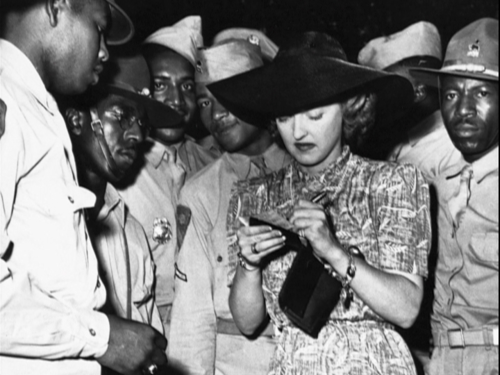
Bette Davis signs autographs outside the Hollywood Canteen.

In addition, it was at the Hollywood Canteen that a pregnant Gene Tierney was signing autographs when she was approached by a fan who had recently been quarantined for German measles. Tierney contracted the disease, and her daughter was born with severe problems including blindness, deafness, and intellectual disability. Tierney suffered from serious mental anguish and guilt for the rest of her life because of her decision to go to the Hollywood Canteen that night.

In 1944, the canteen was such a famous institution that Warner Bros. decided to make a movie about it. Based loosely on the experiences of Sgt. Bell, it tells the story of two servicemen on leave who spend several nights at the Hollywood Canteen–one of whom becomes the millionth G.I. served and wins a date with Joan Leslie. The movie features so many stars that, according to Variety, “There isn’t a marquee big enough to hold all the names in this one, so how can it miss?” The movie was a smash success, and received 3 Academy Award nominations. 40% of ticket sales went to the real Hollywood Canteen.

The Andrews Sisters in Hollywood Canteen (1944)

The canteen continued even after the war was over, finally closing for good on Thanksgiving Day, 1945. Today, in keeping with corporate lack of appreciation for history, the building has become a parking garage for the building next door. But the legend of the Hollywood Canteen lives on, a true testament to the power of Hollywood to maintain morale and keep spirits up in the most difficult times.

Many of these photos were found over on Karen Noske’s wonderful blog Movie Star Makeover. Go visit it if you have the chance, K is a friend of mine and does a magnificent job with her site.

BABY FACE (1933) and Pre-Code Hollywood Morality

In a scene cut from the original theatrical release, Barbara Stanwyck breaks a beer bottle over the head of a man trying to assault her.

When discussing classic film with those who may have little knowledge of its history, a common grievance I hear is that people take issue with the contrived storylines and docile women that they perceive to make up the cinematic landscape of classic Hollywood. “The stories are all the same,” they often state, “and the women are so wholesome and pure. It’s not real.” When I hear statements like these, I try to give as much historical context as is appropriate for the conversation, and then…I almost always recommend a pre-Code.

Before the strict enforcement of the Production Code in 1934, Hollywood was the antithesis of what most people consider “old movies” to be. A far cry from the sweet, obedient women who always ended up married to the good guy at the end, women in this era of filmmaking were often driven, manhunting, sexual creatures who lived their own lives, their own way. They got divorces, slept their way to the top, and weren’t afraid of the power of men.

This was the world of pre-Code Hollywood.

Norma Shearer in THE DIVORCEE (1930), a story of a woman’s divorce and illicit affairs that won Norma Shearer an Oscar for Best Actress.

In 1922, following a series of Hollywood scandals that culminated in the accusation and ultimate acquittal of Fatty Arbuckle in 1921 in the famous Virginia Rappe rape trial, Hollywood realized that its morals were coming into serious question by certain political factions. The studios hired Will Hays, Presbyterian clergyman and former head of the Republican National Committee, to try to tame what they perceived to be an industry spiraling out of control. He drafted a series of “Do’s, Don’ts, and Be Carefuls” that ultimately morphed into the first Hollywood Production Code, put into effect in 1930. Jason Joy was employed as the chief enforcer of the new mandate, holding the post until 1932.

Roscoe “Fatty” Arbuckle, whose 1921 trial and acquittal for the rape and murder of Virginia Rappe called into question the morality of Hollywood.

Though the code existed as a technicality, Jason Joy was not too keen on its enforcement and the first film that was reviewed under the new system, The Blue Angel (1930), was passed through with very few changes. The story of an elderly professor who falls in love with a cabaret singer is one that has become a classic of German cinema, but in 1930 it was branded as indecent by a California state censor. As there was poor communication between Joy’s office and the studios, and poor infrastructure regarding who had the power over what, there was not much  that Joy could do had he wanted to.

While the studios and the Production Code office fumbled with the cumbersome new laws, box-office sales skyrocketed. Out of this era of lack of code enforcement came films that were sexy, steamy, brutal, and raw. Women were loose and manipulative, men killed and massacred. There were overt references to sex, and near-nudity.

In Night Nurse (1931) Joan Blondell and Barbara Stanwyck dress and undress 3 times in the first half hour.

Despite the Code’s ban on sexual suggestion and nudity in silhouette, this scene from Golddiggers of 1933 appeared, a clear slap in the face to the Production Code office and one of the raciest scenes to come out of the 1930s.

There was an air of lawlessness in the movies, and the public loved it. The studios were making movies that people wanted in spite of the powers-that-be, and they were doing it right under their noses.

And then came Baby Face (1933).

Film scholars often cite Baby Face as the film that served as the tipping point for all the changes that would take place the following year. At the TCM Festival a few weeks ago Bruce Goldstein, president of the New York Film Forum, described Baby Face as the Citizen Kane of pre-Codes, a film so good, so racy, and so much in defiance of everything the Code stood for that it singlehandedly rallied the office to action.

Baby Face is the story of a young woman who, tired of her life as a prostitute in the saloon owned by her father, decides to use her powers over men to get a job and rise to the upper echelons of New York society. Literally sleeping her way to the top, she is the epitome of the power pre-Code women had over their men. All the men in the movie simply crumble to her will, she uses them as rungs on the ladder to get to where she wants to be.

Even by today’s standards, Baby Face in its original form is a monument to feminism, a story of how a woman uses her wiles to outsmart all the men in her life. But upon its completion in mid-1933 the Production Code office, now headed by Joseph Breen, panicked. The film broke so many rules of the Code, it was essentially unfit for release and was banned by censors across the country. Serious cuts were made to Baby Face to make it palatable to censors, and less than 6 months after the release of Baby Face in December of 1933, an amendment was added to the Code to require all films released after July 1, 1934, to obtain a certificate of approval before their release into theatres. An important shot of a muder/suicide scene in Baby Face was cut to comply with restrictions on murder. Scenes such as this one were cut to comply with the restriction on illicit sex being presented as attractive:

The original cut of Baby Face was tragically presumed lost, until 2004 when a print of the original negative was discovered at the Library of Congress. It premiered at the London Film Festival, and is now widely available via several DVD releases. The print is magnificent. The original theatrical release shows a movie that is nothing special, a run-of-the-mill production with few particularly memorable moments. But when one views the original, uncut version, it is magical. The movie comes to life, and it is a rich, complex story of a woman’s drive and motivation to better herself. Baby Face is the ultimate pre-Code, and the discovery of the uncut version in 2004 stands as one of the most important cinematic discoveries of the last 20 years.

As for the Code itself, it slowly chafed away until its replacement by the MPAA in 1968. It is a controversial subject among film scholars. In my personal view, though the Code severely restricted the freedom of artists to express themselves in Hollywood, its enforcement had its benefits to the progression of the movie industry. In order to make the films they wanted to make, filmmakers were forced to resort to subtlety and innuendo, clever and biting dialogue that went under the radar of the censors, and that audiences had to listen or watch for. Movies played to smarter audiences, because the Code forced them to.

The Women (1939)

But as the Code lasted for such a long span of film history, far too few people know about the rich history before its enforcement, when films were decidedly modern and extremely thrilling. For further reading on this subject, I would recommend Mick LaSalle’s 2000 book Complicated Women, all about the women of pre-Code Hollywood and the roles they played. A great read on an immensely fascinating subject.

See you next time!

TCM Programming and the Definition of “Classic Film”

As part of TCM’s tribute to chemistry and physics in film, A BEAUTIFUL MIND (2001) will play on the network tonight. The choice has sparked mixed reactions among fans of TCM on social media today.

In the past 3 years of this blog’s existence, I have spent considerable time discussing the meaning of the term “classic film.” It is a vague description, one that means different things to different people and which tends to polarize those who are loyal to their own particular definition. In this age of social media, I have seen countless debates on the subject on Twitter and Facebook, conversations that get especially heated when TCM decides to show a film that was made relatively recently.

Fans of old films have cause to be wary of TCM turning its back on this programming. The channel AMC, which is now famous for its original content (Mad Men, Breaking Bad) used to be very much like TCM, airing black and white films from the 1930s through the 1960s without commercial interruption, punctuated by its own original educational programming about film history and culture. But in 2002, AMC decided that the cable subsidies they were receiving were not enough to keep the channel going, and began to allow advertising which changed their programming focus to a general one in order to keep sponsors happy.

Though I personally do not worry about TCM shifting its focus (I direct you to the popularity of the TCM Classic Film Festival and the TCM Classic Cruise, a testament to how popular their programming is), I have noticed that they seem to be thinking outside the box with their definition of “classic film,” which is upsetting some viewers who have a very clear concept of what a classic film should look like. Tonight, they are showing A Beautiful Mind, the 2001 Best Picture winner that tells the story of mathematician John Nash and his struggle with schizophrenia. TCM’s Facebook page was alight this morning with a debate on whether or not this is a classic film, questions as to why the network was showing it and counter-attacks questioning whether TCM should even be questioned about their programming.

As I’ve stated before, my own personal definition of a classic movie when I am asked about it is a movie made more or less between the confines of 1916 (when filmmakers were really starting to “get” moviemaking in my opinion) and the fall of the production code in 1968–with several exceptions to that rule allowing for great and culturally significant movies pre-1916 (such as “A Trip To the Moon” and The Great Train Robbery) and post-1968 (such as Cabaret and Amadeus). I would also say that not every movie made between that time period can be considered a classic, but specifying a specific time period helps to get around some of the vagueness and muck that comes along with trying to make a clear-cut definition of anything.

A scene from Amadeus (1984), a movie I consider to be a classic because of the positive cultural significance and lasting influence it has enjoyed.

A Beautiful Mind is a fantastic movie, no question about it. Phillip Glass’ haunting, almost mystical score along with Oscar-winning performances by Russell Crowe and Jennifer Connelly make this movie perhaps one of the technical best of the past 15 years. Would I call it a classic? According to my own personal definition, no. It has not marinated in our culture long enough for us to see if it stands the test of time, and though it won several awards upon its release it has not proven to be culturally pervasive enough to warrant an exception to the  rule.

However, I am open to discussion on this. What is your personal definition of a classic film? Would you consider A Beautiful Mind to be a classic, and worthy of a spot in TCM’s primetime lineup? I look forward to hearing from you in the comments section, and I will also pose this question to my readers on the Backlot Commissary group on Facebook. Feel free to join the discussion here or there!