EVENT: The 103rd Birthday Celebration of Carla Laemmle, October 20, 2012

Portrait of Carla Laemmle in the 1920’s.

Laemmle today.

I was thrilled to receive a press release in my inbox today for the event marking the 103rd birthday of silent film actress Carla Laemmle, one of the last surviving personalities from the silent era. The niece of Carl Laemmle, who was a major figure in silent film and the founder of Universal (and who, as you will see below, has added status as a rescuer of a number of Jews from the Holocaust), Carla was featured in a number of small parts, including The Phantom of the Opera (1925) and Dracula (1931), and though she has been formally retired from films since the 1930’s, she is an active and vibrant participant in many classic film-related events. At the age of 102, she appeared at the TCM Classic Film Festival this past year and was also present as a special guest when I covered Cinecon this past September. She is especially noted for her sharp memory and magnificent poise–it is very difficult to believe that this beautiful woman is 102 years old!

An interview that Carla did with Leonard Maltin at this past year’s TCM Festival. The video was recorded by my friend Theresa Brown, and this link comes courtesy of her.

Another thing that is well-known about Carla Laemmle within the classic film community is the devotion, warmth and openness of her family. Each birthday she has, her family organizes large gatherings for which invitations are given to just about everyone–family, friends, fans, press, anyone who may have had anything to do with her in the past or present. A friend of mine once told me that when she was living in Hollywood, she sent Carla Laemmle a card for an upcoming birthday. A few days later, a relative of Laemmle’s showed up at her door to thank her personally for the card, and to invite her to Laemmle’s birthday celebration. This is the kind of family she has, and I must say that I think this is likely a huge factor in her longevity.

Here are the details of what will be happening tomorrow evening. You do have to have an invitation to actually attend, but you may be able to show up and see her enter the building, which promises to be an event in itself!

Happy birthday, Carla!

———————————————————————————————————————-

Hollywood, CA – On October 20th silent film actress Carla Laemmle will celebrate her 103rd birthday at The Cinefamily Silent Film House Theater in Hollywood.  Invited guests will enjoy a screening of clips from the actresses’ career that spans from the silent picture days, where Carla played the prima ballerina alongside Lon Chaney (Phantom Of The Opera in 1925),  to the early talkies in which Carla spoke the first lines in the Bela Lugosi’s classic “Dracula.” Guests will also get a sneak peek at Carla’s newest role in the very latest Hollywood content outlet, a web series entitled “Broken Dreams Blvd” starring Danny Aiello. The series is written and directed by family friend Kevin Jordan. Carla plays the great grandmother to Nic Novicki (Boardwalk Empire) who with Carla runs the oldest tour bus company on Hollywood Blvd. Quite fitting since her Uncle, Carl Laemmle, not only founded Universal Studios but also created the Hollywood tourism trade. Laemmle was the first to allow visitors behind his studio gates, where he offered trolley tours to film fans for a nickel. ” We wanted to tell the story about our friend and cast member of our TV Web show and honoring her on her amazing 103rd birthday. She is terrific in our show “, states Nic Novicki, star and co-writer of “Broken Dreams Blvd”.

During WWII, Carl Laemmle was known to have rescued survivors of the Holocaust and sponsoring them to enter the United States. Five of these survivors will attend on Saturday including Sandy Einsteinn.

The celebration will also include a live organ player to accompany Carla’s ballet performance in Phantom Of The Opera and a 1920s quartet. ” A very special night ahead for a very special woman. There aren’t that many 103 year olds still filling out W-9s!.” , said Nic Novicki, Producer and cast member of “Broken Dreams Blvd”.

Celebrity Hosts include:  Danny Aiello, Nic Novicki(Boardwalk Empire), Renee Taylor( Happily Divorced), Joe Bologna(CSI), Ed Lauter(Trouble With Curve) – Also: Rosemarry Hill(great niece of Carl Laemmle), Bella Lugosi Jr., Tyrone Power Jr., Jane Withers, Bruce Garrick (My Three Sons), Barbara Luna (Ship of Fools), Oscar nominated Lainie Kazan, and Edward Lozzi. Other celebrities on the Event Committee attending include: Carla Laemmle (Phantom of the Opera, Dracula), Danny Woodburn (Mirror Mirror, Seinfeild, Death to Smoochy), Steven Martini (Major Payne, Limelife), Mark Povinelli (Water for Elephants, Are you there Chelsea), Kevin Jordan(Brooklyn Lobster, The House Guest) Edward ‘Grapevine’ Fordman (One on One, Punk’d, Key and Peele), Will Styles (House of the Rising Sun, Hope and Faith), Marty Ingels(CSI),  Brenda Dickson(Young & The Restless),Jack Carter(Shamless), Chuck McCann(Boston Legal), George Barris, Ron Masak(Murder She Wrote), Lou & Carla Ferrigno,  Director Gabriel Bologna(Boston Girls), Francesca Hilton, LouWegner(Trouble With the Curve), Charles Fleischer (Roger Rabbit), Arthur Gardner(All Quiet on the Western Front 1930cast members from “Boardwalk Empire”,casting director Marvin Paige, and many others coming on board.

*Special Birthday Celebration Stage Tribute and Reception for Carla Laemmle 103rd Birthday 

*Saturday Oct. 20th  7PM Media Check In:  Celebrity Arrivals 7:30Pm  8PM  Show  Starts

*Cinema Family Silent Film House

*611 N Fairfax Avenue // Los Angeles // 90036

Introducing the Carole Lombard Filmography Project


As you may recall, I created a poll last week in which I asked you, my readers, whose filmography you would most like to see profiled on the site. The clear winner was the beautiful and talented Carole Lombard, whom I happen to absolutely adore, so I am very excited to embark on a quest to view and analyze her complete filmography for the site.

One obstacle (one that there would have been had anyone won the poll) is that a number of Carole Lombard’s early films have been lost. For example, from her very first film appearance at age 12 in A Perfect Crime (1921), there seem to be only a few stills left, and the film itself has disappeared. When I try to tackle a film and find that this has happened, I will provide a summary and note that it has been lost and is unavailable for viewing.

I welcome guest posts–if you are a Lombard fan and would like to write a piece on what she means to you, shoot me an email with the article attached at fowler.lara@gmail.com and your piece will appear as a guest post on the site. In addition, if you would like to provide your own analysis of a film, you may contribute that as well.

Within the next few days, the event will kick off with a profile of Carole Lombard’s life. It will last until all of her movies have been seen and analyzed (or noted and summarized, in the case of a lost film), however long that may take. In between posts for the Carole Lombard Filmography Project, I will write other entries as usual and keep the blog up to date.

This promises to be quite an endeavor, but I am ready and excited for it. Viva Carole Lombard!

W. Somerset Maugham and The Power of Bette Davis–“The Letter” (1940) and “Of Human Bondage” (1934)

Bette Davis as Mildred, the troubled waitress in the film adaptation of W. Somerset Maugham’s “Of Human Bondage” (1934)

The themes of W. Somerset Maugham, English legend of literature and drama, often revolve around a single strong woman who drives the story forward, and whose power often wreaks havoc in the lives of the men around her. In the works to be discussed here, Of Human Bondage and The Letter, as well as a number of other stories including, notably, Rain (which was also made into a film starring Joan Crawford), the main character is a woman who has strayed in some way, and makes no apologies about it. This was a dangerous and tricky subject to tackle before 1968, as the code forbade the depiction of wayward women going unpunished for their actions, and indeed, the films adapted from W. Somerset Maugham stories tend to be markedly different from the majority of the films released under the code in their treatment of the female character.

W. Somerset Maugham.

To represent these characters onscreen, Maugham could have asked for no one better than the headstrong and independent Bette Davis, born of strong New England stock and raised to have the moxie to singlehandedly take on Warner Brothers Studios in 1937. The fact that she lost is no object–in becoming the first star to take on the studio system, she displayed that the enormous strength of character so evident in her movies was actually her own.

Signed to Warner Brothers in 1932, Of Human Bondage was Davis’ 23rd movie, yet was the most important and most visible one up to that time. It is the semi-autobiographical account of Maugham’s own life, telling the story of Philip, a medical student and artist affected by a clubfoot (played by Leslie Howard), hopelessly in love with Mildred, a crass, uneducated waitress (Davis). Mildred rejects his passion and is rude and callous toward him, yet his obsession becomes increasingly strong until Philip’s passion for Mildred threatens to destroy all of his ambitions.

Davis’ portrayal of the troubled, illiterate Mildred earned her rapturous critical praise and an Oscar nomination for Best Actress of 1934 as a write-in candidate. Her loss to Claudette Colbert was felt strongly, and the following year her performance in Dangerous, a far more mediocre film, won her the Oscar in what was likely a consolation prize for not winning the year before. Her portrayal of Mildred is crass, primitive, and ultimately electric, a powerhouse performance in a film that would otherwise have faded into oblivion.

Here is one of the key scenes from the film. This, I think, is what singlehandedly secured Bette Davis’ nomination for Best Actress. Note how she plays this scene in a way that simultaneously conveys anger and pain, and the strong grip that Davis maintains on the scene that allows her to slowly and methodically escalate Mildred’s emotions in an effective and realistic way. She backs away from the offensive words like an animal, her body tight, her voice growling and shrieking as she goes for the jugular.

In direct contrast to Mildred, Davis’ portrayal of murderess Leslie Crosbie in The Letter is one of calm focus. The film opens on a sugar plantation in Singapore, where, as the workers sleep, a gunshot is fired and Davis emerges, still shooting at the man who has fallen dead on her stoop. The moment she stops shooting is a key moment in the introduction of Leslie Crosbie’s character, and highlights one of Bette Davis’ trademarks as an actress–the wide range of emotions that can be read in her face in a fleeting millisecond. As Davis drops the gun, her face has morphed from anger to a shocked “What have I done?”

The opening scene.

The story is about a woman seeking an acquittal for murder committed in self-defense. Leslie claims that the man came in and began to seduce her, and she shot him when he refused to listen to her struggles. Her story is believed, until a letter is uncovered by her defense that suggests that she and the man had been having an affair. Knowing that this letter would destroy her entire case, the defense seeks to acquire it, but finds that it is in the possession of none other than Mrs. Hammond, the wife of the dead man, hellbent on revenge.

Gale Sondergaard as Mrs. Hammond, opposite Bette Davis as Mrs. Crosbie.

The Letter is a truly riveting and suspenseful story, showing a side of femininity that was rarely brought out in films of the 1940’s. Not only do we see Mrs. Crosbie as a suspicious character who clearly has something to hide, but the character of the jealous wife, played by Gale Sondergaard, also possesses a sense of power and domination that she is not afraid to show. Though no less potent, the power exhibited by the women in The Letter is a good deal more subdued and complex than that shown by Mildred in Of Human Bondage. Where Mildred raised her voice and threw plates, Mrs. Crosbie shot without a word and tried to evade the crime while maintaining a normal outward appearance. Mrs. Hammond barely says a word throughout the entire movie, yet it is clear that she holds all the cards. In one powerful scene, Mrs. Hammond hands over the letter by dropping it on the floor for Mrs. Crosbie, who is made to pick it up by essentially bowing at Mrs. Hammond’s feet. It is also worth noting that in this scene, Mrs. Hammond (written to be of Eurasian descent) is clothed in dark, ornate clothing with lots of jewelry, almost like a god. In contrast, Mrs. Crosbie is dressed in a virginal white dress with a veil, signifying subservience and creating another power dynamic within the film between the two women in addition to the overarching theme of the movie.

As the subservient.

An additional factor in The Letter that is missing from Of Human Bondage is the innate chemistry between Bette Davis and director William Wyler. Wyler had directed her 2 years earlier in Jezebel, which had won Bette Davis her second Oscar, and she thrived under his direction. Indeed, The Letter earned her yet another Oscar nomination, her 5th by that point.

Of the two performances outlined here, her role as Mrs. Crosbie is a more polished and presentable performance by any standard, but Mildred is the unrestrained, wild Bette Davis–raw and vibrant, with nothing but her enormous talent to guide her. The director was capable, John Cromwell had many credits, mostly on Broadway, by the time Of Human Bondage came to fruition, but it is clear that Bette Davis followed the beat of her own drummer here. Much like Katharine Hepburn, Davis’ own personality played much into her portrayals so that she never completely lost her offscreen personality. And this is part of what makes her so enduring and identifiable as an actress, and the perfect conduit for the strong female characters of Maugham.

Thanks for reading!

New Poll Up on Backlots’ Facebook Page

If you have not already “liked” our page on facebook, check it out here and participate in the poll happening now–whose filmography would you like to presented here in a new running feature? The entire filmography of a single star or director will be profiled, analyzed, and critiqued here on the site, and it is up to you to choose in whose work you are most interested!

The poll allows you to choose one personality. You may choose from any of the stars or directors listed, or if you REALLY think some worthy soul is missing from the list, you may feel free to add him or her.
Thus far the choices are:

Carole Lombard (actress)

Billy Wilder (director)

Judy Garland (actress) (I swear I didn’t choose Judy myself! Someone else entered it into the poll. I will gladly present Judy’s filmography if she gets the most votes, but I’ve already seen all her movies so this feature would be over rather quickly!)

Jack Lemmon (actor)

John Huston (director)

David Niven (actor)

Linda Darnell (actress)

Joan Bennett (actress)

Bette Davis (actress)

William Wyler (director)

Barbara Stanwyck (actress)

This includes my own suggestions as well as the suggestions of others. The best place to vote would be on Backlots’ facebook page. However, if you don’t have a facebook account, you can send me your vote through the comments section of this post, or email me at fowler.lara@gmail.com.

Have fun, and I look forward to hearing from you! This is going to be a major undertaking, as nearly all of these personalities have very expansive film careers. I’m ready and willing!

“The Purple Rose of Cairo,” Our Love Affair with the Movies, and What Makes a Classic?

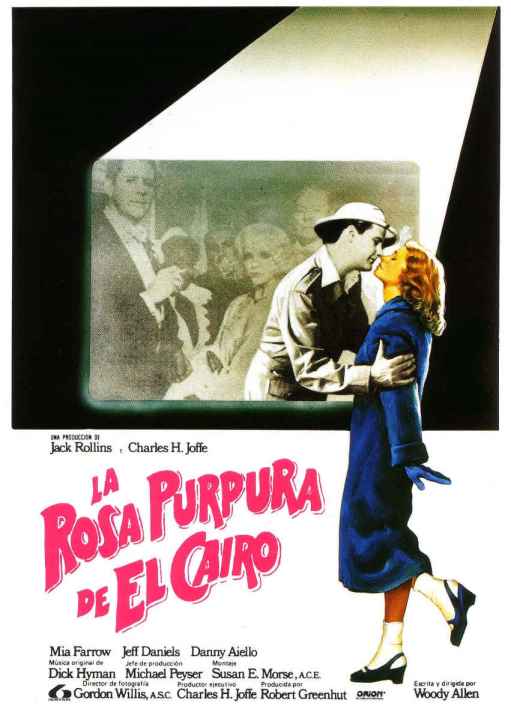
The Spanish poster for Woody Allen’s “The Purple Rose of Cairo” (1985).

When I discuss this blog with those who might be unfamiliar with classic film, I am often asked “What do you mean by ‘classic’?”

It’s a valid question. What DO we mean by “classic?” Do we mean black-and-white? Not necessarily, I would argue. Do we classify it by quality? How old it is? If so, when did classic films stop being made? These are all questions that stump even the most versed classic film theorists and historians among us. Turner Classic Movies is often chided by fans for movies it chooses to program into its lineup that fans don’t consider “classic.” Once, it programmed Election (1999) into a lineup of classic films dealing with politics, and fans were in an outrage. But why? How is Meet John Doe (1941) considered an acceptable classic film to show while Election is slammed as “not a classic?” Many people cite the downfall of the production code in 1968 as the defining moment of classic film’s disappearance, but this is not exact. Most people consider Cabaret and the Godfather films to be classics, and these were made in the early to mid-1970’s, with the last Godfather movie made in 1990.

And then there’s Woody Allen. Woody Allen’s first film was What’s Up, Tiger Lily? in 1966, a mere 2 years before the downfall of the code, and his career has rarely faltered since then. What he has contributed to film is immeasurable by any standard, and with films such as Annie Hall, Crimes and Misdemeanors, Hannah and Her Sisters, Love and Death, Bananas, Take the Money and Run, and more recently Match Point, Vicki/Cristina/Barcelona, and Midnight in Paris, he has left an indelible mark on comedic and dramatic writing and directing in movies. Whether or not you consider Woody Allen to be a “classic director,” it is undeniable that he is a legend in the business and his movies have contributed massively to our cultural fabric over the past 45 years.

The movie I would like to focus on today is a film that Woody Allen called one of only a handful of his films that came relatively close to what he had envisioned. The Purple Rose of Cairo is an homage to Allen’s predecessors, and above all a love poem to classic film and how we feel about the movies.

Starring Jeff Daniels and Allen’s then-girlfriend Mia Farrow, The Purple Rose of Cairo is a beautiful combination of fantasy and reality, that merge together to create a simple allegory about love. This is not ultimately about a love with people, but with what we see on the screen that, regardless of what we may be facing, takes us away from reality and, for 2 hours, makes our problems disappear. Mia Farrow plays Cecilia, a dowdy waitress in 1930’s New Jersey, trapped in an abusive relationship and a meaningless job. Her only love is going to the movies, where she sits and watches The Purple Rose of Cairo, the movie playing at the local movie house, time and time again. One day while she is watching the movie, one of the characters (Tom, played by Jeff Daniels) begins to break the 4th wall and speak to her, telling her how he’s noticed her sitting there at every show. Then, much to the horror of the other patrons (and the other characters in the movie, who have also begun to break the 4th wall), he steps out of the film to talk to her.

Tom steps out of the movie.

Cecilia and Tom leave the theater together, and Cecilia proceeds to show him what life is like in the real world. Tom tries to take her out to dinner, but the only money he has is fake money from the world of the movies. She takes him to church, but the only gods he knows of are the people who created his character, the writers of the movie. When Cecilia’s jealous husband finds them together, Tom begins to fight with him, because “courage is written into my character.” Cecilia refuses to leave Tom to go with her husband, and the two develop a relationship.

Meanwhile, the producers back in Hollywood have heard of how a character has stepped out of the movie and are desperately trying to take measures to get him back. They send Gil, the actor who plays Tom, out to New Jersey to try to restore some order, but instead it just confuses Cecilia as to whom she loves. Tom invites her into the movie world, allowing her to step inside the screen just as he stepped out. Eventually though, she chooses to stay in the real world with Gil while Tom stays in the movie. She goes home and packs to leave her husband to go back to Hollywood with Gil. When she gets to the movie theater to meet him, she finds that since Tom is back in the movie and Gil’s career is no longer in jeopardy, Gil has left without her and the run of The Purple Rose of Cairo has expired its run in the movie theater. Both Gil and Tom are gone, and the theater has moved on to a new movie–Top Hat. The movie ends as Cecilia is sits in the theater watching Top Hat, and as the camera fades out, we see a tiny smile come across her face–in the end, the only love that endures is her love of the movies.

A sad ending, but a very poignant and relevant comment on the place that movies have in our lives. Movies endure when other parts of our lives go to pieces, and are always there if we need comfort or a sense of continuity. By creating a world in which characters pop out of the screen and interact with the audience, Woody Allen makes us think about the reality of the unchanging nature of movies and what it means to us.

The opening credits, shown in the typical Woody Allen style of white letters on a black screen, features the song “Cheek to Cheek” from Top Hat, which begins with the lyrics “Heaven…I’m in heaven…” which could be read as a symbol for what the audience feels while sitting in a darkened movie house waiting for all their problems to wash away. A beautiful, relevant choice for a piece that speaks directly to our hearts, irreversibly stolen by the movies.

The Purple Rose of Cairo was made in 1985, many years after what many people would consider the cutoff point for a movie to be considered a classic. But this movie, to me, is a prime example of how time should not necessarily be entered into the equation. For me, this is the definition of a classic film. A movie that reflects pensively and intelligently back on itself, beautifully made with thoughtful examination, and very high quality.

I would like to close by posing this question to my readers: What does classic film mean to you? When you use the term “classic film,” what do you mean? Are there any movies that were made in more modern times that you consider “classic?” I look forward to hearing from you!

Thanks for reading, and I leave you with the trailer to The Purple Rose of Cairo.

“The Best Years of Our Lives” and the Restructuring of the Post-War American Family

In 1945, when U.S. soldiers began to return to their families from the battle zones of World War II, the United States, from the government to the nuclear family, was forced to face a new reality. What was for everyone a joyous, thrilling occasion became, for far too many families, the beginning of a new and unknown struggle–that of caring for a veteran who has known nothing but war for the past 4 years.

Though there had been a number of movies prior to the war’s end that touched upon the possibility of soldiers not coming home at all, no one really dealt with the possibility of a soldier coming home permanently injured, or having lost touch with reality at home. The year after the war’s end, The Best Years of Our Lives, a film dedicated to documenting in brutally honest detail exactly what American families were going through at the time of release, came out and did just that.

The story follows three soldiers, Fred (Dana Andrews), Al (Fredric March) and Homer (Harold Russell), who return to their Midwestern hometown of Boone City after the war’s end. Unknown to his family, Homer has lost both hands in the war, and has been given a pair of hooks to approximate the general functions of a hand. As he is dropped off by Fred and Al, his family runs to greet him, showering him with hugs and greetings. Then his girlfriend runs over from next door and does the same…but he does not hug her back. As Fred and Al drive off, Homer lifts up his hand to wave goodbye to them, and his family sees what he has been afraid of showing them.

Real life disabled veteran Harold Russell as Homer Parrish in “The Best Years of Our Lives,” in the famous scene where Homer’s family sees for the first time that he has lost his hands.

What is magnificent about this scene is that you can literally see the family’s faces transform from joyous happiness to horrified shock, all in less than 2 seconds of screen time. Its involvement of every single character on the screen to create a truly dynamic scene, one that is over in the blink of an eye, is absolutely remarkable, and it is to the great credit of director William Wyler that this scene happened the way it did.

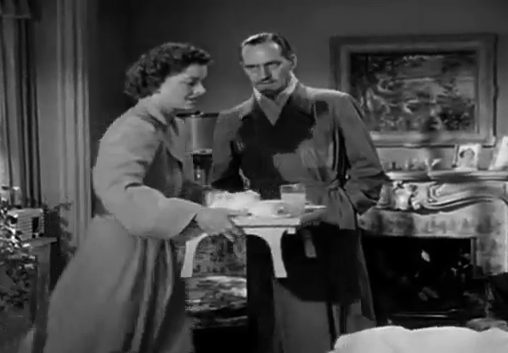
It is also at this moment that the film takes a turn, and we know what we are about to see unfold. We see Fred and Al return to their families, and each of them experiences a different kind of homecoming. Al returns home to wife and children who have essentially become strangers. Myrna Loy plays Milly, Al’s wife, with skill and grace, embodying the housewife who has been living life without her husband for 4 years, and experiences a form of culture shock when he returns. There is a scene in which Milly fixes Al breakfast in bed, trying to reconstruct the life they had before he left. It is intensely awkward, with Milly rarely looking Al in the eye throughout the entire scene, and making seemingly banal conversation. It is an indication that no matter how hard they might try, the structure of their family is permanently altered.


Fred returns home to a wife who has taken a job at a burlesque revue, and has also taken to having gentleman callers. She wants to go out every night, while Fred prefers to stay in, much to her dismay and frustration. She wonders if he has been hurt mentally, if not physically, as he has changed since he came home from war. It may be inferred from some of the hints that the movie drops about Fred, that he might have been suffering from depression following the war’s end. He has trouble finding a job, and finally  ends up working at his old job, but in a much lower position.

The struggle to find and keep work after returning from war is a major theme in the movie. Homer is unable to work due to his disability. Like Fred, Al is offered his old job at a bank, but, unlike Fred, in a higher position. However, he runs into trouble when he gives a loan to a former soldier with no collateral, in an act of camaraderie and empathy for his situation. He is also affected by a drinking habit that embarrasses him and the company when asked to give a speech at a company meeting.

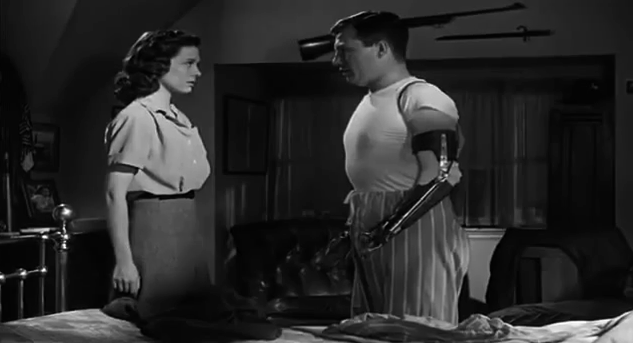
Homer, who initially seemed unfazed by his disability, quickly begins to display insecurities when faced with the denial of his family. Homer’s family is absolutely fascinating, because all of their communication about Homer’s disability is exchanged through glances. There is not one word spoken about it. It is only Homer’s girlfriend who will talk openly and honestly about it, and she makes it clear that it makes no difference to her. Before the war, Homer had promised her that when he returned they would marry, and Homer expresses doubt that he’s good enough for her with no hands. The girlfriend reiterates that whatever he needs done, she will do. When Homer demonstrates for her what that means by showing her how he removes his hooks at night and gets ready for bed, the girlfriend gently and lovingly removes the hooks from the bed and sets them aside, lovingly buttoning Homer’s pajamas. It is a very touching scene, and shows the audience what it means to truly dedicate oneself to a newly disabled loved one.


The three soldiers remain relatively close, and often meet at Butch’s Bar, a joint that Homer recommended when they were on their way home. It is here that Fred, unsatisfied and frustrated with his life at home, begins to fall for Al’s teenage daughter (played by Teresa Wright). Though in the grand scheme of things, this is a relatively minor plot point in the movie (the main plot points being related to the soldiers’ struggles in reintegrating into society) and occurs toward the end of this 3-hour movie, it is, obviously, significant in reshaping the dynamic both in Al’s and Fred’s family life. Al becomes suspicious of Fred and also of his daughter, while this is the final straw in an already broken marriage between Fred and his wife. Though the relationship is unresolved at the end of the movie, it is inferred that Al’s daughter stays with her high school boyfriend, to Fred’s approval. The movie ends at Homer’s wedding with his girlfriend. All’s well that ends well in this movie that, in the bulk of it, deals with harsh realities, and at the end, offers a projection of hope into the future.

It is interesting that, with the slightly possible exception of Fred’s wife, there is no bad character in this movie. Everyone is portrayed in a very real way, with all the flaws that come with coming to terms with a returning veteran, and Wyler is careful not to allow judgment to pass on any character. Every action that might be considered mean or problematic, is qualified by the notion that this is a new situation for all involved. Even a character that Homer encounters at Fred’s soda fountain who chides the United States, in front of Homer, for entering the war at all, is excused by his own ignorance of the situation and what to say to returning veterans. The movie is above all an exploration, not a derision, and the purpose is not to pass judgment on people still coming to terms with the effects of war, but instead present a realistic and honest view of what the country was going through.

It is striking just how modern this movie is, and very relevant to what is going on today in the political climate of the United States. I think it would behoove many of us today to revisit this movie, for our own benefit and for the benefit of those who are currently returning from active duty. Its themes are timeless and important, and we can learn a lot not only about the ravages of war on all levels, but about the effects on the family and, ultimately, about ourselves.

A Bit Late, But…

I realized that I never officially posted our most recent accolades! Well, without any further ado…

Backlots has been nominated for the 2012 CiMBA Awards in the categories of Best Blog Design…

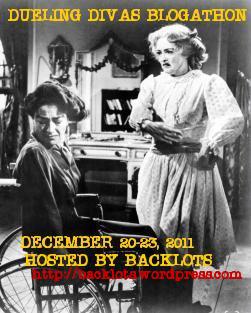
…AND Best Blog Event, for the Dueling Divas Blogathon I hosted on this site last December.

(By the way, stay tuned over the next few weeks for an important announcement regarding this year’s Dueling Divas Blogathon! Yes, it’s happening again!)

It was an honor to be nominated among several other extremely high quality blogs–the Classic Movie Blog Association holds a very high standard to be met, and never is it more evident than in their yearly awards. To my great shock and humility, I had the privilege of winning a CiMBA Award last year for my discussion of the final scene of The Heiress, and when I found out that I had been nominated again this year in 2 categories, I was thrilled.

I must say I am rather proud of Backlots’ blog design. It took me a good bit of time to create the banner, as WordPress is strict about the size limits that must be respected, and I cut, copied, pasted and screenshot for a good half an hour to create the banner as it looks today. It is the same image that now appears on Backlots’ business card, and I get many compliments on how nice it looks when I hand out my card so I’m very happy that it got some formal recognition!

I was excited about the prospect of a Dueling Divas blogathon. I wanted to make it unique and appealing to a wide audience–ranging from Bette and Joan to Judy and Grace to Hayley Mills and Hayley Mills, and the posts that came in reflected that diversity that I tried to impart from the beginning. I hoped it would be enjoyable, I certainly enjoyed it and it’s nice to hear others felt the same way.

As I mentioned earlier, stay tuned, because those Dueling Divas will be back at it this December and this time–there will be a twist!

Thank you to the CMBA, and thank you to my readers for encouraging me in this blogging adventure. I couldn’t be happier, and I’m humbled just to be in the same league as some of these blogs.

Congratulations and good luck to all the nominees!

A Stanwyck Sunday

While bumbling around my apartment this morning, mentally outlining the tasks to be done today over a rather tasty piece of challah french toast, I noticed that the “record” light on my cable box was illuminated. “That’s strange,” I thought, “I don’t remember programming anything today.” I turned on the TV and immediately knew what I was looking at–a woman with an unmistakable baby face with a slight overbite, devilish, playful eyes, and slender, catlike figure was pleading with a Chinese general for the life of a slave woman. “Oh!” I thought, “It’s The Bitter Tea of General Yen!” My trusty DVR had remembered what I had not–there was a Barbara Stanwyck movie on today.

“The Bitter Tea of General Yen” (1933).

Barbara Stanwyck is a unique personality in the film world. Known as “the best actress never to have won an Oscar,” she was lauded for her versatility and skill in everything from suspenseful murder plots (Double Indemnity) to zany screwball comedies (Ball of Fire), and everything in between. But through it all, Barbara Stanwyck never stopped being Barbara Stanwyck, and it is this tough and gritty dame from Brooklyn that permeated all her roles, causing audiences to fall in love with her and flock to her movies.

The combination of New York sass and unusual beauty set Barbara Stanwyck apart, and though she lacked the flawless loveliness of Gene Tierney or Lana Turner, she exuded a confident and dominating presence that belied a childhood filled with trauma and abandonment. Instead of letting her childhood make her a victim, the former Ruby Stevens was strengthened by it, incorporating those lessons she learned as a child into her adult persona as an actress.

Orphaned at the age of 4, Stanwyck (known by her birth name of Ruby Stevens until she began her acting career) grew up on the streets of Brooklyn, cared for by an older sister and intermittent foster parents, but the majority of her life was spent on the street, where she learned to fight, curse like a sailor, and otherwise defend herself physically and verbally. She left school at the age of 14 and got a series of odd jobs which eventually led to a place in the chorus of a play called The Noose. Following the success of that production, she was cast in Burlesque, which made her a Broadway star and caught the attention of Bob Kane, who urged her to come to Hollywood for a screen test. From there she gradually rose to fame until she was one of the most highly sought-after stars of the 1930’s and 1940’s, with earlier films like Night Nurse (1931), Baby Face (1933) and Stella Dallas (1937) paving the way for such 1940’s classics like The Lady Eve (1941), Ball of Fire (1941) and Double Indemnity (1948).

The Lady Eve, 1941.

Double Indemnity, 1948.

Her personal life was rocky at best–her marriage to Frank Fay broke up due to alleged domestic violence, and Stanwyck won custody of their adopted son Tony. She then married actor Robert Taylor, with whom she stayed for 14 years before their their divorce in 1950. Tony became increasingly troubled, and Barbara, having been raised without parents of her own, had problems knowing what to do with him. Eventually the two became estranged, and stayed that way until Barbara’s death in 1990.

When the popularity of television became apparent, Stanwyck made an easy transition to the world of the small screen, appearing in a prominent role as Victoria Barkley in “The Big Valley” which aired for 4 seasons from 1965-1969. In this role, she was able to show off the versatility she displayed as a movie actress, and made it clear that 20 years past her prime, she still had it.

Stanwyck had many friends in Hollywood, and had an especially close friendship with William Holden. Holden had paid an unexpected tribute to Stanwyck in 1978 when they were onstage together presenting an Oscar for Best Sound, crediting her with saving his career when it was in jeopardy. In return, when Stanwyck won an honorary Oscar at the Academy Awards ceremony in 1982, she dedicated the award to Holden in a rare display of emotion, reminding us that this tough, brassy character was wonderfully, beautifully human.

Following smoke inhalation on the set of The Thorn Birds, Stanwyck developed a severe case of bronchitis that soon turned to chronic obstructive pulmonary disease (COPD). The prognosis was not helped by the fact that Barbara had been a smoker since age 9, and she died on January 20, 1990, of a combination of COPD and heart failure. Her ashes were scattered in Lone Pine, CA.

Today, Barbara Stanwyck’s memory is very much alive, and she is familiar to many younger television viewers today due to the reruns of “The Big Valley” that run every day on the TV station INSP. She has become a legend in the community of the young classic film enthusiasts, with those of all genders and persuasions proclaiming their love for her. Turner Classic Movies is very much aware of Barbara Stanwyck’s popularity, and due to this demand, she is slated to be the Star of the Month for the month of December. Every Wednesday, she will be honored with the best films of hers in the prime time slot continuing on into the night.

Barbara would be absolutely thrilled. Not bad for an orphan from the streets of Brooklyn.

The Aesthetics of “Sunrise” (1927)

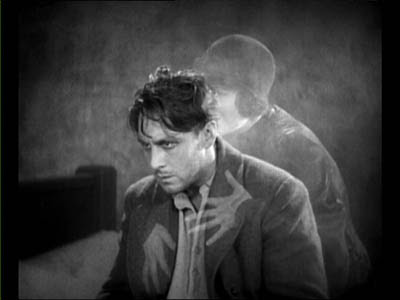
A scene filmed in double exposure in “Sunrise.”

A foreseeably grim story about a man intent on killing his wife in order to live with a seductress gradually fades into a simple, beautiful, heartwarming tale of devotion and love, in this 1927 silent masterpiece by F.W. Murnau. Starring Janet Gaynor and George O’Brien, Sunrise (the full title is Sunrise: A Story of Two Humans, but it is most often referred to as simply Sunrise) is considered to be one of the best silent films ever made, and like the seminal film The Jazz Singer, released later the same year, it incorporated a wide variety of synchronized sounds occurring throughout the movie. We hear car horns, the squeal of a pig, even human voices in the sounds emanating from a large crowd. To audiences in 1927, this was a real spectacle.

Following the release of The Jazz Singer, movie studios were faced with the reality that the future of silent pictures would be extremely short. Though silents did not disappear overnight, they began to slowly fade until 1929, when silent cinema all but became extinct. Sunrise, though released 2 weeks before The Jazz Singer,seems to bridge the gap between the great silent films and the beginning of great sound films, incorporating truly the best of both worlds–the fading silents and the rising talkies.

In addition to the film’s use of audio, it also utilizes magnificent cinematographic techniques that enhance all of the emotions involved in the story. A rather odd font choice is used for the intertitles, suggesting a scary story to come with its large, uneven, drippy type. However, the intertitles are used very sparingly, and Murnau relies most heavily on the environment and the actors’ faces to tell the story. The use of double exposures, cross-fades, and skillful cuts transports us from one mindset to another–from hating the husband as he is about to kill his wife, to sympathy for him in his guilt in ever wanting to commit such a crime. It also brings worlds together–in the opening shots, in which it is shown through a superimposed intertitle that this is “Summertime, vacationtime,” we are taken from a bustling train station in the city to a shot of vacationers sunning themselves on a beach, to a shot of people boating on a tranquil lake in a serene countryside. Each is clear in its emotional intent, and the scenes work together in harmony to create a lovely wholeness to the feeling of summertime.

The temptress and the man, with the beckoning of the city apparent with the city party scene looming over their heads.

The temptress, who urges the man to kill his wife, is shown in a beautiful double-exposure shot almost as a demon inside his head. She appears and disappears like a specter, and he is possessed by her power. At the end, when all is well with the man and his wife, Murnau creates the opposite image–she returns to the city on the back of a cart, dejected, with her head down, the defeated warrior for a man’s affections. The image is powerful, and I, as a rather oversensitive human being, felt bad for her.

Janet Gaynor, as the wife, is truly stunning in this role. Playing a beautiful innocence and naïveté, but with a soul you can feel, she inhabits the character and you feel that under that innocence lives a strong woman. Her performance earned her the Academy Award for Best Actress of 1927/28, in the very first Academy Awards ceremony in 1929. It was one of three films that earned her the award, due to the nature of the Academy Awards for the first three years of its existence, and in addition to Sunrise she won for her performances in Seventh Heaven and Street Angel.

Janet Gaynor receiving her Oscar from Douglas Fairbanks at the first Academy Awards ceremony.

The title is interestingly symbolic–though at the outset, it may be read as simply the timing of the last shot of the film, it also symbolizes the rise of a new understanding and relationship between the husband and wife. The beginning of the film is bleak and dark for both of them, as the husband is intent on a life with his mistress. When he realizes how much he loves his wife, this is the beginning of their own personal sunrise. The majority of the film leads up to this moment, where the physical sunrise in the sky meets with their personal sunrise as a couple. Given the progressive nature of this work, it is also, in a way, ironic that the film is called Sunrise–as coming on the heels of both The Jazz Singer and the rise of talkies, it heralds the dawn of a new era in filmmaking.

The final shot of the sun coming up over the house of the man and his wife.

The Double Standard of “To Be or Not To Be” (1942)

At the outbreak of World War II, before the bombing of Pearl Harbor leading to the United States’ involvement in the war, there were a number of films made poking fun at Hitler and Nazism in general, always portraying Hitler as a sort of bumbling idiot and the object of ridicule. Probably the most famous example is the 1940 Charlie Chaplin classic The Great Dictator, in which Chaplin portrays Adenoid Hynkel, a Hitler-like character ruling the country of Tomania with an iron fist. However, the film I would like to explore today is somewhat lesser-known than The Great Dictator, yet carries a good deal more weight considering that the film’s release was the unfortunate victim of superbly bad timing.

This incredibly fast and complex story of mistaken identity in war-torn Poland, starring beautifully funny Carole Lombard and multi-talented Jack Benny, is dark humor at its best, concerning a group of actors who get mixed up with Nazi spies.The film is intended as a satire, and it is an uproariously funny piece that holds up extremely well with the passing years. Interestingly, it plays very much like a Mel Brooks comedy, with dialogue that could have easily been written by Brooks and scenarios that could have come from his comedic mind. Lending credibility to this statement, Mel Brooks did indeed remake this film in 1983, this time starring Anne Bancroft in the Carole Lombard role and Mel Brooks in the one played originally by Jack Benny. It is not hard to understand why it so appealed to him.

Carole Lombard and Jack Benny.

The filming of this movie began in October of 1941, while the U.S. was still at peace with the world, though Hitler had invaded Poland the month before and Europe was already in shambles. When Pearl Harbor was attacked on December 7, 1941, prompting the United States’ entry into World War II, To Be or Not To Be was just wrapping production, which was finalized on December 23. All of a sudden, this satirical parody of the Nazis didn’t seem so funny anymore. When the film was released on March 6, 1942, it angered critics and much of the public, who claimed that the film’s light treatment of the war which was now all too real to them, was inappropriate and offensive.

And as if that weren’t enough, To Be or Not To Be had another problem to contend with.

Carole Lombard in Indianapolis on the day before her death–January 15, 1942.

Shortly after filming was completed, Carole Lombard, an active liberal Democrat who was always eager to support political causes, embarked upon a tour to raise bond money for the war effort. On January 16, after raising $2 million in war bonds at a rally in Indiana, she boarded TWA Flight 3 back to Los Angeles. After re-fueling in Las Vegas, the plane took off again, but for reasons that are still unknown to this day, suddenly and brutally crashed into Potosi Mountain, killing all 22 passengers onboard. The smart, witty, universally loved star whose future looked extremely bright, was among the first casualties of the U.S. war effort.

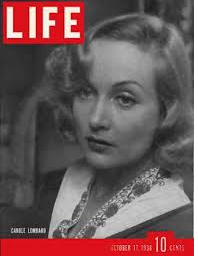
One of my all-time favorite images of Carole Lombard that graced the cover of Life Magazine in 1938. I have this magazine in my personal collection.

With Lombard’s death, To Be or Not To Be had to be re-examined. In light of the circumstances, a line was removed from the print: a line in which Lombard, in reference to a plane ride with an admirer, says “What can happen on a plane?” Though upon release Lombard’s performance was hailed as one of the great comedic performances up to that point (as often happens when a film is released after a star’s death), the reality of her passing combined with the shifted connotations of the content creates a film that is funny, sad, and poignant all at the same time. What is created is a supreme work of irony–the circumstances surrounding the film mold it into something that it was not conceived to be, but much like an accident in the kitchen may lead to a new recipe, the concept works marvelously nonetheless. It is a highly enjoyable film, but with a sad quality throughout that can only be read from the future, knowing what we know now.

Here is the opening scene, which gives you a good taste of how the movie will play out right from the beginning. Note “Hitler”‘s utterance of “Heil myself” at 2:58, which was directly appropriated into a song in Mel Brooks’ Broadway musical The Producers.