I have just received confirmation that for the second year in a row, Backlots will have the honor of providing official press coverage for the TCM Classic Film Festival, April 10-13 in Hollywood. The TCM Classic Film Festival is perhaps the biggest festival focusing on classic films in the country, and one that is very highly anticipated throughout the classic film community.
Over the span of four days, film fans have the opportunity to attend screenings at such historic locations as Grauman’s (now TCL) Chinese Theater, the Egyptian Theater, the Pantages and the El Capitan, hear panel discussions with key figures from the classic film era, and mingle with other classic film devotees. It is truly the experience of a lifetime, and I have been lucky enough to witness it firsthand. I am honored and privileged to be able to repeat that experience.
Some of the highlights of this year’s festival will include guest appearances by Maureen O’Hara (whom your author had the pleasure to meet in Ireland a few years ago), Richard Dreyfuss, Mel Brooks and Margaret O’Brien. Jerry Lewis will be getting his hand and footprints cemented at Grauman’s Chinese Theater, and TCM will also be honoring the music work of Quincy Jones.
With Maureen O’Hara in Glengarriff, County Cork, Ireland in June 2011.
As this year is the 75th anniversary of that phenomenal year 1939, the festival will include screenings of Gone With the Wind, The Wizard of Oz, and many more screenings from 1939 and beyond to be announced in the near future. The much-anticipated red carpet opening night event will be a screening of a newly restored version of the musical classic Oklahoma!, with Shirley Jones in attendance.
As usual, I will be making a post at the end of each day, outlining that day’s unique and exciting events. I will also enable a live Twitter feed on the blog, and will be updating social media frequently throughout the festival.
For those of you in the Los Angeles area, or those willing to come to the area, there are still passes available. Check out the festival website for all the updates! If you are unable to get a pass, TCM also sells individual tickets for screenings the day of. The website also features the latest announcements and news, as well as an extensive Frequently Asked Questions page and an extensive list of places to stay in Los Angeles.
Today is Oscar Sunday, and your author is in rain-soaked Los Angeles today trying to stay dry. Tonight, right down the street and for the 86th time in history, the Academy will pick what it considers to be the best achievements in filmmaking over the past year.
To many people, the Oscars are synonymous with glamour, fame, chic, and high fashion. The one night when the stars we see on the screen come together to celebrate the best among them, in the best outfits from the best designers. We see joy at wins and barely masked sorrow at losses, a lavish ceremony punctuated by long breaks for expensive commercials. It has become a moneymaker and a television extravaganza, and genuine appreciation for the talented winners is often trumped by concern for corporate sponsors and commercial breaks.
But it has not always been this way. The Oscars of today would be almost unrecognizable by those who attended the first Academy Awards 86 years ago, in a small room in the Hollywood Roosevelt Hotel on May 16, 1929. It was a private dinner with awards announced in advance for the best and brightest of the years 1927 and 1928. Janet Gaynor won a Best Actress Oscar for 3 roles (Seventh Heaven, Sunrise: A Song of Two Humans, and Street Angel), while the Best Actor Oscar went to Emil Jannings for two (The Way of All Flesh and The Last Command). The entire ceremony lasted for 15 minutes, and it was not broadcast over any medium.
Janet Gaynor receives her Oscar from Douglas Fairbanks.
Over the years, the Oscars morphed into what they are today. With the advent of television and corporate sponsorship of the telecast, the ideas, morals, and priorities have shifted to make the Oscars primarily a moneymaking endeavor for the network on which it is broadcast. That does not mean, however, that the Oscars themselves have lost their significance. Despite the capitalistic drive of the Oscar telecast, the Oscars remain an integral part of the industry and influence forever the lives of all who are nominated or win. They have become a part of our cultural fabric.
Owing to the mass audience that the Oscars attract and the interconnection between the ceremony and culture as a whole, the Oscars have a reputation for being political, whether those politics manifest in choice of winners, in speeches, or in occurrences during the ceremony. National and world struggles have often been reflected during the Oscars, and they have helped shape the lens through which we perceive what goes on in our world.
Here are some classic Hollywood Oscar moments that have interwoven into our national dialogue.
HATTIE MCDANIEL WINS BEST SUPPORTING ACTRESS FOR GONE WITH THE WIND, 1940
For a film whose premiere she was not allowed to attend, and at a segregated ceremony in which she was relegated to the back of the room, Best Supporting Actress nominee Hattie McDaniel won the Oscar for her portrayal of Mammy in Gone With the Wind at the Academy Awards in 1940. Her speech is, in my opinion, one of the most eloquent and heartfelt of any speech ever given at the Academy Awards.
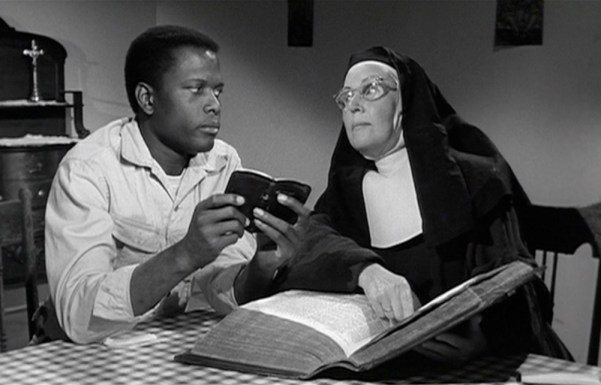
SIDNEY POITIER WINS BEST ACTOR FOR LILIES OF THE FIELD,1964
In the same vein, at the height of the Civil Rights Movement in 1964, Sidney Poitier won Best Actor for his role in Lilies of the Field. It marked the second Oscar in history for a black actor, after Hattie McDaniel’s historic win in 1940. After the ceremony, Poitier declined to comment on the significance of the occasion to reporters, preferring to reflect further before making a statement so important given the times.
JANE FONDA WINS THE OSCAR FOR KLUTE, 1972
In 1972, Jane Fonda won the Oscar for Klute in the wake of her active campaigns against the Vietnam War. She was a very controversial figure in Hollywood at this time and during her speech she acknowledged the controversy by saying “There is a great deal to say…and I’m not going to say it now.” A few months later, Fonda went to Hanoi to continue her anti-war campaigning, becoming known to a generation as “Hanoi Jane.”
IMAGE DESCRIPTION: Logo for TalkingFlix (“talking” in green, “flix” in black, bordered by three black lines indicating sound. Below, on blue background with white lettering: “The first global Audio-Described On-Demand entertainment platform. Below that: URL of talkingflix.com, next to “A service by Crossway Media Solutions.”
Earlier this morning, a friend of mine approached me with the announcement that she has just learned of TalkingFlix, the first fully audio-described video service, to be launched later this year. This is big news for many blind and visually-impaired movie lovers, who have been unfairly overlooked in most mainstream movie outlets. Online video streaming services on the whole have been slow in adapting their films to be accessible to people with hearing and visual difficulties, and though Netflix has promised to add captions to 100% of its movies by the end of 2014 to make them accessible to deaf customers, little has been done to make movies accessible to blind viewers. TalkingFlix would add audio description, a method of describing a scene verbally to set the scene for a viewer who can’t see it, to 100% of its movies as its primary business model.
While the emergence of TalkingFlix is exciting news in itself, my friend, who is blind, immediately saw the implications for what this means regarding a certain group of films that she has not as yet been able to experience–the silents.
IMAGE DESCRIPTION: A scene from the silent film CITY LIGHTS, in which a seated woman in a black coat is handing a white flower to Charlie Chaplin, who is standing across from her. She is looking past him (the character is blind) and smiling.
Silent films are a bit of a conundrum when it comes to accessibility. Due to the built-in captions and lack of reliance on dialogue, silent films seem custom-made for the deaf community. Silent film festivals draw huge numbers of deaf patrons and sign-language interpreters are often employed for pre-movie talks and discussions to make the festival fully accessible for deaf audiences. However, for the very same reasons, these films have been largely inaccessible to blind audiences. Without the accompaniment of a seeing person to explain what is happening visually, a blind viewer would not be able to enjoy a silent movie to its full extent. With the advent of this service, all that has the possibility to change.
The website for TalkingFlix does not expressly mention silent movies, and it is likely that due to the novelty of silent film for blind customers, the idea is not on their radar. But the website has an anonymous survey that prospective customers can fill out to “shape TalkingFlix into your personal entertainment center.” If you, like my friend, would like to see silent films on TalkingFlix, be sure to visit their website and take the survey to help them shape the company into one that will allow silent films to be accessible to a wider audience. Not only will it allow silent films to be experienced in a completely different way, it will do that much more to extend the visibility of silent movies into a broader demographic, something that is much needed as many of these movies are in danger of fading away.
Be sure to visit the website, take the survey, and stay up-to-date on the imminent launch of TalkingFlix!
Upon checking my inbox earlier today, I found that I had received a letter from Susan Pfeiffer, secretary and beloved friend to Joan Fontaine. Susan and I have been in touch several times–last October when I conducted a written interview with Joan, it was Susan who helped with the correspondence and was an integral part of the interview coming to fruition. And when Joan passed away this past December, we were in touch again. Susan was a very important part of Joan’s life during her last decade. She knew her perhaps better than anyone over these past few years, and in her letter to me today, she asked to clarify some things she has heard over the years about Joan, her life, her legend, and her character.
I have long been protective of Joan, as I feel that she was terribly misunderstood by many people. A progressive thinker and very sensitive to the plight of animals, she was ahead of her time in many ways, in ways inconceivable to most of her generation. In her letter, Susan opened up to me about some of the misconceptions that she often comes across regarding Joan and her life. I am deeply humbled that Susan chose Backlots for this honor.
Joan spent her final years in quietude (she had no computer and no presence on the internet, as has been incorrectly reported), in a beautiful house in Carmel overlooking the Pacific Ocean. When she passed away on December 15, there was some talk that she was cremated and her ashes were scattered on the Pacific Ocean close to her home. Susan would like our readers to know that this is not true–though Susan did not disclose Joan’s true final resting place, she would like us to know that Joan’s ashes were not scattered in the Pacific. There were countless places very special to Joan–she was a woman who loved deeply and became attached to many people, places, and things. Susan describes her as “one of the kindest, loving women I have ever met.”
Joan had two daughters, Deborah (born in 1948) and Martita (a daughter born in Peru in 1946 who came to live with Joan in 1951). In her teens, Martita went through some problems and there was a rift between them. Joan discussed this in her autobiography and as she was a private person who didn’t talk much about her private life, people assumed that the rift remained and Martita and Joan never made up. But, Susan tells us, that rift healed, and healed well. Martita and Joan were close as adults, and Martita came to Joan’s home in Carmel for a visit during Susan’s years with her. She was close to both of her daughters–Deborah and Martita both sent flowers and cards for birthdays and holidays, and they talked often on the phone. Susan tells us: “Joan saved all the cards and letters sent by both Martita and Deborah. They meant a lot to her. She loved both of her girls.”
Playing with her daughters, circa 1955.
Perhaps the most discussed part of Joan’s life was her relationship with her sister, Olivia de Havilland. As with many siblings, their relationship was one of very serious ups and downs. At the time of Joan’s death, she and Olivia had not spoken for a long time. Joan is often maligned for this, and Susan tells of countless letters from fans advising Joan to “mend fences” with Olivia, and chastising her for not attending the ceremony when Olivia was awarded the Legion d’Honneur (Joan never received an invitation and didn’t learn of the event until after the fact). However, Susan wants to make it very clear that Joan had no hard feelings toward her sister and that she “never saw any animosity toward Olivia.” Susan tells me that Joan was once approached about the possibility of an on-air interview with her and Olivia together, and Joan agreed to it. Unfortunately, the interview never came to pass and the sisters never had the opportunity to come face to face again.
Sisters share a smile in 1967.
In addition, Susan recalls speaking with Joan about a rumor regarding her and Errol Flynn being lovers. Errol and Joan were friends/acquaintances, writes Susan, but never lovers. Susan also wishes to clear up a rumor about Joan and Howard Hughes. “Joan never had an affair with Howard Hughes,” she writes. “She was not attracted to him.” This is also corroborated in Joan’s autobiography, in which she relates that Howard Hughes made several passes at her, but she was never interested.
Closing her letter, Susan gives us one final, beautiful insight into Joan Fontaine, the person: “She cared about everyone, and everyone who met her, fell in love with her. She was very special and will be greatly missed.” A true testament to a gentle, caring soul.
Thank you to Susan Pfeiffer for these wonderful insights into a woman who truly is greatly missed.
Judy Garland, one of the most prominent and visible legends of Hollywood cinema.
In 1999, the American Film Institute ranked those it considered to be the top 50 screen legends–25 male, 25 female–actors whom they considered to have had a considerable impact on our film culture and the cinematic landscape of Hollywood. The rules stipulated that in order to be considered for “legend” status, the actor had to have either 1) made his screen debut in or before 1950, or 2) died, thus leaving a completed body of work. This resulted in a list comprised of mostly actors from the classical era of Hollywood (a term that denotes the years between 1927 and 1963), but featuring several exceptions from influential stars who have since passed on. The list was released with great fanfare, and as a 13-year-old already enthused about classic Hollywood, I was just so happy to see my favorite stars’ names in print that I didn’t stop to think about whether or not I agreed with the rankings. I took the list as the be-all, end-all on who was the best in the business.
Katharine Hepburn and Humphrey Bogart, who got the number one male and female spots on the list, together in THE AFRICAN QUEEN.
A few weeks ago, I decided on a whim to revisit the list. What I found gave me an entirely new perspective on what the list meant. I realized that this was not a list of the best actors in the business, but rather of the biggest legends. And I got to thinking about what that meant.
What is a legend? The word, by its very nature, connotes something immortal. And in order to stand the test of time, one must have qualities that go above and beyond what is seen in the normal course of life. In the movie industry, it seems to take on a unique form–a screen legend has contributed, in one way or another, to the formation of our psyche as moviegoers–they are indelibly linked to our concept of what makes up our cinematic landscape.
And how does one become a legend? I would say that it’s a combination of talent and star power, with a certain element of being in the right place at the right time in terms of audience taste. Marilyn Monroe, for example, is a clear example of how the combination of those three things can make an explosive Hollywood legend. Monroe, blessed with charisma, a huge amount of intelligence and winning talent (her talent would often be seen through the lens of the dumb blonde characters she played, one of the hardest characters to play well), she also reaped the benefits of coming onto the Hollywood scene when something new and different was welcomed. Nobody had ever seen anybody like Marilyn Monroe before, and her novelty fascinated and enthralled filmgoers. Her tragic early death, less than 15 years after her screen debut, has frozen her legend in time, and we see her as an essential part of cinema history.
Marilyn Monroe talks about her fame
For Monroe, though she had extraordinary talent, the primary vehicle by which she became a legend was unquestionably her star power. Though the difference is sometimes hard to visualize, I would say that star power is a certain energy and appeal that is so attractive to audiences that it keeps bringing them back. Talent, on the other hand, is a skill set that the performer brings to the table and though he or she may not have this certain je ne sais quoi that comes with star power, their abilities leave audiences enthralled and hence, they keep coming back. A prime example of this is Judy Garland in the early part of her career. When Judy Garland first came to MGM in 1935, she was an average teenager in every way–there was nothing unusual about this 13-year-old that would give her any staying power…that is, until she opened her mouth and sang a song. Out came the voice of a woman decades older, with emotion far beyond her years. And it left audiences agape.
Judy Garland sings “Bill” from Show Boat in 1935. She was 12 years old.
After those initial years, after developing a signature vocal and performance style at MGM and in her concert life, Judy Garland would acquire a great deal of star power, and she is now perhaps the greatest legend ever to come out of the entertainment world.
The AFI seemed to draw heavily on star power in forming its list of legends, or at least it seemed that way to me when I examined it again a few weeks ago. It is often very difficult to separate personal taste from assessments of star power and talent, and your humble author is certainly not immune to judgments based on taste. I tried to reconstruct the list based on what I thought were better rankings, and I posted it to the Backlot Commissary (for those of you unfamiliar with Backlots, the Commissary is our Facebook group where we can post content and have discussions). But I’m not happy with my list and keep making revisions, because I have come to the conclusion that there is very little possibility of being objective when it comes to ranking of legends.
Below is the AFI list. Do you agree with it? Leave a comment, and let’s discuss! I look forward to hearing your commentary.
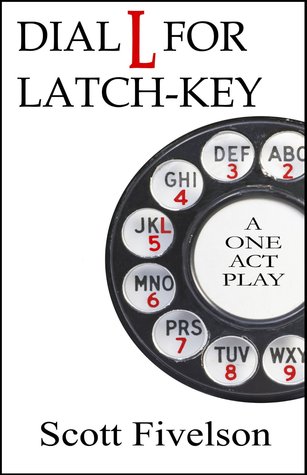
A few days ago I was approached by the multi-talented Scott Fivelson, who brought to my attention two quite interesting works that he thought, accurately, would be of interest to readers of Backlots. The first, a satirical one-act play entitled Dial L for Latch-Key, fits squarely in with Backlots’ very popular Hitchcock Halloween blogathon, and the second deals with classic film in a unique way that I know my readers would find interesting. So thanks to Scott for bringing these things to my attention so that I may inform you, the reader!
Somewhere between Alfred Hitchcock and Monty Python lies the new one-act play by Scott Fivelson, Dial L for Latch-Key, a satire evoking both the suspense of an Alfred Hitchcock film and the humor of an eccentric British comedy. Rife with cultural references that will thrill devoted fans of Hitchcock (and Fivelson even throws in some Monty Python for good measure!), Dial L for Latch-Key is a quirky farce that is a delight to experience.
The playgets its name from the 1954 Alfred Hitchcock suspense film Dial M for Murder starring Ray Milland and Grace Kelly. It is one of Hitchcock’s more unusual ventures, and one of my personal favorites. Fittingly, many plot points from Dial L for Latch-Key are reminiscent of the film, but with zany, slapstick dialogue that could be out of a 1970’s British comedy.
The trailer for Dial “M” for Murder
The play has been performed several times in the United States and England notably at Upstairs at the Gatehouse Theatre in Highgate Village, London, the New End Theatre in Hampstead, and at the Phoenix Theatre in San Francisco, CA. It has also been broadcast on the radio in several cities, and is currently available in print and audiobook formats. Check it out here. It’s a lot of fun!
The second thing Scott brought to my attention is a film that is in post-production called Near Myth: The Oskar Knight Story. It tells the story of director Oskar Knight, and what attracted me to this particular work is the fact that it features several high-profile stars from the film world including the legendary Margaret O’Brien, who provides testimony on what it was like to work with Knight. O’Brien, beloved by many Backlots readers, continues to be active in the classic film community to this day, and will make an appearance at the TCM Classic Film Festival this year. Near Myth: The Oskar Knight Story will be her first film appearance in several years. Stay tuned for announcements about the release of the film! You can follow them on their Facebook page or by visiting IMDB.
Margaret O’Brien, one of the stars of Near Myth: The Oskar Knight Story, dances with Judy Garland in Meet Me In St. Louis.
Thanks for reading, everyone, and I’ll see you next time!
“It is a splendid thing,” remarked President Franklin D. Roosevelt in 1935, “that for just 15 cents, an American can go to a movie and look at the smiling face of a baby and forget his troubles.” The baby Roosevelt was referring to, a curly-haired, dimple-cheeked blonde who captured the heart of the nation during one of its most frightening times, was 7-year-old Shirley Temple.
Today, the world is mourning her. Temple, who ultimately grew out of her Hollywood career and began a second life as prominent politician and diplomat Shirley Temple Black, died today at the age of 85. She leaves a legacy of films that have immortalized her not only in the eyes of children of the Depression, but in the eyes of their children and their children’s children, for whom she represents a bygone era of gentle, innocent sweetness.
In the midst of the worst economic disaster our country has ever faced, people turned to the movies for solace and comfort. The world outside was grim–with breadlines on every corner, shantytowns dotting urban landscapes, and families and businesses on the brink of financial ruin, it would seem that there was little left to live for. But in the darkness of a movie theater, all the problems of the outside world were suspended. Lavish musical numbers delighted us. Beautiful costumes entranced us. And a young child reminded us that an innocent life, free of cares, was still possible amid the squalor of Depression-era existence. In short, Shirley Temple gave us hope.
And it was that simple reminder to look toward happier days that kept alive the spirit of survival in many families. It is no case of luck that Shirley Temple was the biggest star of the 1930s–she represented the dogged childlike spirit that looked toward better times, regardless of the odds. That spirit, so deficient during all trying times, remains intact today. While Shirley Temple herself has died, she lives on through her film legacy, a representation of childhood innocence that gives us hope and optimism in times when we feel we cannot go on.
Several days ago I was approached by a good blogging friend of mine, Vince Paterno over at the marvelous and meticulously researched Carole & Co. Vince was in the process of putting together a blogathon dealing with romantic comedies from the classic era and asked if Backlots would like to co-host. I eagerly agreed!
Though Backlots has put together several blogathons in the past (our annual Dueling Divas blogathon is always a hit, and the Hitchcock Halloween blogathon this past October went off without a..well..hitch!), this is the first time I will be collaborating with one of my fellow bloggers on such an endeavor. Vince is extremely knowledgeable about classic film and, as you can see from his blog, he has an especially abiding love for and expertise on the subject of Carole Lombard, making a romantic comedy blogathon a perfect fit for Carole & Co. and a wonderful area of collaboration for our two blogs.
It Happened One Night, 1934.
For this blogathon, participants are asked to write about a romantic or screwball comedy that piques their interest, and send it to either Vince or me. We will both post the entries on our pages, and I encourage my readers to visit Vince’s site as well once the entries are posted to see discussions happening at Carole & Co. in addition to our own. They are always thought-provoking and very intelligent.
The blogathon will take place between May 1 and May 4, so you have a bit of time to put romance on the front burner and start thinking about those movies! Here are the participants thus far:
STARDUST: It Happened One Night (1934)
CRITICA RETRO: Meet John Doe (1941)
THE LADY EVE’S REEL LIFE: Love is News (1937)
TALES OF THE EASILY DISTRACTED: There’s Always a Woman (1938)
SPELLBOUND: Love Crazy (1941)
THE FILMATELIST: An examination of the films of Eric Rohmer
THEY DON’T MAKE ‘EM LIKE THEY USED TO: Day-Time Wife (1939)
ALL GOOD THINGS:Hands Across the Table (1935)
THE THRILLING DAYS OF YESTERYEAR: Easy Living (1937)
Marion Davies peeks through a plant at her love interest in THE CARDBOARD LOVER (1928)
The preservation and cultural permanence of silent film is a very pertinent topic in the film community right now. Before the advent of VHS, DVD, and home video players, filmmakers had no reason to think that their films would ever be seen again after their run in the theaters was finished. Many great movies ended up carelessly shelved or worse–ended up in the trash can and destroyed. A recent estimate gauged that nearly 90% of all silent films have been lost.
We are extremely lucky that The Cardboard Lover, a truly delightful piece of comedy that has sadly been much neglected, survived at all. It has become a rare film, accessible only in private collections and university archives, and is in desperate need of a restoration. To my knowledge, it has never been shown on TCM.
And what a shame that is. The Cardboard Lover is a clever, well-written comedy in which the primary showcase is Marion Davies’ significant comedic flair. It features a tight plot and solid acting from all the necessary parties, and several subtle gags for which the viewer has to be on the lookout at all times!
One of Sally’s elaborate gags, dressing up as a bellboy in order to better stalk her tennis player!
Marion Davies plays Sally, an American visiting Monte Carlo whose main interest is in stalking a tennis player (Nils Asther) with whom she has become enamored. The rather oblivious tennis player doesn’t seem to realize her crush on him, but when he decides to look for a fake love interest to get back at his two-timing fiancee (Jetta Goudal), she persuades him to hire her. Hilarity ensues with several cases of mistaken identity and, of course, Marion Davies’ spot-on impersonation of the fiancee toward the end of the film.
The Cardboard Lover was made during a watershed time for Marion Davies. After many years of what she considered to be “stuffy” costume dramas at the bequest of William Randolph Hearst (her boss at Cosmopolitan Productions as well as her live-in romantic partner), Marion finally got to show a glimmer of her comedic gifts in The Red Mill in 1927, and the following year she made The Patsy in which she exudes an almost screwball comedy-like energy. It was her greatest role to date. The Cardboard Lover immediately followed, and Marion’s excitement at being able to play comedy is almost palpable. She concluded the year with Show People, making 1928 perhaps the single best year for Marion Davies. It was also marked her final year in silent films, and it was only fitting that she should go out with such a remarkable group of movies.
Show People, the movie that immediately followed The Cardboard Lover.
Many classic film fans will recognize the title and plotline of The Cardboard Lover. It was remade with Norma Shearer and Robert Taylor in 1942, but with several plot differences so as to make it a unique production. Interestingly, Norma Shearer was somewhat of a rival to Marion Davies while they were both working on the MGM lot in the 1920’s and 1930’s, both having connections to two of the most powerful men on the lot. Norma was married to Irving Thalberg, head of production, and Marion was living with William Randolph Hearst, head of Cosmopolitan (which had merged with MGM in 1924). They vied for several roles, the most important of which was perhaps that of Marie Antoinette, a role that Norma eventually played in 1938.
An interesting trivia bit highlights The Cardboard Lover–early in the film we are introduced to a spritely character by the name of “Peppy.” “Peppy” is played by Pepi Lederer, Marion Davies’ niece and older sister of screenwriter Charles Lederer. The daughter of Marion’s sister Reine, Pepi was an aspiring actress who was greatly supported by Marion, but her troubled personal life hindered any success she may have achieved. She became addicted to drugs and alcohol and was eventually placed in a psychiatric ward by Hearst and Marion to cure her addiction. She committed suicide in 1935. A sad end to a light that shone quite brightly in The Cardboard Lover.
Pepi Lederer.
The Cardboard Lover is available through the UCLA Film and TV Archive, but it is missing a score. As mentioned above, it is in desperate need of restoration. Though work is being done to preserve these beautiful films, we have a long way to go in making people aware of just how magnificent they are, and how much attention they need. The Cardboard Lover is a prime example. I would love to see it shown at a film festival, it’s a real crowd-pleaser and a wonderful testament to the gifts of Marion Davies and the entire cast.
On February 1, TCM will begin its annual salute to the Oscars, 31 days of Oscar-winning films shown back to back until the Academy Awards ceremony on March 2. Kicking off what TCM calls “31 Days of Oscar” this year will be a new documentary from acclaimed filmmakers Rob Epstein and Jeffrey Friedman, produced as a joint effort between TCM and the Academy of Motion Picture Arts and Sciences and celebrating the history of the Oscars and where they came from. The production is called …and the Oscar goes to…, and I had the great privilege to be able to see its world premiere this past Thursday night at the Academy of Motion Picture Arts and Sciences’ Samuel Goldwyn Theater in Beverly Hills.
It was a real event, and TCM pulled out all the stops. In attendance were several TCM luminaries including Ben Mankiewicz (who gave a pre-screening introduction) and Illeana Douglas who has served as a guest host on the network. Also there was George Chakiris, best known for his Oscar-winning role as Bernardo in West Side Story and for his role as a dancer in several high profile musicals. I was also glad to see many of my fellow classic film bloggers, along, as I was, to cover the screening.
George Chakiris, here in the red jacket as Bernardo in WEST SIDE STORY, attended the screening of …AND THE OSCAR GOES TO… on Thursday.
Before the film began, we heard a talk by the directors and saw a beautiful promo for TCM’s “31 Days of Oscar.” In the 31 days leading up to the Academy Awards, TCM often makes some of its most brilliant programming choices–as the films chosen are all Oscar winners, they are almost universally superb, and TCM’s “31 Days of Oscar” is a highly anticipated event in the classic film community.
…and the Oscar goes to… began at 7:30. It tells the story of the Oscars from its inception in 1927 straight through to the present day, with ample anecdotes and stories behind many of Hollywood’s finest Oscar moments. It draws on interviews from contemporary stars and directors such as Whoopi Goldberg, Steven Spielberg, and Michael Moore to illustrate what the Oscars are all about, and uses plenty of archival footage to show the audience what the Oscars were like before the popularization of television. I was happy to see the film feature several of my very favorite Oscar speeches of all time, including those given by Hattie McDaniel at the Academy Awards of 1940 and Dustin Hoffman at the Academy Awards of 1980.
In Dustin Hoffman’s speech, he talks about the fallibility of the Oscars and the inherent unfairness in competition between peers. I was pleasantly surprised to see that the film is quite unbiased in its attitude toward the Oscars. Instead of the Academy flouting what it does as somehow the be-all, end-all in Hollywood, it highlights several people who emphasize the idea that the Oscars are not really what Hollywood is all about. My absolute favorite quote from the film came from a director who said that everyone thinks the Oscars are the real Hollywood. They are not, he said. He continued on to say that the real Hollywood is seen when the actors, directors, and crew members show up on the set the day after the lavish Oscar party, wearing jeans and eating bad doughnuts and drinking stale coffee. Hollywood is not the Oscars, he emphasized. Hollywood belongs to the people who work all day and all night for the perfect shot and put their blood, sweat and tears into what they do.
Following that quote, the entire theater burst into applause.
There are a number of awkward segues that could be fixed in the editing room, but all in all, the film was a success and lots of fun to watch. This screening was the first time …and the Oscar goes to... has been shown in public, and I would venture to say that the awkwardness of the segues may be fixed before the film airs on TCM. I would highly recommend that you catch it when it kicks off “31 Days of Oscar” on February 1 at 8:00 PM EST, as I think it provides a wonderfully intimate glimpse into this storied Hollywood tradition.
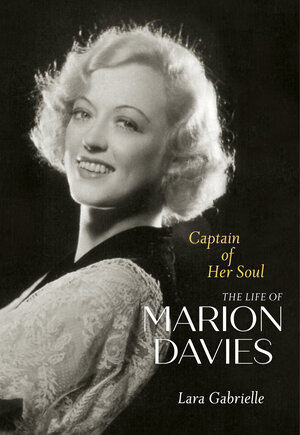
Captain of Her Soul: The Life of Marion Davies is now available at your favorite bookseller! Click hereto order it, and visit mariondaviesbook.com for all the latest.
Backlots is devoted to honoring and celebrating all aspects of classic film and is written by Lara Gabrielle, a California-based classic film writer and historian. Lara is the author of CAPTAIN OF HER SOUL: The Life of Marion Davies (UC Press, 2022).
Here you will find pieces on frequently seen classics and some lesser-known gems, as well as book reviews, festival coverage, and pieces on the history, theory and culture of film as it relates to the study of classic cinema.
Enjoy the site, and thanks for reading!
AFFILIATIONS & AWARDS
2019 CMBA Award for Best Profile of Classic Movie Performer or Filmmaker--"The Activism of Myrna Loy"
Winner of the 2018 CiMBA Award for Best Classic Movie Series, BACKLOTS AT THE COURTHOUSE: OLIVIA DE HAVILLAND VS. FX
Winner of the 2014 CiMBA Award for Best Profile of a Classic Movie Performer or Filmmaker: A Q&A WITH JOAN FONTAINE IN HONOR OF HER 96TH BIRTHDAY
Winner of the 2011 CiMBA Award for Best Classic Movie Discussion, THE FINAL SCENE OF THE HEIRESS
I am honored to be a judge of the Animal Film Festival in Grass Valley, CA.
EVENTS
BACKLOTS ON THE WEB
Join us at the Backlot Commissary, the place for Backlots' readers to share content and discuss movies!
Walter Pidgeon and Greer Garson in "Mrs. Miniver."























_03.jpg)

 Backlots