THE GREAT ZIEGFELD (1936): A Fitting Epic

By Lara Gabrielle Fowler

Between the years 1907 and 1931, the Ziegfeld Follies were the toast of New York. The lavish entertainment spectacle that featured beautiful girls in beautiful gowns was wildly popular among New York’s high society, as was its creator, Florenz Ziegfeld, whose life was as decadent as his shows.

How fitting that in 1936, at the height of the Great Depression, Metro-Goldwyn Mayer (known for removing its audience from their current financial woes with its own lavish musical productions) decided to create a large-scale biopic about the lavish and luxurious life of Florenz Ziegfeld. The 3-hour exploration of Ziegfeld’s loves and losses simultaneously reminds viewers of what life was like when people had money to spare, and acknowledges the problems of the present. Several former Ziegfeld performers appear as themselves in the film, notably Ray Bolger and the legendary Fanny Brice (from whom we hear a few measures of her signature song, “My Man,” but the camera cuts away and the rest of the song is lost. A disappointing cinematic choice, in my opinion!) A reminder that Florenz Ziegfeld was essentially left for broke when the stock market crashed in 1929 resonated with audiences in 1936, still reeling from the stock market crash 7 years prior, as well as audiences of the present day. Ultimately we are reminded that our luxuries are temporary, and that we should not take anything for granted.

William Powell and Luise Rainer as Florenz Ziegfeld and Anna Held.

The story hinges mostly on Ziegfeld’s common law marriage to Anna Held, a Polish-French stage performer, portrayed in the film by Luise Rainer. Ziegfeld (William Powell) is painted as a perpetual ladies’ man, and his line of work certainly doesn’t curtail his propensity for chasing women. Anna tolerates it to a point, but when Ziegfeld is seen kissing a drunk chorus girl, she leaves. Despite his indiscretions, the film makes it clear that she still loves him. Ziegfeld subsequently becomes involved with Billie Burke (Myrna Loy) and when he marries her, Anna is heartbroken.

Luise Rainer won the 1936 Academy Award for Best Actress for her role as Anna, and it is widely said that her scene congratulating Ziegfeld on the telephone was what secured the award for her. Though it is a brilliant and beautiful scene with magnificent acting by Rainer, for me it is the few seconds just before she gets on the phone that stand out as the most emotional moment of the film. The character is miserable, anxious, and shaky, and the emotion exuded by Rainer is raw and shockingly real.

Ziegfeld’s romance and marriage Billie Burke is the most celebrated of all Ziegfeld’s exploits, but gets the least amount of attention in the film. The character of Billie Burke doesn’t come in until 2 hours into the movie, and the exploration of Burke and Ziegfeld gets about half an hour of screen time. The birth of their child is completely glossed over (suddenly the audience is confronted with a 4-year-old child who was never mentioned previously, and is left to the task of deducing that this is the child of Burke and Ziegfeld), and it seems that Metro was in a hurry to get this expensive picture wrapped at the expense of the continuity of the plot.
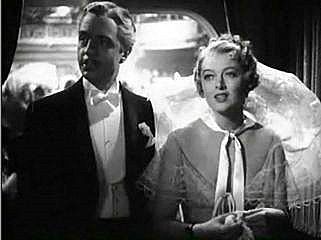
Nonetheless, the last few minutes of the film, depicting Ziegfeld in the throes of bankruptcy and severely ill, is full of poignancy and in itself a representation of the American identity in the 1930’s. Ziegfeld himself, in many ways, represented the 1920’s. Extravagant, joyous, devil-may-care, his attitude was reflected in the overarching sentiment of the country. The stock market crash ruined Ziegfeld just as it ruined the spirit of the 1920’s, and the vision of this symbol of extravagance and luxury lying on his deathbed is one that holds a double meaning for audiences. The film ends as Ziegfeld has a vision of his Follies for one last time–before the flower he is holding drops to the ground.

The film is extremely long, but doesn’t particularly feel that way until the plot begins to speed about 45 minutes before the film’s end. Beautiful performances all around, and I feel that Myrna Loy’s portrayal of Billie Burke could have been a lot more exposed had the studio taken the time to expand the end of the film a bit. Myrna Loy’s high, sweet voice with just a hint of the flitty quality to it that defined Billie Burke’s, it is clear to me why they chose Myrna for the role.

The year after her Academy Award win for The Great Ziegfeld, Luise Rainer starred in The Good Earth with Paul Muni, for which she was nominated for another Academy Award…and won again. This gives her the distinction of being the first person ever to win 2 consecutive Academy Awards. The feat is matched by only 3 other people in history: Spencer Tracy (Captains Courageous, Boys Town) Katharine Hepburn (Guess Who’s Coming to Dinner, The Lion in Winter), and Tom Hanks (Philadelphia, Forrest Gump). Rainer later remarked “It was the worst thing to ever happen to me!” Indeed, Rainer worked very little after her Oscar wins due to her refusal to be typecast, and left Hollywood in 1938
to work on the stage. She retired to London, England, where she still lives, having recently celebrated her 103rd birthday. She lives a semi-quiet retired life, but made an appearance at the first annual TCM Classic Film Festival, on the occasion of her 100th birthday.

Here are some pictures of the real Florenz Ziegfeld, Billie Burke and Anna Held. See you next time!

Anna Held.

Ziegfeld with Billie Burke

The real Billie Burke with Myrna Loy.
A Brief Housekeeping Note…

Hello readers, Lara here to bring you an update on Backlots’ social media presence.

As some of you may have noticed, the Facebook page had a technical issue for quite some time which prevented posts from appearing. However, I am proud to report that the page is back up and running! If you have not yet “liked” Backlots on Facebook, be sure to do so. Now that the page has returned to full functionality, I am going to be posting some fun stuff on the page each day.

You can scroll down to find the link to the Facebook page on the right hand side of this site, or simply click here.

Thanks for your patience, and see you on Facebook!

Deanna Durbin, 1921-2013

By Lara Gabrielle Fowler

We have lost another legend. Deanna Durbin died a few days ago, in her Paris home at the age of 91.

If I were to characterize Deanna Durbin in any way, I would say that she was like a bright comet streaking through Hollywood. She did not stay long–she left Hollywood for married life in France before her 30th birthday–but her presence is still talked about with wonder. She was a child prodigy and a genius, it is said that her young operatic voice has influenced such musical luminaries as Kiri Te Kanawa and cellist Mstislav Rostropovich.

She was born Edna Mae Durbin, and came to Hollywood from her native Winnipeg, Manitoba, Canada, as a baby. She began singing lessons at the age of 10 and by the time she was 14 she was considered a prodigy, securing a contract with MGM Studios. Her first film appearance was in a 10-minute short called Every Sunday, opposite another unknown by the name of Judy Garland.

She was soon transferred to Universal where she established herself as the darling of the lot and a musical force to be reckoned with. In late 1936, taken with Durbin’s talent, the artistic director of the Metropolitan Opera offered her a position with the company. Durbin did not take it, humbly asserting that she needed more singing lessons. But upon viewing her operatic performances on film, one certainly sees a seasoned singer of enormous capabilities.

Her first two marriages ended in divorce, but upon marrying producer Charles David, and after only 26 movies, she left Hollywood abruptly and moved to Paris. She had always disliked the studio system and fiercely defended her privacy through the years, maintaining almost complete anonymity after her marriage to David. Few knew her whereabouts, and only a select few people would receive answers to fan mail.

I often considered writing Deanna, as I have a bit of a connection to her. My paternal grandmother, who died before I was born, was married to a record producing agent in the 1930’s and, for a time, lived across the street from Deanna Durbin. They considered each other close friends and confidantes, and often spent time together when Deanna was not at the studio. Though I don’t think they kept in close touch after my grandmother moved away, due to Deanna’s busy schedule, I often thought of writing to remind her of her friendship with my grandmother. I deeply regret not doing it now.

I am glad that Deanna went her way, on her own terms, and without the hoopla that often accompanies celebrity deaths nowadays. It was quiet, personal, and befitting a woman who deserved our utmost respect.

The most recent picture I have seen of Deanna, beautiful at any age.

LIVE FROM THE TCM CLASSIC FILM FESTIVAL DAY 4 (Closing Day): “Gilda,” Women of Early Hollywood, “It Happened One Night,” “The General,” Closing Night Party

By Lara Gabrielle Fowler

Well readers, the 2013 TCM Classic Film Festival has come to a close. It has been a busy and very exciting 4 days, and your author is at once exhilarated, exhausted, and ready for next year!

In my humble opinion, this 4th day held the best lineup of the festival. Gilda was first on the agenda at the Egyptian Theatre, and though I had seen it on the big screen once before I was all too eager to see it again. The movie tells a story that is complex and hard to follow, but in all truth, the movie is not about the story. The audience is too busy watching Rita Hayworth to have any time for following a plot anyway. It is the ultimate noir, almost a caricature of the genre, and it really seems as though everything  that happens when Rita Hayworth is offscreen is just filler. Rita is the heart and soul of the movie, and because of her, the film is considered to be one of the great noir films of all time. Instead of trying to describe Rita in this movie with words, I will give you some clips so that if you haven’t seen this film, you will see what Gilda is all about.

Hayworth’s performance is rendered even more stunning when one examines who she was offscreen. By all accounts sweet, quiet, and timid, Rita Hayworth was the antithesis of the character of Gilda. She only gave a handful of interviews in her life due to paralyzing shyness, and Louella Parsons (who had met Rita as a teenager just starting her career) noted that she could barely look strangers in the eye. Here she is sultry, sexy, steamy, and an all-around tiger with every man she meets. Suffice it to say, I am of the opinion that Rita Hayworth was robbed of an Oscar nomination for this role.

Our next event happened in Club TCM, a discussion with Cari Beauchamp about women writers in early Hollywood, focusing specifically on Frances Marion. Beauchamp has produced a documentary on Frances Marion, and offered fascinating insight into who she was as a woman, as a writer, and as a member of a fledgling industry. Marion was extremely prolific–one surprising trivia bit Beauchamp related was that out of the 9 pictures nominated for Best Picture at the 1st Academy Awards, Frances Marion had written 7 of them. She eventually left the industry as it became increasingly production- and output-oriented, and she decided to pursue other tasks in which she did not have to compete. She became an accomplished sculptor and painter in her later years.

I must say that I find Cari Beauchamp to be one of the most fun, enthusiastic, and accessible film historians I have ever come across. She is a renowned scholar, and has written highly respected biographies and documentaries, yet her presentations are always down-to-earth and casual, with plenty of humor and no shortage of one-liners. As an example of a classic Cari Beauchamp utterance, she referred to the papers of Fred Thomson (Frances Marion’s husband), noting: “His stuff on de Mille is freaking hilarious.” She is very popular among us young classic film bloggers, enthusiasts, and devotees!

Next up was It Happened One Night, introduced by Cari Beauchamp once again. She pointed out a number of the continuity errors in the movie, ones which I had never noticed in my literally dozens of times seeing this movie. For example, in the famous “Man on the Flying Trapeze” number, the inside of the bus is rocking back and forth while the outside stays still. At one point, Claudette Colbert’s handkerchief disappears and reappears a number of times. The road Clark Gable drives on sometimes has a line, sometimes does not. Regardless of these errors, this movie remains the cream of the screwball comedy crop–one of the very first, and one of the very best.

The next movie was one I was very excited to see–not only is The General (1926) Buster Keaton’s best known film and arguably (or not arguably) his best, but the movie was to be shown at Grauman’s Chinese Theatre, giving it the majestic treatment it deserves. The movie is about a young engineer in Georgia during the Civil War who wants to enlist in the army but is rejected because he would be more use to the South as an engineer. However, when he sits on the wheel of a train to think, the train starts and he is carried to an army base. Buster Keaton antics ensue, and he ends up foiling deserters, hearing enemy plots, and derailing trains from the North. It is Buster Keaton on a grand scale, and his antics are more polished and refined in this movie than they are in his shorts or even his other feature films. I am used to a Buster Keaton whose comedy is mostly slapstick, but this film highlights his ability to create subtle humor through facial expressions. One scene in particular stands out for me–when Buster sees yet another obstacle in his path, he expresses his incredulity through blinks of his eyes. It gives the audience a clear view of what he is feeling, yet Buster never for a minute lets go of his famous deadpan face.

Keaton was also known for dangerous stunts that he performed himself. Here are some stunts from the movie that demonstrate what he was capable of.

The General marked the final event of the TCM Classic Film Festival. A closing night party tied off the festivities, during which we said goodbye to friends and acquaintances that we met here, and even made plans to meet up again before the next festival. I always have fun at the TCM Classic Film Festival, and I can’t wait for next year!

Thank you, dear readers, for following along during these 4 days that seem to have gone by so quickly. I hope you enjoyed this coverage, and I will be resuming regular blogging duties upon arrival back home, including catching up on the Carole Lombard Filmography Project.

See you soon!

LIVE FROM THE TCM CLASSIC FILM FESTIVAL, DAY 3: Jane Fonda’s Handprint Ceremony, “On Golden Pond,” “The Lady Eve,” “Mildred Pierce”

By Lara Gabrielle Fowler

Day 3 started with a bang, as the first event of the day was a very special one. Jane Fonda was scheduled to have her hand and footprints put in the courtyard of Grauman’s Chinese Theatre, right alongside those of her father, Henry Fonda. The event was very crowded, and the security tight and closely monitored. For obvious reasons, this is to be expected at an event for a major celebrity, especially one who is as politically controversial as Jane Fonda. Once all attendees successfully passed the security screenings, the event began. We saw a number of major celebrities in attendance, including Jim Carrey, friend and 9 to 5 costar Lily Tomlin, brother Peter Fonda, and longtime friend Maria Shriver. Jane Fonda’s son gave a keynote address, followed by warm words from Lily Tomlin and Maria Shriver. My friends and I happened to be in a spot where we could see Jane behind the scenes as the speeches were read, and she was clearly very emotionally moved. Because of the massive crowd, pictures were hard to get. Here are a few pictures from the official TCM collection of the event.

Jane and Peter Fonda sit next to their father's hand and foot prints at Grauman's Chinese Theatre.

Jane and Peter Fonda sit next to their father’s hand and foot prints at Grauman’s Chinese Theatre.

pv_23632_006_2248_7

Putting her hands into the cement.

pv_23632_006_2242_7

Finishing the prints.

The ceremony slowly began to break up after Jane’s prints were sufficiently down in the cement, and we began to prepare for the next event–a screening of On Golden Pond (1981) introduced by Jane, clearly the woman of the day. She told some beautiful stories about the filming,  particularly relating to her relationship with Katharine Hepburn on set. Jane Fonda was the perfect person to introduce the film, as she had a position as actor and producer on the film as well as being Henry Fonda’s daughter. It was wonderful to hear her talk.

This widescreen print magnified the lush beauty of the photography, shot on location in New Hampshire with breathtaking shots of the fall leaves and loons. It is a simple story, taken from the stage play about Norman and Ethel Thayer (Katharine Hepburn and Henry Fonda), an elderly couple dealing with the effects of age. Norman’s failing health and grumpy personality alienate everyone around him, but Ethel is devoted to him and loves him unconditionally and with all of her soul. Norman and their daughter Chelsea (Jane Fonda) have a severely damaged relationship due to Norman’s inability to be a demonstrative father, and much of the movie deals with their healing process as Norman nears death. It is a beautiful movie on so many levels. The relationship between Norman and Ethel is one that I think everyone hopes they will have with their spouse as they age together, and watching Hepburn and Fonda together is so touching that the mere thought of it provokes tears.

Next up was the brilliant comedy The Lady Eve, another in the Fonda family pantheon. Henry Fonda plays Charles, the heir to a beer fortune who, unbeknownst to him, gets mixed up with a father and daughter pair of card sharps on a cruise ship. He ends up falling in love with the daughter Jean (played by Barbara Stanwyck), and when Charles finds out who she is, he breaks off the relationship. To get him back, Jean collaborates on an elaborate plan to pose as the Lady Eve Sidwich, fictional niece of wealthy Sir Alfred McGlennan Keith. “Lady Eve” and Charles fall in love all over again, and Charles is none the wiser that this is the same woman with whom he had broken up on the cruise ship.

This is a classic screwball comedy by the brilliant Preston Sturges, who has a unique and specific style that leaves its mark on any movie he makes. As film historian Carrie Beauchamp said at the beginning of the screening, Sturges’ films center on dialogue and a hand-picked, stellar cast. The supporting cast in The Lady Eve is especially good, with Sturges mainstay William Demarest, Eugene Pallette, and Charles Coburn playing small but significant roles.

Below is a scene which Roger Ebert called the sexiest scene ever on film. The Hays Code forced filmmakers to be cleverer with their depiction of sexual or steamy content, and this scene is a prime example of how a scene can be extremely charged without the two leads ever even hugging or kissing.

Next on the agenda was Mildred Pierce (1945) with special guest Ann Blyth, Veda in the film. By all accounts that I have heard, Ann Blyth is one of the nicest celebrities in Hollywood, and she certainly showed that tonight. Gentle and sweet, she is the complete polar opposite of her character in Mildred Pierce. Robert Osborne interviewed her about her time in the movies, and she spoke of nothing but good memories of Joan Crawford, a celebrity who often gets a bad rep in Hollywood gossip circles.

pv_23632_003_5246_1

Robert Osborne interviews Ann Blyth.

Mildred Pierce is another wonderful ensemble movie, though the plot centers around the relationship between Mildred (Joan Crawford) and her devotion to her daughter Veda, who proves to be a spoiled, ungrateful child with an evil streak. The supporting cast includes such character actors as Jack Carson and the witty and hilarious Eve Arden, who pops up and provides some oft-needed comic relief every now and then.

This was the third time that I had seen Mildred Pierce on the big screen, and it never fails to impress me. It is wonderful on the small screen, wonderful on any medium, but there is nothing like the big screen for this movie. Everything is accentuated and magnified, and Veda’s evil is all that more powerful.

For a previous post I have written about the costumes of Mildred Pierce, click here.

Stay tuned tomorrow as Backlots puts the blame on Mame, with a review of Gilda!

LIVE FROM THE TCM CLASSIC FILM FESTIVAL DAY 2: “Libeled Lady,” “Notorious,” Hollywood Home Movies, “It,” “A Foreign Affair”

By Lara Gabrielle Fowler

Day 2 of the TCM Classic Film Festival got underway early this morning with screenings beginning at the 9:00 hour. Libeled Lady, my screening choice for this time block, began not long thereafter at 9:30, and this was one of the events I was most looking forward to. Libeled Lady is a read crowd-pleaser, and a personal favorite of mine. The all-star cast assembled for the film can essentially do no wrong in my book, and the combination of talent and skillful direction by Jack Conway makes for a tightly wrapped treat for viewing.

The story deals with the story of a libel suit filed by an heiress (Myrna Loy) due to an untruth written by a newspaper, the editor of which (Spencer Tracy) decides to frame her in an elaborate plot to avoid getting involved in the suit. The other factors in the framing are played by William Powell and Jean Harlow, with a significant supporting performance by Walter Connolly. The cast works so well together that the plot is completely seamless, the highlight of which is when William Powell goes fishing and gives one of the most hilarious screwball scenes on film.

After having a good laugh at Libeled Lady (including uttering a rather embarrassingly loud scream of laughter at 0:46 of the above video), I enthusiastically headed over to the Egyptian Theatre for a screening of Notorious. Arguably Hitchcock’s finest film, it weaves a fascinating web of intrigue within an elaborate plot to infiltrate a Nazi group in Rio de Janeiro. If you haven’t seen this film, you owe it to yourself to do so. I have seen it a number of times, but every time I watch it the suspense and finesse of the filmmaking keeps me on the edge of my seat. My favorite scene hinges upon the procurement of a key by Ingrid Bergman’s character to the wine cellar where there is thought to be suspicious material. In this video, begin watching at the beginning and continue to the 4:00 mark. Note Hitchcock’s use of magic technique to create suspense and to push the scene forward.

Next up was a screening of rare Hollywood home movies from the Academy Film Archive. Included were clips of stars from various classic eras relaxing on the set or at home, and they were a true delight to watch. Highlights included Marlene Dietrich in Austria, Joan Fontaine on the set of Gunga Din, a young Lucille Ball being carried on the set of an early film, and Mitzi Gaynor at the beginning of her career. Along to introduce the screenings were representatives from the Academy library, and Mitzi Gaynor herself introduced her own home movie clips. She looks wonderful, and is still full of pep at the age of 82.

DSC00260

Mitzi Gaynor presenting some of her home movies.

DSC00257

Young Lucille Ball.

DSC00248

Marlene Dietrich relaxes in Austria.

DSC00253

Joan Fontaine on the set of Gunga Din.

After the home movies, I rushed back to the Egyptian Theatre for the screening of It. Clara Bow is my favorite silent star, and I was excited to see such an iconic movie on the big screen. It is a vehicle entirely for Clara Bow. The plot is rather irrelevant, as the movie was formed simply to center around her, and in that it succeeds magnificently. All of Bow’s bubbly charm is out in full force, and we see her as having an abundant amount of what the movie calls “it,” described as “self-confidence and indifference as to whether you are pleasing or not.” Clara Bow became known as the “It Girl,” and the term has entered the modern lexicon. This screening featured a brand new score by Carl Davis, performed with a live orchestra.

Clara Bow in It.

The friends with whom I am staying were very excited about A Foreign Affair. It was the highlight of the festival for many of them, and as I had never seen it before, I was very curious. I was disappointed that the film was screened so late, because I think I would have enjoyed it much more if I had not been so tired. Marlene Dietrich’s magnificent cabaret numbers were far and away the highlights for me–there is something about Marlene Dietrich that is inexplicable. Whenever she is onscreen, all eyes turn to her, and when she does her cabaret numbers, time seems to stop. I think she is one of the most fascinating characters in all of film history, and it is always magnificent to watch her.

Highlights tomorrow include Jane Fonda’s handprint ceremony at Grauman’s Chinese Theatre, The Lady Eve, and Mildred Pierce. Stay tuned!

LIVE FROM THE TCM CLASSIC FILM FESTIVAL DAY 1: So You Think You Know Movies?, A Special Press Announcement, and Screenings of NINOTCHKA and SUMMERTIME


tcm-turner-classic-movies-tcm-classic-film-festival-3-600-34204

By Lara Gabrielle Fowler

The TCM Classic Film Festival kicked off today with a flurry of events taking place in the Roosevelt Hotel, followed by an array of screenings in the evening hours. The first official event that I attended was a very difficult trivia quiz hosted by Bruce Goldstein entitled “So You Think You Know Movies?” The questions ranged from the obscure to the very obscure, and the team that won did so with a total of 11 points out of 20. The high point of the event was the fact that a number of people who had questions written about them were there, including Norman Lloyd and James Karen. Regardless of the extreme difficulty of the game, it was heartening to see the celebrities greeted with such a warm reception, receiving standing ovations and much affection from the audience.

After trivia was over, the room cleared for a special announcement by Robert Osborne. A few days ago I received an invitation to a press event at which Robert Osborne would be making an announcement regarding a series of costumes on exhibit at the festival. It was billed as a “part of a major announcement,” and I was curious to see what he would have to say. I sat at one of the press tables and soon after Robert Osborne came out along with a representative from Bonham’s auction house. It turns out that TCM is going to be collaborating with Bonham’s for a major memorabilia auction in November, consisting of many costumes and items from the Golden Age of Hollywood and beyond. The Bonham’s representative was quick to point out that the auction is using the TCM definition of classic–“Classic meaning great, not necessarily vintage,” she said. It promises to be an interesting thing to watch. It won’t start until November, but if you would like to learn more about it, information will be available at http://www.bonhams.com in the coming months.

Access to the opening night screening of Funny Girl was restricted to high level pass holders only, but I instead attended the screenings of Ninotchka (1939) and Summertime (1955) with pleasure. Ninotchka is, as most classic films are well aware, is a legendary comedy, ahead of its time in its use of humor. It tells the story of Ninotchka Yakushova, a Russian envoy who is enlisted in the sale of Russian royal jewels in Paris–and her rigid manner is slowly melted by Count Leon (Melvyn Douglas), who is trying to assist a duchess in her goal to retrieve the jewels before they are sold.

The famous tagline of the movie is “Garbo Laughs!” which refers specifically to one very clever scene in which the Count tries to make her laugh by telling jokes at a restaurant. None of the jokes are funny to Ninotchka until the Count, in his frustration, accidentally falls off his chair. This elicits peals of laughter from Ninotchka, and signals the beginning of her melting persona.

Directed by Ernst Lubitsch, much of the film is echoed in the later Lubitsch film To Be or Not To Be, including much of the cast and the general intellectual feel of the movie. Also similar to To Be or Not To Be which derives its humor from Nazi oppression, the humor has dark undertones dealing with tyranny under the rule of Joseph Stalin. Its story was made into a Broadway musical called Silk Stockings in 1955, which was then transferred to the screen as a 1957 musical film with Cyd Charisse.

Summertime has a completely different tone. A romantic drama starring Katharine Hepburn as an American tourist in Venice and Rossano Brazzi as her Italian love interest, it is more an examination on the realities of life and love than any sort of feel-good romance. Rossano Brazzi’s character is married with 4 children, having an affair with Katharine Hepburn, who is only in town for a short time. David Lean intended for this to be a steamy, passionate love story, true to the stage play by Arthur Laurents. However, at the insistence of the Catholic church, David Lean had to cut 18 feet of shot film, and the story suffers. What remains, though, is a sweet story and the movie contains some of the most beautiful shots of Venice onscreen. A funny trivia bit about this movie that has made its way into the Katharine Hepburn legend, is that Katharine Hepburn refused to perform a scene that required her to fall into the canal, on the grounds that it was far too dirty and she would get sick. After pouring massive amounts of disinfectant into the canal, Hepburn finally agreed to do it but complained throughout her life of chronic conjunctivitis due to that scene in Summertime.

Coverage will begin tomorrow morning on Twitter at 9:30 with Libeled Lady! Be sure to check in for live updates.

See you in the morning!

LIVE FROM THE TCM CLASSIC FILM FESTIVAL 2013: Press roundtable with Robert Osborne, Charles Tabesh and Ben Mankiewicz

By Lara Gabrielle Fowler

As a precursor to the official festivities of the TCM Classic Film Festival beginning tomorrow, members of the media were invited to a special press roundtable at which we could ask questions of relevance to our readers. The panel, consisting of TCM premier host Robert Osborne, head of programming Charlie Tabesh, and weekend and daytime host Ben Mankiewicz, allowed the press to get an insider’s view of what goes on at TCM behind the scenes.

DSC00239

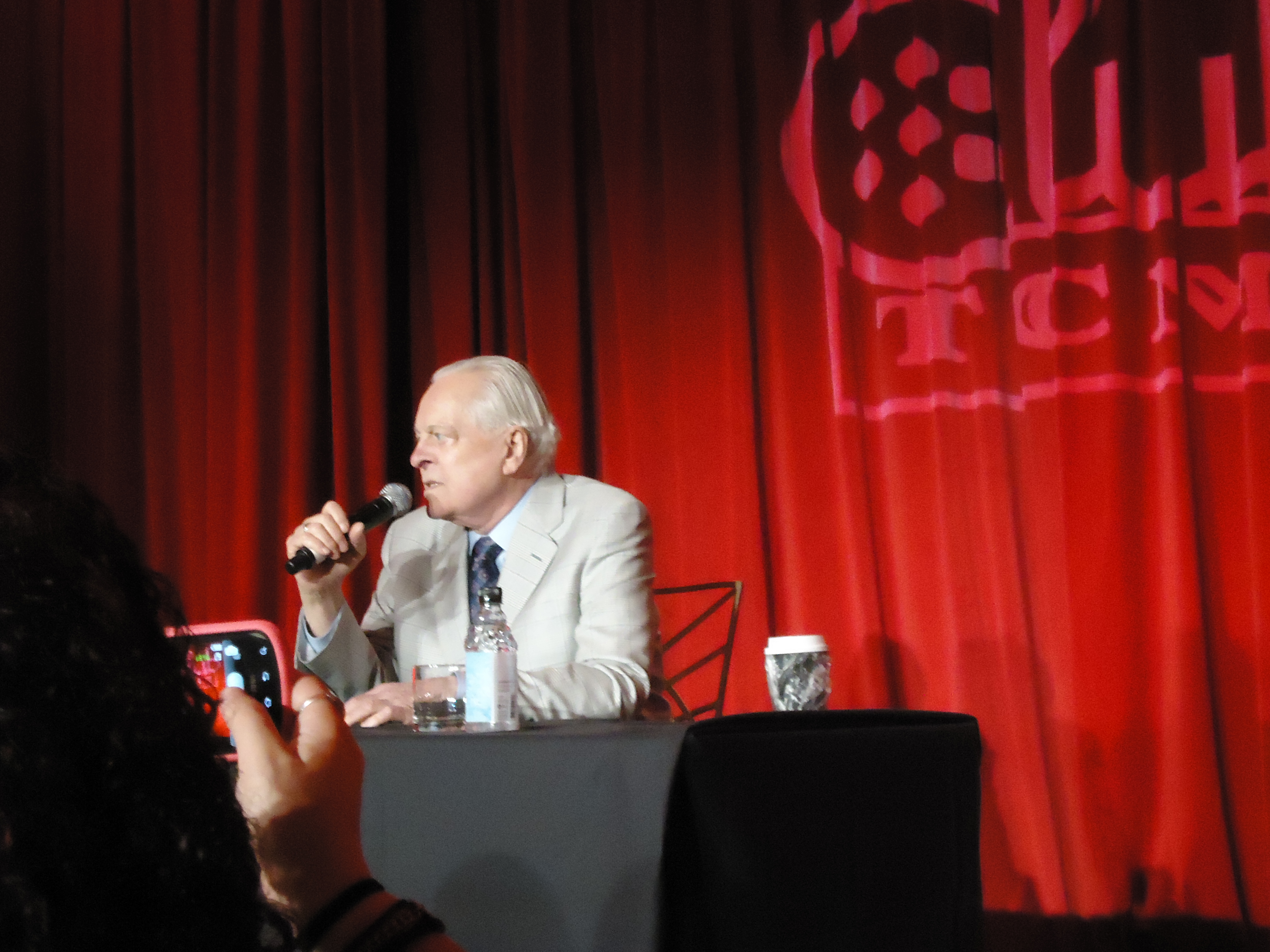
Robert Osborne answered questions first. He discussed the importance of the diversity of programming that is one of the cornerstones of TCM, and also mentioned that though he was well aware of the youth demographic and the many classic film fans under 30, the enthusiasm of younger viewers came as a surprise to the rest of the TCM team. “They thought it was only for people with gray hair,” he said. What did come as a surprise for him was how fans seem to find their niches at these TCM events. On the cruise, he said, people had divided themselves into groups and organized themselves according to fandom–for example “The Bogart fans are going here, the Cagney fans are going here, and the Stanwyck fans are going here.” He also went into a bit of the process of choosing films for scheduling, and how he works with the guest programmers that appear often on TCM. He is especially impressed with Cher and her choices for the “women in film” lineup that she is programming, saying that she is not a diva at all and is very accommodating and lovely to work with. “Kind of disappointing!” he joked.

Next was Charlie Tabesh, who expanded upon Osborne’s remarks regarding programming. In response to a question about requests for films to be shown, Tabesh stated that they will go to the message boards and see where the interest is. Regarding the oft-pondered question “What is a classic?” in regard to programming, he responded with the general consensus that there is no definition. Programming is based around context, and he gave the example of Katharine Hepburn as Star of the Month. They wanted to show every single one of her movies, and as Hepburn’s career extended far beyond what many consider to be the classic era, they ventured outside of what they would usually program on TCM.

My question was in response to a complaint I often hear from classic film fans in Europe who are disappointed with the programming on the TCM worldwide branches. I asked if they were in contact with one another and if there was any way that the diversity of programming that Robert Osborne had talked about earlier could be transferred to TCM worldwide. The answer came back that copyright laws are different in different areas, as are the values and desires of viewers. Though they are indeed in contact, they understandably don’t have a say in what is programmed, so regardless of what American TCM might hold as a value, TCMs worldwide can make their own choices.

DSC00240

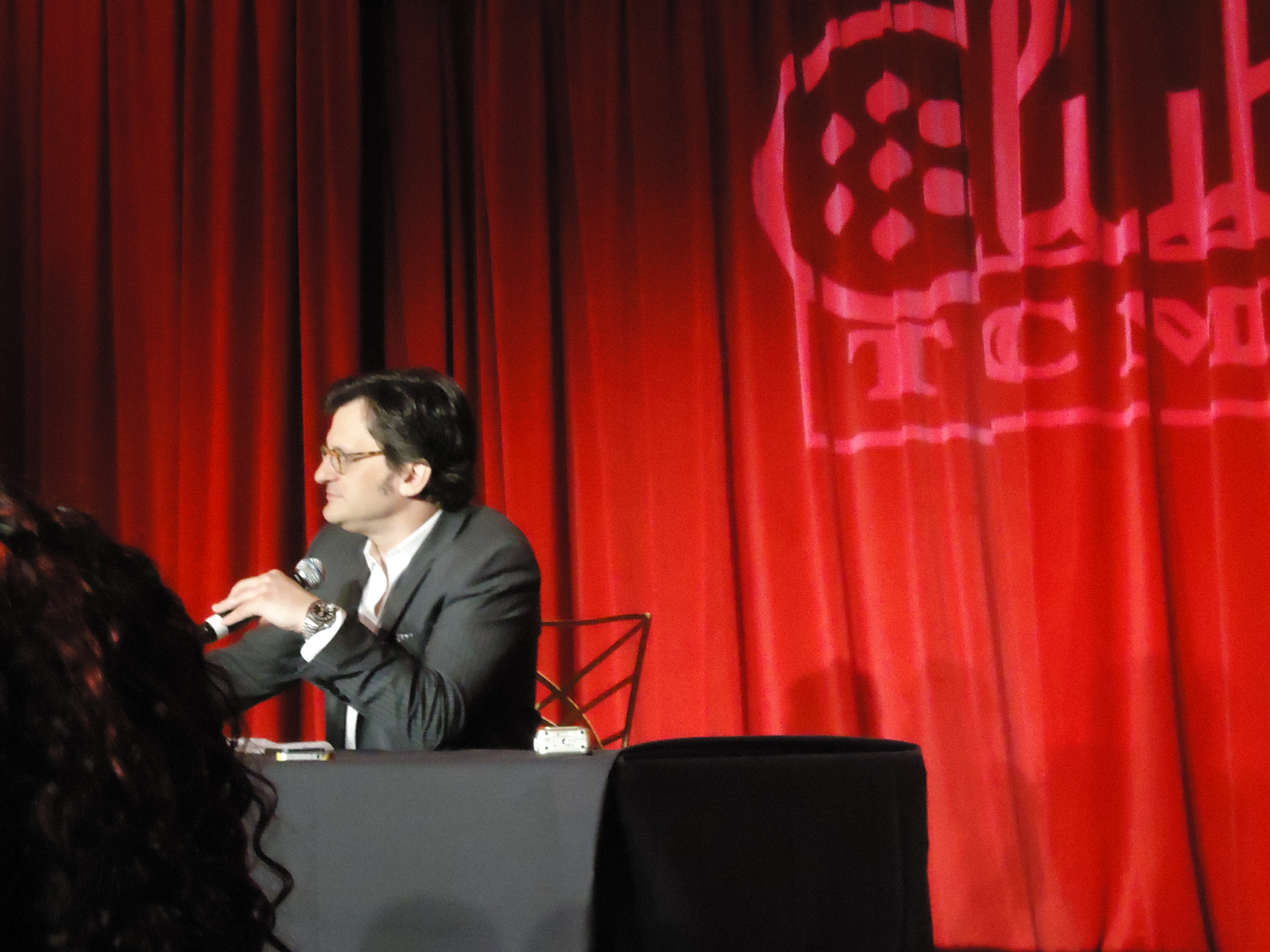
Ben Mankiewicz answered questions about his input at TCM. He said that above all, he is an employee and doesn’t have too much say, though he is welcome to make his own suggestions. In response to a question about his changed appearance (now appearing clean-shaven and well-dressed as opposed to his former casual attire on the channel), Mankiewicz told an amusing story about how his contract initially stated that he had to keep a goatee at all times. When he expressed a desire to shave it off, the powers-that-be asserted that it was not in the contract at all and that he could do it! So now he appears in the way that he wants to present himself. He also remarked on the real community that TCM fans feel with one another, and how the internet has sparked a phenomenon in classic movie fan community. As an example, he cited #TCMParty, the Twitter hashtag that has united classic movie fans on the site, all watching TCM at the same time. He also remarked on the loyalty to the channel that is unmatched–he has a love for sports and ESPN, he said, but doesn’t feel any kind of loyalty or community with it. TCM fans are special that way, he said–there is no other channel that can inspire this kind of enthusiasm and energy from the fans.

Beautifully said, and absolutely true. I can’t think of one other channel that has this kind of united following.

The festival begins tomorrow afternoon. I have enabled live tweets, and you may follow along on Twitter as well as on the blog. It promises to be a very exciting few days!

See you tomorrow!

TCM Classic Film Festival Countdown

By Lara Gabrielle Fowler

Following a lovely journey down California’s Highway 101 with stops in Carmel and Santa Barbara, I have arrived in Hollywood 4 days early for the TCM Classic Film Festival.

In case any of my readers are unfamiliar with Backlots’ festival protocol, I will be enabling live tweets the day before the festival starts, and you can follow along on the blog in real time. I will be attending a press Q&A on Wednesday with Robert Osborne, Ben Mankiewicz, and other TCM personalities, and the preliminary festival coverage will start that evening with the information I obtain from that event. I will also be providing you with plenty of photos and information from the festival on the whole, including pictures of Hollywood and classic film-related sights in the area.

See you next time, and be sure to check out the beginning of Backlots’ festival coverage on Wednesday!

Dealing With Disaster Through Cinematherapy

By Lara Gabrielle Fowler

As we struggle to make sense of the unthinkable events in Boston yesterday, we find ourselves coming together as a country and a world to participate in collective grieving, as so often happens when a tragedy of this scale occurs.

It is a time when people who need to get away from the gruesome footage and detailed descriptions often feel trapped, as all the television channels are showing the scene and all the radio stations describing it. The images are psychologically more than most of us can handle. When the events of September 11, 2001 occurred, my father instructed me not to turn on the television, as the images would scar me for life. Yesterday, I heeded my father’s advice from 12 years ago and have not turned on the television or radio. It is more than I wish to subject upon myself.

There is a movement in psychology right now called “cinematherapy,” in which those seeking comfort from grief, loss, stress, and numerous other issues, are given a list of movies to view to assist them in their journey toward recovery. I am not a psychologist, and I do not pretend to know the precise methodology behind cinematherapy. However, a good many of us involve ourselves in cinematherapy without giving it a second thought. Movies have the inherent ability to make us feel intense emotions, and in times of trial and despair, they can lift us up and make us feel better about the state of the world. They can even inspire us to change our world view, or to help those in need.

Here is a short list of movie classics that may help in our own collective journey toward healing from events that are beyond our comprehension. They are worth a look when we need an outlet for indescribable feelings.

1) SAN FRANCISCO (1936)

A love story set in the days prior to the 1906 San Francisco earthquake. The earthquake and subsequent fire occur toward the end of the movie, and the ending scene features the joy at the fire’s extinguishing cries of “We’ll build a new San Francisco!” as the cast marches confidently and valiantly down toward the city to the tune of “The Battle Hymn of the Republic.” An exquisite and inspiring ending that shows the strength of the human spirit in the face of disaster.

2) SOME LIKE IT HOT (1959)

Named the #1 funniest movie of all time by the American Film Institute, Some Like it Hot is legendary for its screwball humor. Two men witness the St. Valentine’s Day Massacre, and dress in drag to escape the mob by hiding out in an all-girls jazz band. If you’re one of those few who have not seen it, you are in for a big treat. It will make you howl with laughter, something that we all need in days like these.

3) THE THIN MAN (1934)

I know that this may seem like an odd choice for this list of movies, but aside from the fact that I personally enjoy this movie, I have a purpose for including it here. For some reason, The Thin Man seems to have strangely curative properties. I thought I was alone in my tendency to turn on The Thin Man after a long or stressful day, or when I’m feeling down. But in talking to other film fans, I learned that they have the same ritual. The Thin Man seems to be everyone’s go-to movie for comfort. Go figure, but it works.

4) MEET ME IN ST. LOUIS (1944)

Musicals were created to raise spirits during the Depression, and continued to inspire long after the Depression was over. No matter what the country was going through, our musicals helped us get through it. I would personally suggest Meet Me in St. Louis, a movie that was conceived to help wartime audiences maintain a sense of home and family in the face of terrible events overseas. The number “You and I” is particularly touching as a reminder of love and solidarity, placed in the movie as a comforting message to soldiers.

Any of these movies are worth a watch any time, but especially if one is struggling to come to terms with something saddening or distressing.

See you next time.