Lecture and Booksigning with Emily W. Leider, Author of “Myrna Loy: The Only Good Girl in Hollywood”

You may recall that when I made Myrna Loy the Star of the Week a few weeks ago, I discovered mid-week that there was to be a new biography, in fact the only biography ever written about Myrna Loy (aside from her own autobiography, Being and Becoming). This was a monumental coincidence, and I found myself tickled to death that 1) we were finally going to be able to read a biography of Myrna Loy, and 2) I had something important to report regarding the Star of the Week. Suffice it to say, I was really excited about this bio.

Fast forward a few weeks, and I discover from one of Backlots’ awesome and informative followers on Twitter that Emily W. Leider, the author of aforementioned biography, would be giving a reading on October 27….at the BookShop West Portal in San Francisco.

I’m from San Francisco.

BookShop West Portal, San Francisco.

So this evening at 6:30 (half a hour before the lecture was supposed to begin), I found myself perched in a folding chair in that tiny, picturesque bookstore, clutching my newly purchased copy of Myrna Loy: The Only Good Girl in Hollywood. I was rapturously reading the first few pages when the author, a very intelligent-looking woman in gigantic black glasses, came through the door with a huge entourage. It seems that she brought all her family and friends to the lecture! The people were all lovely, and I enjoyed listening to them talk about books (many of them seemed to be authors themselves) and Ms. Leider’s previous works before the lecture began.

(By the way, as a side note, I was literally the only person there under the age of 65. I’m not even exaggerating.)

After an introduction by the host of the evening, Neil of BookShop West Portal (which is a really lovely bookstore, make sure to check out their website, they do great things for the community), Emily W. Leider took the stage to talk about Myrna. She noted the makeup of the crowd, mostly friends or friends of the shop, saying “We filled the house!” She began by discussing Myrna’s early life and career up through The Thin Man, enriching the story with slides and video clips corresponding to the eras she was discussing. The technology was all handled by family members of hers and there were a few technical slip-ups that she seemed to barely notice. Her ease about the whole thing made me take note that this is a very down-to-earth, casual woman–to me, the perfect person to write about Myrna Loy!

After her presentation, Ms. Leider took some questions from the crowd. One attendee asked what Myrna’s favorite role was, and Ms. Leider very astutely responded that Myrna would have said The Best Years of Our Lives. I wholly agree. Everything I’ve read indicates that Myrna held that film far above anything else she ever did.

Another attendee asked what Myrna’s later career was like. Ms. Leider responded with a brief summary of Myrna’s post-war films, noting that Myrna found “Baby Jane” type roles degrading and refused to play them in her later years. She continued working into her 70’s, but always playing respectable roles in films that held women in high regard.

I wanted to ask her about Myrna’s transition from silent actress to sound actress, and how she was one of only a few stars who made that transition seamlessly, but after the second question she said very enthusiastically “Thank you!” and everyone started clapping. Oh well.

I went up to her after the lecture and asked her to sign my book, which she very kindly did. We started a small conversation when she asked me if I was a longtime fan, and I told her about Backlots and the Star of the Week coincidence. She seemed amused and wrote in my book: “To Lara, Viva Myrna Loy! Emily W. Leider.”

(Photo coming soon, my camera is broken!)

Thank you to Ms. Leider for writing this book, and to BookShop West Portal for hosting this event!
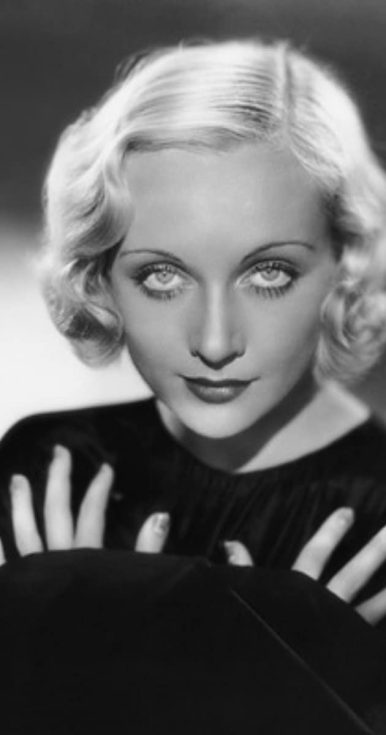
A Carole Lombard Dream

MV5BNTg5NjI3MDA5Nl5BMl5BanBnXkFtZTcwMzY3OTQ4Mg@@._V1_UY1200_CR156,0,630,1200_AL_

Upon falling asleep last night after a relatively uneventful evening, I had a dream about Carole Lombard. Mind you, I have not seen any of Lombard’s movies for about a month or so, and wasn’t particularly thinking about her yesterday, so this was a rather strange occurrence.

The dream consisted of my volunteering for a dinner party at a swanky restaurant in San Francisco (my hometown) with some friends. We were given our duties and then told by the host: “When Carole Lombard gets here, be sure to let me know.” I waited and waited for Carole Lombard to get there, and when she arrived, she was dazzling as usual.

But what really struck me about this dream was that this was not the Carole Lombard at the age she was at the peak of her career–in fact she never reached the age at which I was seeing her. This was Carole Lombard around age 50, looking radiant and beautiful, with her angel face and blonde hair unmistakable.

She came over to us and started a conversation filled with one-liners and jokes, and she stayed with us the entire evening, making us laugh. Carole Lombard was so captivating that we forgot to tell the host she was there, preferring to keep her for ourselves that evening.

I wonder what this means. Her birthday was on October 6, but now that it’s almost November, it has been nearly a month since the Carole Lombard internet birthday celebrations. Given the fact that she was nearly 20 years older than she was at the time of that tragic plane crash in the Sierra Nevadas, I like to think that she’s checking in to tell us that she’s all right and happy. I hope so.

Anyway, I close this little blurb with Carole as she probably would want to be remembered–for her hilarious antics, both onscreen and off. Thanks for reading!

Rita Hayworth Picture Spam

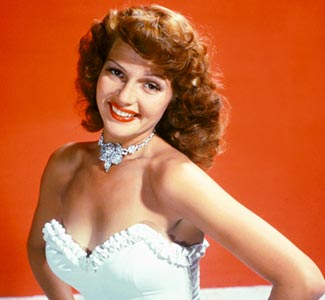
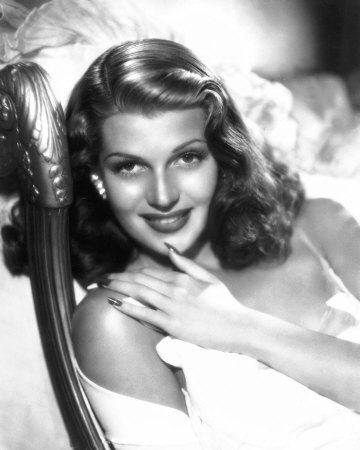
For the last day of Rita Hayworth week. I hope you enjoyed the Rita theme this week–I actually think I’m going to change Star of the Week to Star of the Month, starting in November. That way I can have more time to really go in-depth with each star. But for now, here is a photographic tribute to lovely Rita!

A housekeeping notification…

Just a small note.

So as not to make you think you’re seeing things, I have added a “Backlots on the Web” section to the sidebar. In this section I have added a button leading to Backlots’ Twitter page and, after much ethical and moral deliberation, a PayPal button.

Times are tough for everyone, and classic film fans have recently been hit with a small 1929 with Netflix’s nearly 2-fold price hike. I completely understand if funding a classic film blog is low on your priorities list, but the button is there if you want to throw this author a bone–you can contribute as little or as much as you would like. Please know that your comments mean just as much to me, and Backlots will continue to operate as usual. The only difference is that the button will be there if a reader wants to make a financial contribution.

I hate money. I’ll just let Bette Davis talk about it.

I always feel so bad for those kids. Imagine your mother telling you “Yeah, we could get you that bicycle you’ve been wanting all year, but the only present you’re getting this year is a war bond.” What.

Thanks for reading, and for all your wonderful comments and support!

Happy birthday, Joan Fontaine!

Turning 94 today is the beautiful, multi-talented stage and screen star, Joan Fontaine. One of my personal favorites, Joan now lives in Carmel with her secretary and her dogs, and continues to sign autographs and answer fan mail.

Primarily known as a “Hitchcock actress,” having starred in Rebecca in 1940 and garnering an Oscar nomination for her performance, Joan is the only actor ever to win an Academy Award for a Hitchcock film, for Suspicion, released the following year. She is noted for her striking beauty, and her excellence portraying shy, ingenue characters often abused by their male counterparts, as she did in both Rebecca and Suspicion, and in other noteworthy films such as the comedy classic The Women (1939) and the tragic Letter From an Unknown Woman (1948).

Born Joan de Beauvoir de Havilland  in Tokyo, Japan, Joan was raised with her older sister Olivia de Havilland in Saratoga, CA, in the San Francisco Bay Area (and, incidentally, not too far from where I live). Their English parents separated when the girls were very young, and their mother took them to Saratoga from Japan when it became clear that the climate was not conducive to their health. Joan spent part of her adolescence with her father in Japan and attended the American School in Tokyo, before returning to Saratoga and finishing her schooling at Los Gatos High School.

Sister Olivia left Saratoga for Hollywood shortly after graduating from high school, and Joan followed her after her own graduation. The beginning of her career was bumpy, compared to Olivia’s very smooth road to success in Hollywood, but eventually she began making a name for herself, starring in A Damsel In Distress opposite Fred Astaire in 1937, and The Women in 1939, before hitting the big time with Rebecca, filmed just after her marriage to first husband Brian Aherne. By the following year, Joan had gotten so much attention for Rebecca, that her career was soaring. 1941 saw Joan and Olivia pitted against each other at the Academy Awards, with Joan nominated for Suspicion and Olivia nominated for Hold Back the Dawn. Never having particularly gotten along, the tension between them that night was enormous. However, when Joan won for Suspicion, Olivia was the model big sister, photographed hugging Joan and looking at her with great pride.

From there, Joan’s career grew as she starred in 11 more prominent films throughout the 1940’s, including Jane Eyre (1943), The Constant Nymph (1943, recently remastered beautifully by the Library of Congress), and Letter From an Unknown Woman (1948). Her marriage to Brian Aherne fell apart in 1945 and she married William Dozier in 1946, by whom she had a daughter, Debbie. Later, she adopted a little girl from Peru by the name of Martita with her third husband Collier Young (Martita later ran away from home, a painful incident that Joan recounts in her book, No Bed of Roses).

At home with her children, circa 1954.

In the 1950’s, Joan’s career became more stage-oriented. She appeared in Tea and Sympathy  on Broadway in 1954 opposite Anthony Perkins and in the 1960’s she appeared in Private Lives,  Cactus Flower, and a production of Lion In Winter in Vienna, Austria. Though her last film was The Witches in 1966, she continued working on stage and on television through the 1980’s, writing her memoir, No Bed of Roses, in 1978.

No Bed of Roses did not speak kindly of her sister Olivia, and is said to have permanently caused a rift between the two legends. Each sister disapproved of how the other treated the death of their mother in 1975–Joan claims that Olivia didn’t make efforts to contact her on the road, telling her of their mother’s passing. Olivia says she did, but Joan brushed her off. Joan recounted her side of the story in No Bed of Roses, and speaks of her anger and frustration with what she perceives to be her older sister’s lack of consideration. To me, it seems like a simple miscommunication that solidified a decades-old problem between the sisters, and though we can’t know for sure, it seems as though they haven’t had much communication at all since 1975. At ages 95 and 94, it seems unlikely that they will resolve their conflict.

I am a huge fan of both Joan and Olivia, and have had contact with both. I have recounted my story of Olivia here, but last year I wrote to Joan after reading No Bed of Roses, which is a remarkably well-written, elegant book. She is a very, very talented writer, and I wanted to write and tell her so. I wrote a letter telling her how much I enjoyed the book and her films, and she sent me an autographed picture in the mail.

I also have a coat that belonged to her, thanks to a great friend in Norway who collects costumes and is in contact with Joan’s secretary. He had purchased a coat from Joan a while back, and sent it to me as a very generous gift, along with many of her DVDs and some magazine articles.

From what I hear, Joan lives a very happy, comfortable life in Carmel with her 5 rescue dogs, and she is in good health.I send her a card on her birthday (well…I’ve only started it last year, so I’ve done it twice), and this year I found a beautiful Japanese-print card with a dog on the front–perfect for Joan, who loves Japan and loves dogs.

Silence in Sound: The Power of Johnny Belinda and The Miracle Worker

When the silent era finally gave way to talkies in 1927, an art form was lost–the art of meaningful expression without words. When we look at the films of the great silent stars, for example those of Clara Bow, Norma Talmadge, or Lillian Gish, we see a wholly separate kind of film, one where actors are comfortable using their bodies to convey meaning and their eyes to show emotion, rather than relying on words. The filmmakers of the silent era were masters of “show rather than tell,” and as soon as the talking era came in, all that was lost in the novelty of sound onscreen.

In 1948, another noteworthy silent role came along–that of Belinda in Johnny Belinda, Jean Negulesco’s masterpiece about a deaf-mute farm girl coping with the difficulties of life in an ignorant, rural community. The title refers to Belinda’s son, conceived through a rape by a prominent member of the town who later comes to retrieve the baby, only to be shot by Belinda in defense of her son. Co-starring Lew Ayres as the kindly doctor who befriends Belinda and teaches her to communicate, Johnny Belinda was the winner of the Academy Award for Best Actress in 1948, going to Jane Wyman for the title role, and is regarded as one of the finest pictures to come out of the 1940’s.

The emotional power of the film comes from many sources, but the majority of the power comes from the character of Belinda, who despite her situation retains a lovely heart of gold. Jane Wyman, whose apple cheeks and sparkling eyes always make her look like she’s smiling, was perfect for the role, and for her work she garnered the first Academy Award given to an actress for a non-speaking role since the silent era.

There are so many compelling scenes in this movie, but the one that moved me the most was when Belinda, having been coached by her teacher, signs the Lord’s Prayer at her father’s deathbed. Please start the video at 4:45 to watch the scene.

Wyman redefined what it meant to act onscreen, relying solely on expressions and nonverbal interactions with her environment. It’s a really brilliant performance, and she deserved the many accolades she received from it.

14 years later, another young actress lit up the screen in a role not dissimilar to Belinda. Portrayed by the 16-year-old Patty Duke, the childhood of Helen Keller came to life in The Miracle Worker, and provided yet another chance to revive the lost art of wordless expression onscreen. The story concerns itself primarily with the relationship between Helen Keller and her teacher Annie Sullivan, and how Sullivan broke into Helen’s chaotic world and taught her that “everything has a name,” opening her eyes to the world around her. The film has become a true classic, and the climactic “water” scene is one of the most famous in film history.

The similarities between these two characters are obvious, but the main difference between them is, I think, the fact that Belinda possesses a soft, gentle nature–not wanting to harm anyone or anything. She is calm, almost angelically serene in all her actions, and her character is clear from her first scene–as she bends down to gently pet a newborn calf, we see that this is gentle soul. This scene serves to characterize her right from the start, and also foreshadows the love and tenderness Belinda will show her future son.

Helen, by contrast, is a wild child–untrained and primitive in her actions. She is frustrated by her world, her lack of limits, and the fact that she is essentially alone in the darkness without anyone to show her the way. She often acts out in a way that makes her seem more like a wild animal than a child, due to her lack of knowledge of her world. Patty Duke is absolutely magnificent in this role, and the scene where Annie teaches Helen how to eat breakfast shows especially well the frustrated and angry character of Helen.

Another interesting thing to analyze about these two films is the role of the teacher in each. Fittingly, the kind doctor who teaches Belinda how to communicate has a far easier time than Annie Sullivan does with Helen. Belinda is eager to learn, learns quickly, and has a wonderful relationship with her teacher. Helen is stubborn, obstinate, and refuses to do what she is told.  She hates Annie at first, locking her in her room and hitting her, sticking her with pins, and ruining her things. It takes Helen the entire movie to learn to communicate, while Belinda learns in 15 minutes! This is in keeping with the tone of each film, with Johnny Belinda being a docile, graceful story, and The Miracle Worker being a raw character examination of two strong-willed people.

In all, Johnny Belinda focuses more on the telling of the story rather than the inner emotions of the characters, while The Miracle Worker is more character-driven, with very little actual progression in the plot. A lot happens in Johnny Belinda, there are numerous plot twists and many characters to keep track of, and it is a film that moves along at a steady pace. The Miracle Worker has very few characters–in fact Helen and Annie are the only ones that really matter, and there is very little plot to speak of, the film focuses entirely on one event–Annie getting Helen to communicate.

Johnny Belinda and The Miracle Worker both received a multitude of Academy Award nominations. Johnny Belinda received a whopping 12 Oscar nominations, with Jane Wyman winning as the Best Actress of 1948.

The Miracle Worker was nominated for 5 Oscars, including Best Actress (Anne Bancroft) and Best Supporting Actress (Patty Duke), both of whom won for their portrayals of Annie Sullivan and Helen Keller.

Patty Duke winning Best Supporting Actress for The Miracle Worker.

New poll on Star of the Week Rita Hayworth

Here is a new poll that will remain on the site for the next week or so. Enjoy!

BOOK REVIEW: “If This Was Happiness” by Barbara Leaming

Many years ago, I was flipping through  a magazine of my mother’s when I came across a familiar face in the “editorials” section. It was the face of Rita Hayworth, who always fascinated me and in whose life I was pretty versed. Daughter of a Spanish dancer, married Orson Welles and Prince Aly Khan, had two daughters…but what I saw in this editorial really shocked me. It said something to the effect of: “How courageous Rita Hayworth was! After the horror she went through, she remained strong.”

This confused me. I had never heard of any unusual problems in Rita Hayworth’s life…and I couldn’t imagine what they were talking about. So I promptly ordered this biography, If This Was Happiness, by Barbara Leaming, began reading…and promptly found out.

Let me first give you my impression of the book, because it would be very hard not to get carried away with discussing the revelations therein.

The book is very well-written and well-researched. It’s clear that Leaming has done her homework, and having written a previous book on Orson Welles (drawing on interviews she had with him), Leaming certainly had material to work with. She uses testimony from everyone from Orson Welles to Rita’s secretary Shifra Haran, to her elementary school teacher in New York. It is quote-heavy, and Leaming carefully analyzes all the assertions she puts forth–questioning herself, dissecting quotes, and giving credit and doubt where they are due. Overall, it’s a well-crafted biography.

I intentionally steered clear of this when I outlined Rita Hayworth’s life for the Star of the Week post, because it’s slippery territory, but Leaming’s book reveals some very shocking and disturbing details about Rita Hayworth’s childhood, particularly surrounding her father. Barbara Leaming had previously written a book about Orson Welles, whom she had the privilege to interview, and Rita’s traumas came up while Leaming was talking to him. These issues are serious and certainly affected Rita’s entire life, and we finally have an answer as to perhaps why certain aspects of her life turned out the way they did.

However, my one complaint about this book is that she places what I consider to be too much emphasis on it. Obviously, a revelation like this is a major selling point, and Leaming probably knew that. It seems that on every page there is some reference to her father’s abuses, and a psychological evaluation as to why she may have acted that way and how it is a victim’s behavior. Though I think she may be right in a good deal of her assertions, I think it’s way too easy to blame everything in her life on the traumas of her past.

Leaming gives a very positive characterization of Rita, painting her as a gentle, kind soul who, despite having essentially no education, had more street smarts than many of the big shots in Hollywood. She was very sensitive about her lack of education–at one point during her marriage to the intellectual Welles, she was caught reading Ivanhoe, and was terrified of being made fun of.  Leaming makes it a point to say that though many of her contemporaries thought little of her intellect (she and Welles were dubbed “The Beauty and the Brain,” a probably well-intentioned but hurtful moniker that made Rita uncomfortable), had she had a better education, she probably would have been one smart cookie. She includes an anecdote from Fred Astaire, claiming that Rita could be shown a long and complex piece of choreography before lunch, and after lunch she would have the dance completely memorized. That is really something.

All in all, this is a fascinating read. It’s cheap on Amazon, and I’ve seen it at a few used bookstores too. I recommend it, it’s a nicely written biography of one of our most interesting stars.

Backlots has won a CiMBA award!!


Well, we’ve done it!

Remember about 2 weeks ago when I announced that Backlots was up for an award from the Classic Film Blog Association? I am pleased to announce that we won, tying with another very quality post  by Classic Film and TV Cafe.

I was casually checking my email, when I received a message from Rick (from Classic Film and TV Cafe, and also one of the moderators of the CMBA), likening the two of us to Katharine Hepburn and Barbra Streisand. Anyone familiar with the 1968 Oscars will know that this is a reference to the tie win of Barbra Streisand and Katharine Hepburn for Funny Girl and The Lion in Winter, respectively, so I rushed over to the CMBA website, where I discovered the results, with Backlots and Classic Film and TV Cafe tied for Best Classic Movie Discussion.

Thank you to everyone at the CMBA, and to all my readers. I also send my congratulations to my co-winner, Rick. This is a real achievement!

STAR OF THE WEEK: Rita Hayworth

I was all prepared to do a Star of the Week post on Carole Lombard (after getting a request for a profile of that divinely funny actress on Twitter), when I realized that today, October 17, is the birthday of the magnificent Rita Hayworth. Along with being one of classic Hollywood’s greatest beauties, Hayworth gets far too little credit for her extraordinary abilities as an actress and dancer, and she is very deserving of a celebration this week in honor of what would have been her 93rd birthday.

To most audiences, Rita Hayworth is known for playing the seductive title role in the classic film noir Gilda (1946), characterizing the epitome of the femme fatale capable of destroying men with a single glance. She played the role with such aplomb that audiences began to believe that the real Rita Hayworth was just like Gilda, an assumption that couldn’t have been further from the truth and became the source of much frustration in her personal life. She is said to have complained to a friend: “Men go to bed with Gilda and wake up with me.”

In reality, Hayworth was a quiet, almost pathologically withdrawn woman who almost always declined interviews due to her shyness. As a result of this, we have very few insights from Hayworth herself about her life, much of it being related second-hand by her family and friends.

She was born Margarita Carmen Cansino on October 17, 1918 in Brooklyn, New York, the eldest of 3 children born to Spanish dancer Eduardo Cansino and his wife Volga (nee Haworth). Her father was born in Seville, Spain, and was of Roma (Gypsy) origin, while her mother was an American of Irish and English descent who had been a chorus girl in the Ziegfeld Follies. The Cansino family soon left New York to settle in Chula Vista, CA, just outside of San Diego, where Eduardo could commute back and forth to Tijuana for dancing gigs. When Margarita was about 10 and already a seasoned dancer (having been coached by her father almost as soon as she could walk), Eduardo began bringing her along as his dancing partner.

In the early 1930’s, she was discovered by an executive from 20th Century Fox at one of the nightclubs where she and her father were performing. This led to her debut in Under the Pampas Moon (1935), followed by a series of small films where she was billed as “Rita Cansino.” After seeing that her future at Fox was rather slim, the studio dropped her contract and soon after it was picked up by Columbia Pictures, the studio with which she would be affiliated for the vast majority of her career. At Columbia, studio head Harry Cohn made a number of significant changes to her persona–including prescribing painful electrolysis to make her look “less Mediterranean” by lifting her hairline, and giving her a new name–Rita Hayworth.

Publicity photo for "Only Angels Have Wings" (1939)

Cohn began by casting Hayworth in a series of small roles, including “Only Angels Have Wings” and “Music in My Heart,” continuing to mold her appearance to shape what Columbia wanted for her persona. She starred in numerous films that showcased her phenomenal dancing ability, including You’ll Never Get Rich (1941) and You Were Never Lovelier (1942) with Fred Astaire, and Cover Girl (1944) with Gene Kelly. By dancing with both these dancers, she became he first star to pair with both Astaire and Kelly.

With Fred Astaire in You’ll Never Get Rich, 1941.

You Were Never Lovelier, 1942.

With Gene Kelly in Cover Girl, 1944.

By 1944, her career had skyrocketed to the point of being the top box office star for 3 consecutive years, and she also became known as one of the most popular pin-up girls with the soldiers fighting in World War II.

At the height of her career in 1943, Hayworth met and married cinematic legend Orson Welles, with whom she soon had a daughter, Rebecca, in 1944. Two years later, Hayworth filmed the iconic Gilda, with which she would be forever associated.  So powerful was her “bombshell” performance as Gilda, that it is said that the first postwar nuclear bomb tested, sent off in the Bikini Atoll, had Hayworth’s picture on it, causing her great distress.

After Gilda, Hayworth’s film career slowed so she could concentrate on motherhood. A significant film was made in 1947 with The Lady From Shanghai, co-starring (now ex-) husband Orson Welles, who also directed. Hayworth and Welles had stayed on amicable, friendly terms, each one declaring throughout their lives that the other was the love of their life. The Lady From Shanghai is a real triumph, and the famous “hall of mirrors” scene is often studied in film classes today.

In 1949, Hayworth married Prince Aly Aga Khan, thereby becoming Hollywood’s first princess–7 years before Grace Kelly’s wedding to Prince Rainier. Their daughter, Princess Yasmin Aga Khan, was born in December, but by the time the child was 4, her parents were divorced and a bitter, high profile custody battle ensued. Hayworth ended up with custody of Yasmin, and raising her daughters became the primary focus of her life.

With daughters Yasmin (left) and Rebecca, at home.

By the 1950’s, Hayworth’s roles were getting fewer and more far-between. With the possible exception of Salome (1953) and Separate Tables (1958), the roles were in mostly insignificant films, and it was becoming clear to many people that there was something wrong in her life. She often appeared looking disheveled or confused, and though most people blamed it on alcohol (of which she often partook), what it was ultimately deemed to be was early onset of Alzheimer’s disease. The disease made it impossible for her to continue to work, and it plagued her for the rest of her life, until her early death in 1987. She spent her last years at home, cared for by Yasmin, and apparently though she ultimately could not speak, she would tap her feet to music, in what Yasmin called a “memory of her days as a dancer.”

In her memory, Yasmin has set up the Rita Hayworth Alzheimer’s Gala, to benefit the Alzheimer’s Association, and was a primary contributor to the documentary I Remember Better When I Paint, documenting art by Alzheimer’s patients, in 2009.

Here is one of the few interviews Rita Hayworth ever did, in 1970. Thanks for reading, and happy birthday Rita!