Video Q&A session with Lara!


Hello readers!

This is something I’ve wanted to do for a while, and now seems to be as good a time as any. Ever since childhood, I have been fascinated with trivia–especially, no surprise, movie trivia. I often encounter people who, upon learning of my passion for film and the extensive research I’ve done over the years, take the opportunity to ask a plethora of movie questions, which I take great pleasure in answering!

So, dear readers, I thought I would make this into a blog event, in which readers send their questions through email, and when I get enough questions to make a video of adequate length, I will answer upload my answers to Backlots’ YouTube channel. Then I will post the video here, and you will see your question answered (as well as I can answer it!)

Sound good?

So, let’s do this! If you have a burning movie question, something you are just dying to know, or something that has piqued your interest about classic film and would love to know more about, send your questions to backlotsblog@gmail.com and I will do my best to answer them!

I look forward to reading your questions, and thanks for reading!

Summer Under the Stars Blogathon: “Kitty Foyle” (1940)

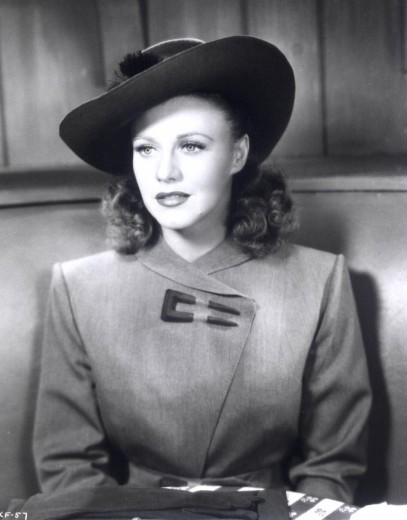
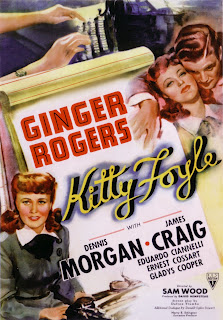
As Summer Under the Stars rolls along, I have been recording those movies that I feel are important onto my DVR, so that I may have them as points of reference–both for this blog and for my own personal interests. The day devoted to Ginger Rogers was especially fruitful, and I recorded a good 6 or 7 movies over the course of the day, the most important of which was undoubtedly Kitty Foyle (1940), Ginger Rogers’ Academy Award-winning turn as a lower-class Philadelphia woman dealing with a multitude of domestic woes. The film is highly lauded, and it is certainly one of the most prominent films to come out of the 1940’s.

The film is told in flashback, and it is made clear that the main character, Kitty Foyle, is struggling with a decision on whether to marry a man who loves her, or to elope with an already-married man with whom she has been in love for years. While she grapples with her decision, the film flashes back to her youth. Working as a secretary in the magazine office of Wyn Strafford, a friend of her father’s, Kitty falls deeply in love with her employer, but when the magazine folds, Kitty needs to find other work and Wyn doesn’t have the courage to propose to a lower-class woman. Kitty goes to New York, where she begins work at a perfume counter, and when she accidentally presses the burglar button, she pretends to faint in order to avoid trouble. The doctor who attends her is amused by her pretense, and they go on a date–falling in love themselves.

When Wyn comes around and finally does propose marriage to Kitty, she accepts and they marry. Upon meeting his family and getting a poor reception, it becomes clear that the marriage will not work. They divorce, and Kitty goes back to New York. While in New York, Kitty learns that she is pregnant, and her hopes of creating a new life with a baby are kindled. It is at this point, too, that Kitty reads of Wyn’s engagement to a girl of his own class, right before an arranged meeting between Kitty and Wyn. The meeting never happens, and when Kitty gives birth to her baby, a boy, he dies at birth.

Years later, after opening up a Philadelphia office of the perfume company for which she works, she by chance waits on Wyn’s wife and their young son. Upon meeting and connecting with the boy, never letting on her identity, she sees the family for what it is and decides not to pursue Wyn anymore. The flashback ends, and Kitty marries Mark.

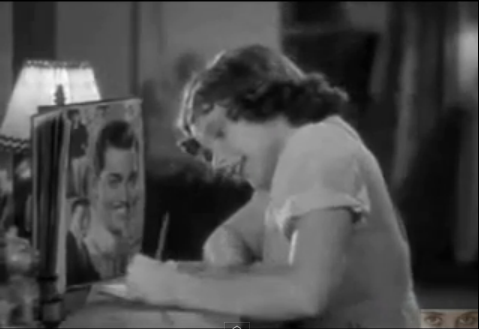
As I mentioned before, this is a movie that is very highly praised, but there seem to be two camps in the classic Hollywood community regarding this film–the camp of those who love it, and that of those who hate it. Personally, I’m not crazy about it. It has the potential to be a great story, and Ginger Rogers is certainly good. For me, too many parts are trite or corny–there is one scene at the beginning in which Kitty essentially has a dialogue with her reflection in the mirror. I understand the purpose behind it, to give the character a background, but I feel it could have been done in a more real way. This is an intensely real movie, and any fantasy as such is entirely out of place. I feel the script is not as well-written as it could be (I hate having to say that, as the screenplay was written by Dalton Trumbo, a very respected screenwriter whose career was  seriously complicated when he was blacklisted by the House Un-American Activities Committee following a refusal to testify), and the plot is a bit hard to follow.

Screenwriter Dalton Trumbo.

That said, it is one of the better films to come out of 1940, and though I question Ginger Rogers’ deserving the Oscar that year (she was in competition with Joan Fontaine in Rebecca, who I think was robbed of the 1940 Oscar), she turned in a solid, grade A performance that was probably the highlight of the film. The scene where she finds out that her baby has died is magnificent.

Here is a picture of Ginger posing with Jimmy Stewart, who was the Best Actor winner that year for The Philadelphia Story. Interesting that both the Best Actor and Best Actress winners of 1940 starred in movies dealing with Philadelphia.

Thanks for reading!

Religious Thematic Elements in “Black Narcissus” (1947).

Shot in striking Technicolor against the breathtaking backdrop of the Himalayan mountains, Black Narcissus is a tale of temptation, sensuality, jealousy, and crisis within an order of British nuns doing missionary work in rural India. The stark, bleak and often disturbing nature of the story and the cloistered environment of the convent is directly contrasted by the beauty of the outdoor surroundings, and the sensuality of the story has as much to do with the magnificent land as it has with the physical temptation of the Brisith agent Dean, around whom most of the story revolves. The film was directed by Michael Powell and Emeric Pressburger, taken from a 1939 novel by Rumer Godden. Black Narcissus plays out very much like a novel, with supreme use of symbolism and metaphor that casts serious doubt on the institution of religiosity, a huge risk for a movie made under the Hays Code.

The story concerns itself with a group of Anglican nuns who journey to India in order to set up a hospital and school, with the ultimate intention to convert the native population. They have to deal with the dominant Hindu culture and the ethereal presence of a mystical old wise man on their property, whom they want to move, but none of the locals dare move him. This, to me, signifies the connection of the locals to their land and their resistance to give up the old ways. Interestingly, the scene where Sister Superior Clodagh (Deborah Kerr) tries to get him to move, she is the one portrayed as the ignorant character–and not the other way around. Under the Hays Code (which codified religious morality into moviemaking), this was daring decision on the part of Powell and Pressburger.

Soon, a British agent by the name of Mr. Dean becomes a regular visitor to the convent, much to the chagrin of the nuns, who consider him obscene and offensive, especially when he shows up drunk to Christmas mass. He  does, however, charm one nun by the name of Sister Ruth, and the Sister Superior Clodagh becomes worried about his appeal to her and Sister Ruth’s increasingly strange behavior. There is one scene in which Sister Clodagh calls Sister Ruth into her room, and begins to question her about her state. The scene occurs about an hour into the film, and is the beginning of the very disturbing turns this movie takes.

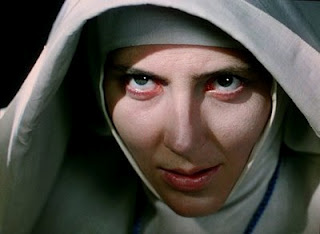
As Sister Ruth is questioned, little by little she begins to shake, and her mouth turns upward into a demonic smile while her eyes remain fixed on Sister Clodagh. It is an intensely disturbing image, and she looks as though she is possessed, either by a demon or by the demons of her own mind. Juxtaposed with the white, virginal habit surrounding her face, it is not only a shock to the viewer’s sensibilities, but is a not-so-subtle foreshadowing of the penetration of evil into the world of the convent.

From that scene forward, Sister Ruth is often shot in hues of red, symbolizing the idea that Sister Ruth is demonic, an incarnation of the devil. As the film progresses and she becomes stranger and stranger, more red is used. For fear of giving anything away, here is one of the final scenes of the movie:

The conclusion is a violent  descent into madness on the part of Sister Ruth, which closes with a final collision of the relationship between the church and the Himalayan mountains. I will not say any more than that about the ending, because it is an absolutely stunning finale that you have to see in order to take in its full effect.

Though the film took place in India, the production was entirely British–with backdrop paintings of the Himalayas substituting for location shots. The majority of filming took place at Pinewood Studios, with some mountain scenes shot in West Sussex. Nonetheless, the film succeeds masterfully in its depiction of the mountains, and the Technicolor is among the most breathtaking I’ve ever seen. I often say that the two most beautifully shot Technicolor movies I’ve ever seen are Black Narcissus and The Red Shoes–both British movies that make heavy use of the color red in their filming.

Deborah Kerr ringing the convent bell in “Black Narcissus.”

Moira Shearer in “The Red Shoes” (1948).

I leave you with the trailer. To say that Black Narcissus is a masterpiece is a vast understatement. It is a truly magnificent piece of filmmaking that I think everyone interested in film should see. Some scenes are not easy to stomach, but it was a film ahead of its time, and many of those scenes look like they came out of a modern-day thriller, instead of a British drama made 65 years ago. If you haven’t seen it, I urge you to.

Thanks for reading!

“Possessed” (1947)

It was Van Heflin day on Summer Under the Stars a few days ago, and I was elated to see that Possessed was on the bill. In the legendary Bette Davis/Joan Crawford rivalry, I have always been partial to Bette Davis, but well aware that my preference for her had much to do with the fact that I was far behind on my Joan Crawford filmography, and I have been trying to make up for that to give Joan Crawford an equal chance. This was a performance that had earned her an Academy Award nomination for Best Actress, two years after her 1945 win for Mildred Pierce, and after having seen the film, I’m not ashamed to say I think she should have won.

The movie is about a woman by the name of Louise Graham whose descent into the realms of mental illness shocks, disturbs and destroys her–and those she loves. Van Heflin plays David, a love she can never have, and Raymond Massey plays her husband who truly loves and is concerned about her, and seems to understand that her illness is real and she is not at fault for what she does while in the throes of what is described as schizophrenia. This is one of the first real analyses of mental illness, and the one of the first films in which the mentally ill are treated as sympathetic, human characters rather than those to be feared.

Joan Crawford gives an absolutely brilliant performance. Take a look at the expression on her face in this particularly telling photo. It is at once sad, diabolical, frustrated–and extremely intense. Crawford lost the Oscar this year to Loretta Young in The Farmer’s Daughter, but it seems that after Mildred Pierce, Crawford’s confidence in her ability as an actress blossomed, and this movie is wonderful evidence of that.


It is interesting to note that the next year, Olivia de Havilland gave a similarly powerhouse performance in The Snake Pit, also dealing starkly and frankly with mental illness. In this film, the idea of Possessed is extended into the realm of the mental institution, and the inherent problems of institutionalization. In the span of a year, two groundbreaking films dealing with mental illness were released, and both actresses nominated for Academy Awards–and both times the actress lost. Olivia de Havilland lost to Jane Wyman in 1948 for Johnny Belinda, and though I have a great fondness for Johnny Belinda, I believe she deserved to win, as Joan Crawford did.

I leave you with the trailer. This is a marvelous film, compelling and beautifully executed in all aspects of its making.

The Death of Marilyn Monroe–Theories and Challenges in Validation

Before I delve into any depth on the touchy and fragile subject of Marilyn Monroe’s death, I would like to emphasize that I am trying very hard to be neutral and stick only to the absolute facts of the event. There is much capitalization on the scandalous aspects of Marilyn’s death, in books, TV specials, gossip columns, and magazines, and it can be extremely difficult to wade through the rumors to pick out what is known to be true about the event. I have too much respect for Marilyn Monroe as a person to allow rumors about her death to be rehashed by myself, so this post is going to stick only to the facts, and I will cite information wherever it is possible so that you may go directly to the source and examine for yourself. This is not gossip, not scandal, not personal opinion (I will try to refrain from giving my personal opinion, if you’re interested we can discuss it in the comment section, but the post is info only), it is an attempt to carefully examine an event that has stumped experts for 50 years.

Sometime between late August 4 and early August 5, 1962, Marilyn Monroe died at her home at 12305 5th Helena Drive, in the Brentwood area of Los Angeles. The initial autopsy revealed an enlarged liver and congestion in the lungs and stomach, and toxicology tests soon revealed that there was an incredibly high level of chloral hydrate in her blood, as well as far above the lethal dose of the drug Nembutal. The drugs were both used as sleep aids for the famously insomniac Monroe. Her blood levels being so high (it is estimated that she would have had to take 60-70 Nembutal and 17-18 chloral hydrate tablets to reach this level), her death was ruled a “probable suicide” on the official death certificate. An accidental overdose would have been next to impossible given the sheer amount of drugs in her body.

View Marilyn Monroe’s death certificate here.

View the initial autopsy report here.

However, this theory came to be doubted when some circumstances involving her death came to light. At 4:25 AM on the morning of August 5, Sergeant Jack Clemmons of the Los Angeles Police Department was called by Dr. Hyman Engelberg, Marilyn’s personal doctor, to say that Marilyn had just committed suicide. Clemmons arrived on the scene and when he entered the bedroom, he saw that Marilyn was lying face down in a flat-out position, with no sign of the convulsions and vomiting that accompany a death involving drugs. There were pill bottles strewn around the scene, but no water with which she could have swallowed them.

12305 5th Helena Drive.

Around 7:15 PM on August 4, the day before her death, she had a phone conversation with Joe DiMaggio, Jr. (her former stepson) about his engagement to a girl of whom Marilyn did not approve. She was allegedly elated to hear that he was breaking it off, and was in a great mood after the conversation. But when Peter Lawford called a half an hour later, he described her as sounding drugged and making suicidal comments. She talked to a number of other people within the same time frame, who described her the same way. It is clear that something happened between 7:15 PM and 8:45 PM on the night of August 4. Just what happened is something we will likely never know.

With stepson Joe DiMaggio, Jr.

I feel that given the evidence, it is necessary to share some of Marilyn Monroe’s mental health history. Her mother was a paranoid schizophrenic who was in and out of institutions all throughout Marilyn’s childhood, forcing Marilyn to be raised in a series of foster homes and a 3 year stint in an orphanage. These early experiences forged some serious psychological scars and issues with abandonment, affecting the course of her life and her struggles. Though schizophrenia is a highly heritable disorder, there were no signs that she had inherited it from her mother. There are, however, signs that Marilyn may have had a minor form of bipolar disorder known as cyclothymia, alternately causing waves of euphoria and waves of depression. Given this speculation, one might say that Marilyn may have had a sudden cyclothymic mood change in that half an hour, leading her to suicidal thought and action, but in most cases, cyclothymia doesn’t work that quickly and the depression is not so severe.

If we are to develop the observations of Sergeant Clemmons, it would lead us down the path of investigating for murder. When Clemmons first arrived on the scene, he talked to Eunice Murray, the housekeeper, who told him that she had seen a light under Marilyn’s door around 3:00 in the morning and tried to go in to check on her, but found the door locked. It was then that she called Marilyn’s psychiatrist, Dr. Greenson, to come help. Upon analysis of the room, Clemmons found that Marilyn’s room had deep pile carpeting, making it impossible to see a light under the door. Murray could have seen light through the crack between the door and the wall, but even if she did, her story about the locked door doesn’t add up–Marilyn’s room door had no functioning lock.

Housekeeper Eunice Murray.

Many in the Marilyn Monroe community have long blamed Eunice Murray for Marilyn’s death, due to her strange story and odd behavior (she was found calmly doing laundry the same morning that Marilyn was discovered). Another very pervasive theory is that Marilyn was known to be the holder of many confidential Kennedy family secrets, and rumors circulated for years of a diary in which she kept them. The diary has never been found, and the rumor is now considered to be untrue. However, a neighbor of Marilyn’s testified that she saw Robert Kennedy at the house the night of Marilyn’s death, accompanied by two men, one of whom was carrying what appeared to be a black medical suitcase. Could the Kennedys have feared that she would reveal their confidential information, and decided it would be better if she were dead? This is a hypothesis that seems ridiculous at the outset, but has garnered a following of informed people who swear by this theory.

50 years have passed, and it is relatively certain that we will never know the true cause of Marilyn Monroe’s death. Most of the closest people to her have now passed away, and it’s unlikely that any new evidence will show up without the help of people who were there. In a recent Huffington Post article, forensic expert Max Houck noted that had Marilyn’s death occurred today, the investigation would have been wholly different. “The good news is we’re very advanced from 50 years ago,” he wrote. “The bad news is, we’re still trying to put it in context.” Without any new evidence and no way to do any further tests on her body, it seems that the rumors will never be quelled, and the speculation will continue for as long as Marilyn’s memory lives on.

If you would like to read more about the unadulterated, bias-free facts of Marilyn Monroe’s death, I would recommend the following sources:

This analysis, beautifully and thoroughly compiled by a great fan who really took the time to learn the hard, true facts.

There are so many BAD books about Marilyn Monroe, and only a select few good ones. This is one of the good ones. Spoto is very thorough, and knows his subject inside and out. If you are to learn about Marilyn’s death from a trustworthy source, this is the place to go. Barbara Leaming’s book is also good.


Summer Under the Stars Blogathon: “Libeled Lady” (1936)

For my first installment to the Summer Under the Stars blogathon, I have the pleasure of reviewing a truly delightful comedy by the name of Libeled Lady. The 5th of the 14 movies movies that teamed William Powell and Myrna Loy, the two possessed all the wit and charm in this movie that they are so widely known for. Add to that the talents of Spencer Tracy and Jean Harlow, and you have yourself a real peach of a movie.

The story deals with a wealthy woman, Connie Allenbury (Myrna Loy) suing for libel after a newspaper article accuses her of breaking up a marriage. In order to counter the suit, the newspaper company hatches an elaborate scheme to make the story true–hiring a notorious ladies’ man by the name of Bill Chandler (William Powell) to woo her and eventually be caught alone with her when his wife walks in. The plan is complicated when the two actually fall in love.

The situation with the wife is a prominent and amusing supporting story. Played by the lovely Jean Harlow, the character of Gladys is the long-suffering fiancé of Warren Haggerty, the managing editor of the newspaper being sued for libel. When the idea is developed and it comes to light that Bill Chandler is not actually married, Warren volunteers Gladys to be the pretend wife for the scheme. Some of the funniest scenes are those in which William Powell and Jean Harlow pretend to be a devoted married couple when there are people around, and as soon as they leave, they are at each other’s throats. William Powell and Jean Harlow were very well matched onscreen, and their good friendship turned to romance in real life. The two became engaged in 1935, and dated for 2 years, despite Powell’s doubts about marrying another blonde movie star after his divorce from Carole Lombard a few years earlier. When Jean Harlow fell ill on the set of Saratoga, it was William Powell who left the set of his own movie in order to take her home. I think had Jean Harlow lived longer, she and William Powell would have become as beloved a screen pairing as Powell and Myrna Loy. However, it is hard to speculate about this, as Jean Harlow died during the filming of Saratoga at the peak of her career in 1937. She was only 26.

One of my favorite scenes is one in which Bill Chandler, pretending to be an expert fisherman in order to get on the good side of Connie’s fisherman father, actually finds himself having to go fishing. Watch what happens:

This is a truly hilarious movie, and if you haven’t seen it yet, you’ll be in for a treat.

Stay tuned for more posts during the month of August dedicated to TCM’s Summer Under the Stars programming!

Backlots Will Be at Cinecon 48!

I have just received confirmation from Bob Birchard, the president of Cinecon, that I have been officially approved for Cinecon press credentials over Labor Day weekend! This is the oldest of the movie-related festivals, and I am honored to be able to cover it. The festival also features a HUGE memorabilia market, and showcases rare movies from the silent and early sound days.

Click on the banner above to go to their website! It’s a simple site that is easy to use, and you will find links to what it’s all about if you would like to attend. This will be my first year, but everyone I know who has gone says it’s absolutely phenomenal.

So stay tuned over Labor Day weekend for my festival coverage, which promises to be very vibrant as there will be a lot to write about!

PROFILE: Clara Bow

During the Silent Film Festival, I promised that I would do a profile of Clara Bow, who I think is probably one of the most alluring personalities to come out of the silent era, and beyond. As today, July 29, is her birthday, there is certainly no better time for a profile! Hers was a true rags-to-riches story, rising from the very lowest depths of poverty, abuse and trauma to being the most popular film star of her day, receiving 8,000 fan letters a week and earning the highest salary in all of Hollywood–$35,000 per week. For this reason alone she is a fascinating character–add that to the charming, exuberant, and adorable persona she exhibited onscreen, coexisting with an irresistible sex appeal, and you have the definition of what it means to be a star.

She suffered greatly throughout her life due to memories of her difficult childhood, and battled serious mental illness for much of her adult life, its trigger likely a combination of genetics from her mother (a paranoid schizophrenic) and a life that was beyond tolerable. However, through it all, she is remembered not for her troubles and struggles (as so many are), but for that singular “je ne sais quoi” that was her trademark onscreen.

Born on July 29, 1905 during an intense heat wave that was expected to kill her and her mother alike, Clara Bow’s parents never bothered to give her a birth certificate. Her mother was a diagnosed schizophrenic who was institutionalized when Clara was 16 after an attempt to kill her, and her father was a deadbeat alcoholic who some thought was mentally challenged, prone to abusive outbursts at his wife and daughter. One doesn’t have to look too deeply to notice what might have caused Clara’s later problems, but none of this deterred Clara, who was intent on becoming an actress. She applied for the Brewsters’ magazine “Fame and Fortune” contest in 1921, and to her surprise, won first place.

After a small part in Beyond the Rainbow (1922) that was cut out of the final print, Bow got her first real part–as that of a tomboy in Down to the Sea in Ships, which was released in 1923 and documented life in the whaling community. She was only 16 at the time and got 10th billing, but received considerable acclaim for her role and from there, her career took off.

“Down to the Sea in Ships,” 1923

She was signed to Preferred Pictures in 1923 and stayed with them until 1925, making such pictures as Grit (1924) and Helen’s Babies (also 1924) before signing with Paramount, where she made her biggest splash. The public immediately took to her bubbly, almost childlike presence onscreen that was juxtaposed with an intense sexuality, and she became the biggest box office draw in the business. She made 8 pictures in 1926 alone, and at the peak of her career during this period she was receiving 8,000 fan letters a week, more by far than any other Hollywood personality at that time. 1927 saw even bigger success, with It and Wings becoming the movies that defined her as a star. It provided her with the nickname “The ‘It’ Girl,” a name by which she is still known today.
Wings has the distinction of being the first film ever to win Best Picture.

It, 1927

Wings, 1927

With the popularization of sound after The Jazz Singer (1927), Clara Bow’s career looked uncertain. The studios were eager to make fewer and fewer silent films in preference for “talking pictures,” which spelled bigger profits for the studios but major problems for many silent stars. The main issue with Clara Bow was her strong Brooklyn accent that the studio found distracting and not suitable for sound movies. With her career in serious jeopardy, Clara managed to tone her accent down a bit for the sake of keeping work, and even sang some musical numbers.

However, even with these modifications, Clara was simply not cut out for sound films. Her career waned, and she made her last film in 1933, entitled Hoop-La. Clara married cowboy actor Rex Bell, later to become Lieutenant Governor of Nevada, in 1931, and the couple had 2 sons, Tony and George, to whom Clara devoted her recently unemployed life to raising. Shortly thereafter, she began to experience symptoms of a mental illness, which, after a stay at the Institute of Living, was diagnosed as schizophrenia, the same disease that had plagued her mother. As schizophrenia is strongly genetically linked, it is highly likely that she inherited it from her mother, and doctors pinpointed the beginning of the illness to the night when her mother tried to kill her. Numerous tests and treatments were tried on Clara, but eventually Clara tired of them and voluntarily left the institution, spending her last years alone at her home in Culver City. She died of a heart attack in 1965, at the age of 60.

On her birthday, I remember her vivacious, active spirit that graced so many films of the silent era, and all that she gave to the movies. She is one of the great icons in movie history, and it is always a pleasure and a joy to watch her onscreen or simply to see her in photos.

Happy birthday, Clara!

Clara Bow and family–son Tony, husband Rex Bell, and son George.

Campaign for the Victims of the Colorado Movie Theatre Shooting

When I heard about the horrific massacre that took place in Colorado last week, I, along with millions of others, was shocked and saddened by this senseless slaying of innocent souls, guilty of nothing but buying a ticket to see the latest blockbuster at the local movie theater. There is no explaining a crime like this, and no understanding what motivates a person to walk into a crowded movie house and open fire on random people. The sadness of last Friday goes even further than grieving for the loss of innocent lives, we also grieve for the loss of the movie theater as a safe haven in which to escape from the troubles of the world.

Since the early days of cinema, people have gone to the movies to temporarily erase the problems in their lives. From the Great Depression to World War II, to the Vietnam War and even the financial crises of today, nothing mattered when we went to the movies. We walked into another world, and everything was ok for those two hours spent within its walls. On Friday, that safety was savagely violated, fearlessly and unmercifully. It is hard to say now, one week out from the shooting, what effect this will have on the psychology of moviegoers, but it is certain that for those individuals who were in the theater and survived the shooting, will never again see going to the movies as an escape.

As the owner of this blog, I am joining forces with other movie bloggers, classic and otherwise, to help raise money and awareness for the survivors of the Aurora, Colorado movie theater shooting. In this day of the online media being the primary source of much information, I believe that we bloggers have a responsibility to do our part to raise awareness for causes that need attention. This is a fund drive organized by the website The Movie Pool, and all donations go directly to the victims through the Colorado Organization for Victims Assistance (COVA),working with the Aurora Police Department. Donations start at $1, so if you can stand not having that chocolate bar you were hoping to get, your dollar will go toward paying a victim’s medical bills and/or other expenses incurred as a result of the shooting.

Please donate here:

If you would prefer to give directly to the source, there is a link on the COVA website that will lead you to the right place. Any money donated through this post will count toward The Movie Pool’s fundraising goal of $10,000 for the victims, in which case your donating through this post would help The Movie Pool reach its goal.

Thank you for reading, and may we soon feel safety at the movies once again.

Thirteen Women (1932)

This movie came to me by way of Marya over at Cinema Fanatic. While in line for the San Francisco Silent Film Festival, we began to talk about Myrna Loy and it came out that I had never seen Thirteen Women. Marya had just gotten a copy from the Warner Archives, and brought it the next day for me to watch. I did so enthusiastically, and I will profile the movie here, along with some interesting facts and pieces of trivia.

Thirteen Women, a chilling tale of horoscopes and fate, is a very interesting film in a number of ways. First, it is one of the first female ensemble films to come out of Hollywood–7 years before the ultimate female ensemble film, The Women, Thirteen Women concerns itself with a woman by the name of Ursula Georgi, the assistant of a prominent “swami” (horoscope reader), who is bent on revenge against the women who bullied her throughout her school years due to her mixed-race heritage. As Ursula sends simple letters to these women predicting their deaths, their lives unravel, and they almost invariably meet the same grisly end predicted in the letters. It is unclear whether the effect is physical (does Ursula really have magical powers?) or psychological (her letters use the “power of suggestion” to make things happen), but whatever it is, every look that Ursula gives–through Myrna Loy’s mysterious and ethereal eyes–is deadly.

Unlike The Women, there are plenty of men IN this picture, but the focus, similarly, is all on the women and their interactions with each other. A bit of trivia on this movie–one of the lead women in the ensemble is Peg Entwistle, in her only film appearance before her much-sensationalized suicide, jumping off the Hollywoodland sign at the age of 24 in 1932, weeks before this film’s release.

When you watch this movie, keep a good eye on Myrna Loy (as though I need to be saying that, it’s an effort to look at anybody ELSE when she is onscreen!) At the beginning of Myrna Loy’s career, she was most often cast as Asian stereotypes or other exotic characters, and as her career began to take off in the early-mid 1930’s with the Thin Man series, she all too readily abandoned those roles (Myrna was known for loathing prejudice of any kind, and she often looked back at her early roles with regret and disappointment for having played them) and developed a new typecast–that of the loyal but witty and independent housewife, as popularized in The Thin Man. She hardly needed to display her flair for drama, the public was in love with her no matter what. However, in this role, take a good look at just how skilled she is. Watch her cold expression as she signs the letter in this clip:

For those of us who are used to her as Nora Charles, this character comes as quite a shock.

I enjoyed this movie immensely. As a Myrna Loy devotee, it was a movie I needed to see, and I’m glad I did.

Thanks for reading!