Day 3 was one filled with favorites and laughs. I started off the day with Why Be Good? (1929), a movie I had seen a few months ago when a new restoration was screened at the Los Angeles County Museum of Art. This same restoration was shown here, and I loved the movie so much the first time that I had to see it again.
The plot of the movie centers around a young girl who falls in love with a wealthy banker’s son, but has to prove that she’s a “good girl” before his father will allow him to date her. The premise sounds contrived, but in reality the film is unique and refreshingly feminist in many spots, with lines that resonate with much of feminist thought today. Colleen Moore is as cute as can be, with big, expressive eyes and movements that radiate the jazz age. It was great fun to see it screened at the festival, and I’m happy that this sweet film is getting the attention it deserves.
Next up was 42nd Street (1933), a personal favorite. Featuring much of the same cast as the seminal Golddiggers of 1933, what this movie lacks in originality it makes up for tenfold with a spectacular cast and Busby Berkeley’s creative musical numbers. Ruby Keeler is a delight as always, and the title number is one of the first real ballet sequences within a film that tells its own story within the film. The famous ballet sequences in An American in Paris and Singin’ In the Rain followed 42nd Street‘s lead in creating a veritable “show within a show,” but 42nd Street takes it one step further–the title number is indeed a story within a story within a story. Take a look:
42nd Street and Golddiggers of 1933 are hallmarks of the pre-Code era, and are extremely popular with the TCM Festival crowd, yet pre-Codes are often put in the smaller theaters and easily sell out. My dream is to one day see a pre-Code programmed at Grauman’s Chinese Theater, where it will not only look beautiful but also bring a lot of excitement to the festival-going crowd. I would have loved to have seen Ruby Keeler on that giant screen!
I had a large break in my schedule on Day 3, during which I relaxed with friends and got ready for the evening screening, Earthquake!, poolside at the Roosevelt Hotel. A Q&A with Richard Roundtree preceded the film, and then we were treated to one of the most fabulously low-budget movies I have ever seen. The inspiration for future disaster films such as the Airport movies and the spoof Airplane!, Earthquake! stars Charlton Heston and Ava Gardner (who hilariously insisted on doing her own stunts) and focuses on a disastrous earthquake in Los Angeles, ultimately destroying the city. Its low-budget special effects left the audience in stitches, and satisfied my frequent craving for camp film. I left with a pain in my stomach from laughing so hard. Thanks, Earthquake!
Dear readers, I’m usually so good about posting right after festival events, but after several late nights, I needed some sleep. The festival is now over, and I’m getting back into the swing of things. I apologize for the delay!
Day 2 was a jam-packed one at the TCM Classic Film Festival, the first day of the festival with a full docket of programming. I started off the day with a beautiful presentation called The Dawn of Technicolor, based on the new book by David Pierce and James Layton. Pierce and Layton were there discussing the facets of early Technicolor, and the differences between the two-strip Technicolor process and the much better-known three-strip process, as seen in movies like The Wizard of Oz. It was a fascinating discussion, touching on such concepts as lighting techniques for early Technicolor and difficulties in getting certain colors to register (blue was especially difficult), and Pierce and Layton showed the audience clips of very early Technicolor musicals that were a delight.
Since many of the early Technicolor clips that the audience saw yesterday are extremely rare, I will instead post here two clips that demonstrate the two-strip process and the three-strip process, respectively.
This is the “Tell Me, Pretty Maiden” number from The Florodora Girl. Pierce and Layton noted that, in addition to the difficulty in photographing blue tints, yellow tints were next to non-existent in the two-strip Technicolor process. The focus was on reds and greens, which came out in beautiful shades and this lends itself to the signature look of two-strip Technicolor.
You can see the difference between two-strip and three-strip Technicolor by looking at this beautiful clip, in which all the colors of the rainbow are represented as Dorothy goes over it. By 1939, three-strip Technicolor had all but replaced two-strip as the color standard in film, though color wouldn’t become industry standard until several decades later.
A wonderful and informative presentation, that I would recommend to anyone interested in film!
Next I went to Club TCM to hear legendary film historian Jeanine Basinger speak about portrayals of history in the movies. Professor Basinger is the head of the film department at Wesleyan University, and founder of the renowned film library there, as well as one of the most respected figures in the world of film studies. She discussed the way history has been portrayed in Hollywood and what devices filmmakers use when trying to depict events for which we may not have all the information, or when trying to make history interesting and screen-worthy. One thing she talked about was what she calls the “letters of transit” device, referring to the plot of Casablanca that hinges on Victor Laszlo getting letters of transit out of Morocco when letters of transit did not exist in reality. The filmmakers used this device to add spice to the story, and it worked brilliantly. No one seems to care that letters of transit did not exist in reality, they existed in Casablanca and that seems to be enough. It was a great discussion, and hearing Professor Basinger speak is something that all students and scholars of film should be able to do.
A scene about “letters of transit” in Casablanca (1942).
Next up was the Buster Keaton classic Steamboat Bill, Jr., complete with a new score by silent composer Carl Davis, who also conducted the orchestra. It was a brilliant score and great fun to watch. Buster Keaton is typically hilarious and, naturally, gets into some real shenanigans. This is the movie with what is probably Buster Keaton’s most famous scene:
Steamboat Bill, Jr. was made in 1928, when Buster Keaton was at the peak of his career. Unfortunately, it was also right before his downfall, with contract switches and the coming of sound essentially putting a halt to what was one of the most glorious careers of the silent era. It was interesting to watch it in this context, as one of the great silent comedians was at the top of the world…only to fall off shortly thereafter.
A personal favorite, Rebecca, came next. I have written about this movie many times before, but it’s such a masterpiece of lighting, cinematography, and acting that I see something new every time. This time, I noticed that director Alfred Hitchcock uses very long lines in his camerawork, perhaps to emphasize the tallness of the estate Manderley. Nearly all the doorways and windows are structured to draw the eyes upward, and even the furniture and shadows are designed to guide the eyes up. Take a look at this scene, and notice the narrow, vertical light on the wall from the window, as well as the narrow structure of the window itself:
It is said that nothing in Hitchcock is accidental. If that adage holds true, this is a genius work of subtlety on his part.
The festival this year features an unusually high number of films that one can read through a queer lens–and Rebecca is certainly one of them. The relationship between the evil Mrs. Danvers and the late Rebecca de Winter can be inferred very clearly in this movie, as evidenced by this scene. Though filmmakers were kept from stating the relationship explicitly, the eerie scenes with Mrs. Danvers in Rebecca’s room do more for a queer reading of the film than anything that could have been stated explicitly.
The next movie, Boom!, is one that I have seen before on the big screen and it is a movie so bad that it’s a lot of fun to watch. I can barely tell you the plot, except that it takes place on a Greek island and Elizabeth Taylor is a drug addict who is visited by death, played by Richard Burton. It features monstrously terrible and nonsensical dialogue, and my friends and I were laughing the whole time. It’s the perfect midnight screening.
Exhausted but beyond excited, I arrived in Los Angeles last night for the kickoff of the 2015 TCM Classic Film Festival, taking place in Hollywood this weekend for its sixth year. The theme this year is “History According to the Movies,” which leaves plenty of room for interpretation…and controversial programming. When the full schedule of the TCM Classic Film Festival was announced several weeks ago, the internet started buzzing. Bloggers and film fans began asking questions–why were there so many modern movies scheduled? Is TCM changing direction? Today at the annual Meet TCM panel prior to the official start of the festival, a film fan brought the question to the attention of Charlie Tabesh, head of programming at the channel. Tabesh answered that the modern programming of this year’s festival fits into the theme of “History According to the Movies,” and TCM has always operated according to themes. If the channel were paying tribute to the career of Katharine Hepburn, Tabesh continued, they would show not only Hepburn’s admired early work, but also her last film, Love Affair, made in the 1990s and generally acknowledged to be far from great.
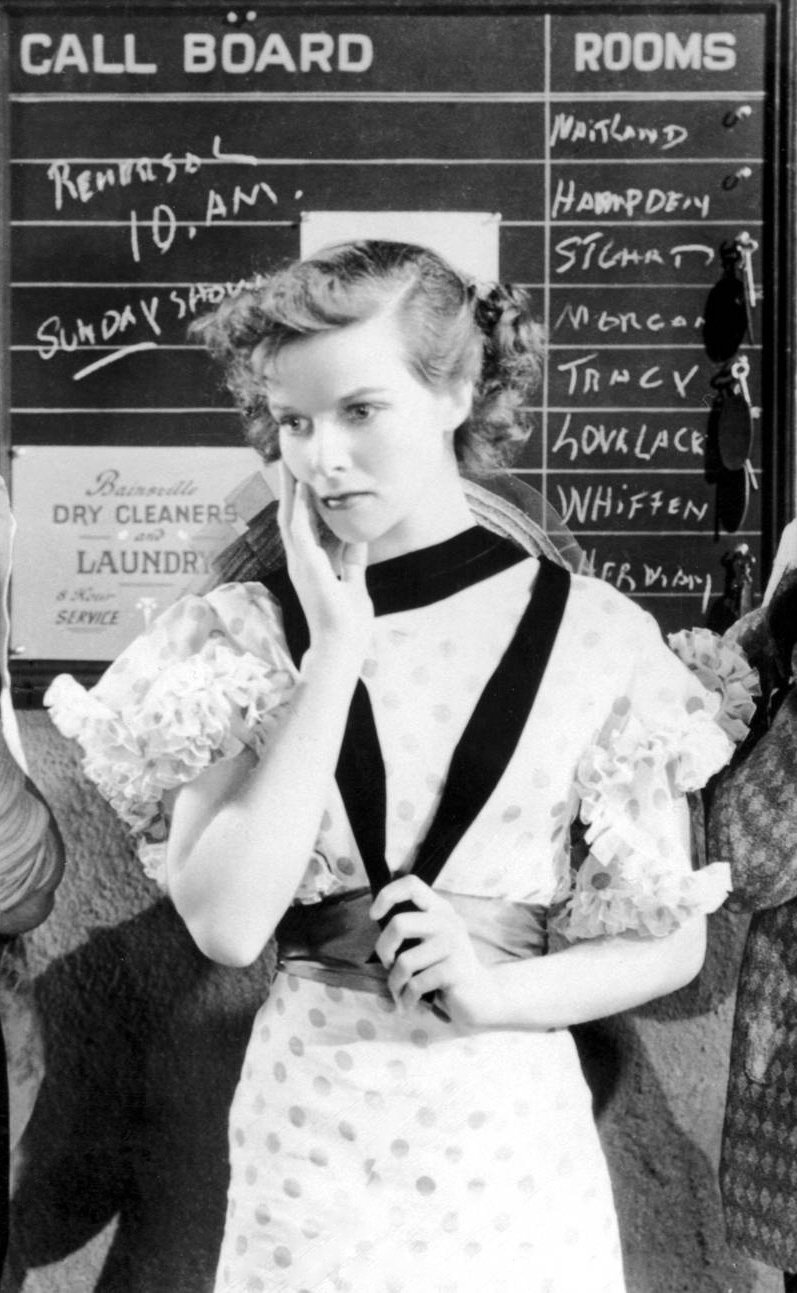
MORNING GLORY (top), which won Katharine Hepburn her first Oscar, would get equal attention with LOVE AFFAIR (bottom) on TCM in a tribute to Hepburn’s career.
Much of the discussion centered around the fact that the festival is screening Out of Sight, a film from 1998 edited by Anne V. Coates. Having edited Lawrence of Arabia, Murder on the Orient Express, and several other noteworthy titles that firmly establish her in the landscape of classic Hollywood, Coates is a deserved honoree at the festival this year for her achievements in editing and, Tabesh said, she requested that the festival screen Out of Sight for a look into what editing looks like today. A look into editing from a woman in the business for over 50 years is a remarkable gift to festival goers. As there is no set definition of “classic,” TCM is obligated to identify and adhere to what they as a channel and a brand consider to be classic cinema, and for Tabesh, classic film has no expiration date. This is clear in TCM’s choice of programming on the channel as well as at the festival–for an in-depth discussion of TCM’s programming choices and what makes a classic, see my article TCM Programming and the Definition of Classic Film. After a short break for lunch, which I spent with my friend Spencer and fellow blogger Kristen at Journeys in Classic Film, festivalgoers convened again at Club TCM for an exciting round of So You Think You Know Movies?, TCM’s difficult and rapid-fire trivia competition. So You Think You Know Movies? is designed for the trivia master, with extremely obscure questions about film history and culture. Trivia is my strong suit, and our team did well, but ultimately a team of 8 called The Flickers won the grand prize, and deservedly so. When quizzed on the spot after the game, they knew almost all the answers to the supplementary questions, which were just as difficult as in the regular game.
As those with high-level passes got ready for the big opening night screening of The Sound of Music, I had a few hours to relax wherein I caught up on some preliminary blogging until 5:30, when I decided it was time to get in line for Queen Christina. A word about lines at the festival–passholders must line up in order to gain entrance to a movie, and entrance is first come, first served. Needless to say, lines queue up quickly. As I deduced that Queen Christina, a hugely popular movie with two hugely popular stars (Greta Garbo and John Gilbert), I gave myself an hour to play it safe in case it sold out. The movie began at 6:30, and the audience was treated to two wonderful things–first, an introduction by noted film historian Cari Beauchamp, and then a rare lighting test that showed Greta Garbo acting in a casual manner. Cari Beauchamp’s talk included details about Greta Garbo’s personal life (“Ernst Lubitsch said that Greta Garbo was the most uninhibited people he knew,” she related), and about her acting in general, in this film and beyond. It was a great introduction to a fascinating film. Queen Christina is one of the last great hurrahs of the days before the full implementation of the Production Code. It tells the true story of Sweden’s queen Christina, who lived in the mid-1600s and who many historians now believe was either transgender or intersex. The film hints gingerly at these subjects, though even in the days before the Production Code, the industry was bound by what it thought the public would accept, so a full examination of a transgender person was out of the question. However, in scenes like these, director Rouben Mamoulian gives the audience an idea of what it is he’s trying to get across.
For a full analysis of the LGBT implications of Queen Christina, feel free to check out my post on the subject for the Queer Film Blogathon in 2011.
Next up was one of my favorites, a showing of the screwball classic My Man Godfrey in a theater that was packed to the gills with enthusiastic fans. This is one that I have seen on the big screen several times, but always seem to come back for more whenever it is showing. One of the zaniest screwball comedies of all time, it is a masterpiece of ensemble acting and director Gregory La Cava directs Carole Lombard and William Powell to perfection. Alice Brady, playing the eccentric and off-the-wall mother, was robbed of an Oscar in 1936, though the film itself received 6 Oscar nominations including Alice Brady for Best Supporting Actress, and remains one of the best-loved screwballs among devotees of classic cinema. We have a big day tomorrow, so I’d better get to bed. See you tomorrow night!
The TCM Classic Film Festival, going on its sixth consecutive year later this month, is known for its devoted following and a large, dedicated staff that keeps a monumental event running seamlessly from start to finish. Classic Hollywood guests, behind-the-scenes film programmers and prominent on-air talent bring life to the festival, giving it the vitality that has come to define this event over these past six years. This year, a major component of past festivals will be missing. The legendary Robert Osborne, the face of TCM and a tour-de-force within the film industry, is undergoing surgery the week of the festival and will be unable to appear at the event.
Osborne, approaching his 83rd birthday, still plays an essential and active role in turning the wheels that keep TCM operating. Though he has increasingly delegated hosting duties to Ben Mankiewicz in recent months, he remains a veritable powerhouse on the channel and has achieved the status of a near-deity within the community of classic film aficionados. He will be greatly missed at the festival this year, and Backlots certainly wishes him a speedy recovery.
I have met Robert Osborne a number of times, but I must say that my favorite moment with him was when he asked about my favorite film at the festival. This was a year when they had shown Cover Girl, a movie that I knew was a mutual favorite. We discussed Cover Girl and Rita Hayworth for several minutes, and I walked away thinking “I just talked to Robert Osborne about Rita Hayworth. What a story I have!” So Robert, here’s to your successful surgery–and make way for tomorrow!
A few days ago TCM released the final schedule of the TCM Classic Film Festival, and there has been a lot of chatter about it already. Much of the discussion has centered around an idea that I have often brought up on this blog, a point of contention among classic film fans–the definition of “classic film” and what constitutes a classic.
This year’s festival features an unusually large number of films from the 1970s and beyond, and for some die-hard TCM fans this has proven a bitter pill to swallow. Many are devoted to films made in the “classical Hollywood era” (an academic designation for films made between 1927 and 1963) and purport that a classic film festival should prioritize films made between the birth of sound on film and the final waning years of the Production Code in order to truly be considered a “classic film festival.”
As I have mentioned before, there is no singular definition for what makes a classic. The term “classic film” is as diverse as the movies themselves, and the vast majority of film fans would not be able to give you a clear-cut definition of what the term means to them–“I know a classic when I see one” is commonly heard among film devotees, perpetuating the enigma of the concept. For me, though I am unabashedly a devotee of the classical Hollywood era, I am familiar with the difficulty of programming a classic film festival that is unbiased and fair to people with varied definitions of “classic,” and trying to make as many attendees happy as possible.
On my part, I have grown to truly love the TCM Festival schedule this year and have already mapped out my timetable. Go to filmfestival.tcm.com for the full schedule, but here is what you may expect from Backlots this year:
THURSDAY:
QUEEN CHRISTINA
MY MAN GODFREY
Friday:
INHERIT THE WIND
THE PROUD REBEL/THE PURPLE ROSE OF CAIRO (I’m loyal to my Olivia, but man, Purple Rose of Cairo…and on the big screen…I’m torn on this one.)
LIMELIGHT
STEAMBOAT BILL, JR.
REBECCA
BOOM! (I’ll have to leave Rebecca early, but there is no freaking way I’m missing the camp factor that is Boom!)
Saturday:
WHY BE GOOD? (I saw this a few months ago and it is so fantastic. Viva Colleen Moore!)
42nd STREET
THE MIRACLE WORKER
Hollywood Home Movies
ADAM’S RIB
Sunday:
THE HUNCHBACK OF NOTRE DAME
GUNGA DIN/THE DIARY OF ANNE FRANK (I’ll probably decide the day of)
THE PHILADELPHIA STORY/THE CHILDREN’S HOUR/JUDGMENT AT NUREMBERG
A few days ago, I received confirmation that Backlots will be covering the TCM Classic Film Festival in Hollywood, as a member of the press for the third year in a row.
Over the past 6 years of its existence, the TCM Classic Film Festival has become synonymous with class and sophistication, and has provided a haven and meeting place for classic film lovers from all over the world. Featuring a plethora of classic film related events to augment the film showings, and world-class guests from all areas of the entertainment world, the TCM Classic Film Festival is truly not to be missed.
Though the full schedule for this year is yet to be released, the theme of “History According to Hollywood” has yielded such exciting programming choices as Gunga Din, Dr. Zhivago, The Hunchback of Notre Dame, and 1776.
Stay tuned, as I will be posting exciting updates to the schedule in these weeks leading up to the festival. In the meantime, if you are in the Los Angeles area, be sure to go to http://www.tcm.com/festival to learn more about the pass options and how to attend. I look forward to seeing you there!
Janet Gaynor receives the first Academy Award for Best Actress, for three roles: STREET ANGEL (1928), 7TH HEAVEN (1927), and SUNRISE: A SONG OF TWO HUMANS (1927).
At this moment, the film world is busy preparing for its biggest event of the year, when Hollywood’s best and the brightest come together to honor the greatest work done over the past year. It is a tradition so ingrained into Hollywood culture that it is difficult to imagine a time without it, a time when there was no precedent against which to measure the best performance or director or screenplay of the year. Yet the film industry already had more than 30 years of history by the time of the first Academy Awards ceremony, and few could fathom the impact that it would have on the industry and how much one ceremony could change the way we look at film as a whole.
The first Academy Award ceremony, 1929.
The first Oscars ceremony was held in the Blossom Room of the Hollywood Roosevelt Hotel on May 16, 1929. Tickets were $5 per person, and 15 awards (the winners of which had already been announced) were handed out in front of an audience of 270 people, in a ceremony that lasted 15 minutes. The award given out for Best Picture of the Year, to William Wellman’s Wings, proved to be a significant one–it would become the only film marketed as a silent to win Best Picture for 83 years.
At the time of the initial release of Wings in 1927, the film industry was on the brink of a massive transformation. The Jazz Singer, the first major film featuring synchronized dialogue, exploded onto the screen less than 6 months after the release of Wings, inciting wonder and fascination in the public, worry and fear in theater owners. Proprietors of small theaters wrung their hands over how to afford the transition to sound that seemed to be coming like a tidal wave. Construction of sound equipment would be expensive and prohibitive, and if sound films continued to be as popular as The Jazz Singer was, audiences would flock to the bigger, more lucrative theaters who could afford sound films, and the small theaters would go out of business. This simultaneously exciting and frightening time in the industry provided the backdrop for the years leading up to the first Academy Awards.
The first words of synchronized dialogue in a major feature film, spoken by Al Jolson in The Jazz Singer (1927).
In order to allow small theaters to adapt their theaters with minimal financial impact, most films to be released in sound between 1927 and 1929 had a silent counterpart to be shown in the silent theaters. Nonetheless, even in silent films, the influence of the coming of sound was palpable. Plots were tighter, intertitles appeared more frequently and featured more skillfully written dialogue. Some of the best silent films were released during the era between 1927 and 1929, due to the influence that sound films were having on the public and the response that silent filmmakers had to make to that influence.
By 1929, sound had become industry standard. The silent era had eroded under the pressure of sound, and most theaters had had enough time to renovate their theaters to accommodate sound pictures. Though silents continued in foreign markets and under certain filmmakers (Charlie Chaplin made his final silent, Modern Times, in 1936), sound had taken over as the default method in the United States. And at the dawn of this new epoch of filmmaking came the birth of the Academy Awards.
There was truly no better time for the tradition of the Academy Awards to start than the spring of 1929. The honored films and performances include some of the best in all the silent era–Sunrise: A Song of Two Humans, one of three performances for which Janet Gaynor won the first Academy Award for Best Actress, ranks as not only a giant of the silent era, but one of the most beautifully filmed movies in all film history. Wings, a war drama focusing on aerial combat,employs the magnificent feat of filming from the air, an almost unheard-of special effect in 1927, and the marvel of it holds up even today.
A scene from WINGS, shot from the air.
In 2012, the Academy Awards paid tribute to its past by awarding the Best Picture Oscar to The Artist, the French-American silent collaboration about Hollywood’s transition to sound. It seemed that the circle was complete–though The Artist bears little resemblance to silent films of the past, it was a nostalgic look at what was, and at the same time, a commentary on what is.
Don’t forget to watch the Oscars on ABC tomorrow, at 7 EST, 4 PST!
I’m thrilled that Theresa, at the fantastic new blog CineMaven’s: Essays From the Couch, is participating this year with a treatise on the divas in Libeled Lady versus those in its remake, Easy to Wed.
Marsha at A Person in the Darktries to keep it civil between Jean Brodie and Sandy from The Prime of Miss Jean Brodie.
Critica Retro offers up a piece on Olivia de Havilland’s twins suspected of murder in The Dark Mirror. If you don’t speak Portuguese, be sure to make use of Le’s handy translate button on the right side of the page!
At Girls Do Film, we are treated to a fascinating look at the legendary relationship between two of the biggest divas of them all, Greta Garbo and Marlene Dietrich.
I See a Dark Theatertakes on diva Rags Ragland and his dual role in Whistling in Dixie.
Meanwhile, at Vitaphone Dreamer, Lina Lamont and Kathy Selden take center stage as they duel over Don Lockwood in Singin’ In the Rain. So fabulous we “cahn’t steeeeand it!”
We travel to France for some Napoleonic dueling in Silver Screen Modes‘ post about The Duellists.
Movies, Silentlydiscusses Constance Talmadge and a wacky storyline involving identical twins in her piece on Her Sister From Paris.
Classic Reel Girl gets creative and tells us why Bob Hope and Bing Crosby really are dueling divas (no doubt on my end)!
It’s a battle of the Barbras over at Moon in Geminiwhere we’re treated to a piece on Barbra Streisand’s dual roles (with a twist) in a On a Clear Day You Can See Forever.
Hear ye, hear ye, this serves as your reminder that the Dueling Divas Blogathon is happening this Saturday! Get ready for a fun day of rivalry and revelry, when Backlots’ readers get together to contribute posts about their favorite dueling divas. In case you’re new around these parts, here are the guidelines for this blogathon, now in its 4th year:
Your topic may be related to any of the following:
Classic film personalities who had a rivalry in real life, either over a particular film role or over a personality clash, ie Bette Davis and Joan Crawford
Classic film characters who had a rivalry on the screen, ie Mildred and Veda from Mildred Pierce
Any dual role played by an actor or actress in a classic film, ie Hayley Mills in The Parent Trap.
You don’t need to feel limited to a single duel between two personalities or characters. You can talk about various clashes a single actor had (ahem…Bette Davis) or duels within a group. In the past, I have written about the duels in The Women, which was a lot of fun.
Also, Backlots is a progressive and gender-eschewing blog, so your divas may be women or men, as you wish.
If you haven’t signed up yet, there’s still time! Email me or comment on this post, and I will know to expect your entry on Saturday.
I am very much looking forward to our 4th year of Dueling Divas, and know that this year is going to be a great one!
As a proud Barbara Stanwyck aficionado, I was thrilled when Noir City 13 reached its halfway point on Wednesday night with a screening of two Barbara Stanwyck dramas from the 1950s–Clash By Night (1950) and Crime of Passion (1957). As both are films that I have seen before (I’ve seen 67 Barbara Stanwyck films–yes, I’ve counted), and given that transportation home gets difficult after about 9:30, I only opted to see the former last night. Regardless, I have two films to write about today, because on Monday we were treated to a showing of one of the greatest and most charming detective stories on film, Dashiell Hammett’s The Thin Man. This is a movie I have written about several times in the past, and seen on the big screen multiple times, but viewing it at the Castro is an experience all its own.
San Francisco, in all its glory, is a town full of cinephiles. People here know their cinema, and they know how to tell the good from the bad. So when there is a packed house for a classic movie in San Francisco, you know it’s good. The theater was packed solid on Monday night.
Released right on the brink of the Production Code, The Thin Man tells the story of Nick and Nora Charles, a married detecting couple who drink their way through life and try (unsuccessfully) not to get involved in detective cases. But when a series of murders occurs and Nick knows people involved, he can’t keep himself away. Nora is just as essential to solving the murders as Nick is, and this is part of the timeless appeal of this movie.
The Thin Man is famous for its snappy dialogue and witty repartee, and for being one of the first movies to show that a husband and wife can be friends, and not just romantic partners. Nick and Nora spend the movie ribbing and joking with each other, just as good friends would do. Nora is an equal to Nick–she never once stoops below his level nor does Nick ever take the upper hand. Yet their love is never in doubt, and for its refreshing take on relationships and the position of women within marriage, The Thin Man may be considered a truly feminist movie.
On Wednesday evening, as Noir City reached its halfway point, I again ventured out to the Castro to view Clash By Night, a 1950 Barbara Stanwyck drama that again skirts the limits of the Production Code. Based on a Broadway stage play by Clifford Odets, Clash By Night tells the story of a woman who marries one man, but loves another. She is torn between love and duty, and ends up making decisions that she regrets. The two love interests are played by Paul Douglas (the man she marries) and Robert Ryan (the man she loves), and the film also stars a young Marilyn Monroe, playing Stanwyck’s brother’s girlfriend, also coming to terms with issues of love. The brilliance of the story, and also the aspect that comes into conflict with the Code, lies in the fact that there is no clear villain, and the audience struggles right along with Stanwyck in trying to determine which decision is the best. Does she leave her husband, with whom she has a child, in order to follow her heart with Robert Ryan? Or does she keep her marriage together for the sake of her husband and her child? We see her conflict, and we empathize with her.
It is interesting to note the offscreen rapport between Barbara Stanwyck, the consummate professional actress of Hollywood’s Golden Age, and Marilyn Monroe, the up-and-coming starlet who was already showing signs of psychological problems and difficulties on the set. The director of Clash By Night, the great Fritz Lang, was not up to handling Monroe’s tardiness and personal problems, but Barbara Stanwyck stood up for the young actress and protected her. She gave Marilyn acting tips, shielded her from criticism, and seemed to take her under her wing as a sort of protege. The two had come from similar difficult childhoods–both had been foster children, abandoned by their parents and raised with little to no stability. Stanwyck seemed to understand what Marilyn had been through and was continuing to go through psychologically, and their positive chemistry shines through on the screen. Their scenes together are some of the tenderest in the movie, and Marilyn Monroe later said that Barbara Stanwyck was the only actress from Hollywood’s Golden Age who ever showed her kindness.
I will be seeing the classic French thriller Les Diaboliques tomorrow evening (one of my all-time favorite films, and this will be my first time seeing it on the big screen), followed by The Honeymoon Killers on Sunday. Stay tuned for a report!
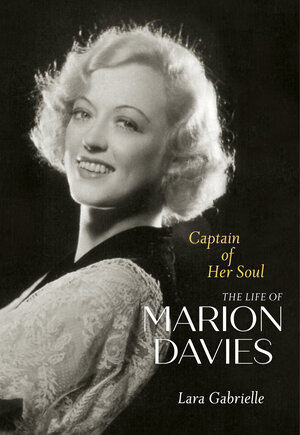
Captain of Her Soul: The Life of Marion Davies is now available at your favorite bookseller! Click hereto order it, and visit mariondaviesbook.com for all the latest.
Backlots is devoted to honoring and celebrating all aspects of classic film and is written by Lara Gabrielle, a California-based classic film writer and historian. Lara is the author of CAPTAIN OF HER SOUL: The Life of Marion Davies (UC Press, 2022).
Here you will find pieces on frequently seen classics and some lesser-known gems, as well as book reviews, festival coverage, and pieces on the history, theory and culture of film as it relates to the study of classic cinema.
Enjoy the site, and thanks for reading!
AFFILIATIONS & AWARDS
2019 CMBA Award for Best Profile of Classic Movie Performer or Filmmaker--"The Activism of Myrna Loy"
Winner of the 2018 CiMBA Award for Best Classic Movie Series, BACKLOTS AT THE COURTHOUSE: OLIVIA DE HAVILLAND VS. FX
Winner of the 2014 CiMBA Award for Best Profile of a Classic Movie Performer or Filmmaker: A Q&A WITH JOAN FONTAINE IN HONOR OF HER 96TH BIRTHDAY
Winner of the 2011 CiMBA Award for Best Classic Movie Discussion, THE FINAL SCENE OF THE HEIRESS
I am honored to be a judge of the Animal Film Festival in Grass Valley, CA.
EVENTS
BACKLOTS ON THE WEB
Join us at the Backlot Commissary, the place for Backlots' readers to share content and discuss movies!
Walter Pidgeon and Greer Garson in "Mrs. Miniver."




















_03.jpg)

 Backlots