The 8th annual TCM Classic Film Festival is coming to a close, and what a weekend it’s been. When I return home tomorrow I will write a wrap-up post summarizing my experience, but I would be remiss if I didn’t write a post today discussing the nitrate prints that festivalgoers were treated to at the Egyptian Theatre these past few days.
Nitrate film stock is known for the shimmering quality it lends to the picture, and for its unique accentuation of line, shadow, and light. It was used in the film industry through 1952, and then due to safety issues owing to its extreme flammability (it holds its own source of oxygen, and keeps burning when thrown in water), it was no longer produced. Many nitrate films were destroyed when the stock went out of production, but we’re lucky that many were also rescued. When one watches a nitrate film, one is essentially watching an “original,” the film equivalent of holding an original photograph. Very few theaters are licensed to show nitrate nowadays, because of the heightened risk of fire. In the Bay Area, where I live, only the Stanford Theater in Palo Alto is equipped to show it.
Going into the festival, one of my most anticipated screenings was Black Narcissus (1947) on nitrate. One of the most beautifully photographed movies of all time, with some of the most vibrant colors we’ve ever seen on film, I knew that it was going to be a magnificent viewing experience. What I was not particularly prepared for, however, was Laura (1944).
I debated whether or not I should go to Laura. It was programmed opposite Twentieth Century, one of my all-time favorites starring one of my all-time favorite actresses, Carole Lombard. It pained me to choose, but ultimately I decided that nitrate needed to take priority.
I’ve seen Laura many times, but was not prepared for what happened when I saw when Gene Tierney onscreen. The nitrate accentuated the lines and shadows of her face, her big, expressive eyes, and the porcelain skin under her jet-black hair. Tierney, whom I consider to be one of the most beautiful faces ever to grace the screen, was so exquisite on nitrate that tears fell from my eyes.
I must stop for a moment to discuss the print. I had a discussion with a few people afterward who were distracted by the pops and scratches on the nitrate print, which had come from the Academy as a “for your consideration” copy for the 1945 Academy Awards. The print did pop and some key lines were covered up. For me, that didn’t matter. We were there (at least I was there) to get the visual of the nitrate. Granted, I have seen this movie before and don’t necessarily need to hear the lines, but I came up with this comparison. When you look at an antique, made by a prominent designer who is known for a certain style, you don’t factor in the fact that it might have scratches on it in your analysis of the style. You look at the style in and of itself, and while the scratches might be an inconvenience, it’s really not what you’re there to look at. That’s my view of the nitrate print of Laura. I saw what I was looking for, and the rest came with the territory of looking at an old film.
With Black Narcissus, none of this was an issue. The print was beautiful, the nitrate was beautiful. Black Narcissus is a movie that has sent a chill up my spine since the first time I saw it. The story of British nuns trying to run a convent in the Himalayas, dealing with cultural differences and a dangerously unstable member of their order, the photography is breathtaking, and the ending is, to this day, considered to be one of the scariest moments in the history of British cinema.
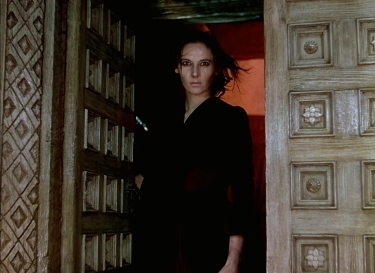
One of the standout nitrate moments for me in Black Narcissus were when Deborah Kerr’s character, Sister Clodagh, has a flashback to when she was a young girl in love in her native Ireland.
The sparkling of the sea in the background, combined with the lines in Deborah Kerr’s hair and the serene, muted colors, brought me to tears during this scene.
The frightening penultimate scene of the movie became even scarier, if that’s possible, as the nitrate highlighted the character’s gaunt, red-tinted eyes and sick pallor.
And finally, at the end, the shot of the green leaves as the rain falls on them.
If you have never seen a film on nitrate, you owe it to yourself to find a theater near you that screens nitrate film. Or better yet, come to the TCM Classic Film Festival next year. There are only a select few theaters in the country that have a license to show nitrate, and The Egyptian Theatre’s retrofit to nitrate capabilities means that the TCM Festival will likely be showing nitrate from now on. It is one of the greatest filmgoing experiences you can have.
I’ll wrap up after I return home tomorrow. See you then, and thanks for reading!
We’re in the middle of the TCM Classic Film Festival’s first full day, and during this break I have between screenings, I wanted to talk about what it’s like to watch an established favorite with a community like the one at the TCM Festival. In a prior post, I discussed the fact that I tend toward the old favorites when faced with a screening dilemma, and much of my reasoning for that comes from the sense of community that comes from sitting in a theater and watching something you’ve seen dozens of times.
Last year, the screening of The More the Merrier proved to be my festival highlight, due to the sheer joy of hearing raucous laughter while Jean Arthur and Joel McCrea were on the screen, and anticipating when that laughter was going to come. I had the same experience this morning with the screening of Born Yesterday (1950). Those loyal readers of Backlots may be familiar with the love I have for Born Yesterday and its messages of freedom through knowledge, and when I arrived at the theater I was thrilled to see that the line to get in was one of the longest I’ve ever seen, extending around the ropes and even necessitating the management to form another line outside. When we were let in, there was barely a single seat left in the theater. I began to look forward to another enthusiastic crowd.
Born Yesterday, and especially Judy Holliday, have always held a bit of a special place in my heart. The combination of physical comedy, topical and progressive subject matter, brilliant and sincere performances, and a witty, dynamic script combine to make a movie that clicked for me at a young age. So much so, in fact, that in 7th grade I chose to do a class report and presentation on Judy Holliday, highlighting clips from Born Yesterday to illustrate my points about her acting ability, including the one below.
(Apologies for the faulty video, but this is the only clip of this scene that seems to exist online, and it’s too good to leave out of this post.)
When this scene came onscreen this morning, the audience went wild, laughing uproariously at Holliday’s card organizing, as well as her mannerisms and quirks that make the scene one of the greatest bits of downplayed physical comedy that I’ve ever seen. When Holliday called out “Gin!” and spread her cards out on the table, in the face of her brash and uncultured boyfriend, the audience clapped loudly.
To hear others appreciating Born Yesterday as I do, and appreciating Judy Holliday as I have for so many years, is a priceless gift of the TCM Classic Film Festival. Rarely in life do we classic film fans get the opportunity to sit in the dark, with our favorite people up on the screen, with nothing but love opposite them in the audience. But once a year at the festival, we can be assured of it.
Thanks for reading, and keep watching this space for more! Here are some photos from some other things that have been going on:
Opening night red carpet featuring In the Heat of the Night (1967)
Hand/footprint ceremony for Rob Reiner and Carl Reiner, featuring guests Billy Crystal, Tom Bergeron, and Norman Lear alongside TCM network representatives Jennifer Dorian, Ben Mankiewicz, Coleman Breland, Genevieve McGillicuddy, and Charlie Tabesh.
At the opening night. Walter Mirisch, Sidney Poitier, Quincy Jones, Norman Jewison, and Lee Grant, with TCM network representatives Ben Mankiewicz, Jennifer Dorian, Charlie Tabesh, Genevieve McGillicuddy, and Coleman Breland.
This afternoon, classic film fans from around the country and the world descended upon the stretch of Hollywood Boulevard that runs from the Roosevelt Hotel to the Egyptian Theater for the opening of the TCM Classic Film Festival. For much of the day, the street was completely blocked off for the red carpet entrance to the opening night movie, In The Heat of the Night, for which Sidney Poitier and Norman Jewison were in attendance. It looked to be a spectacular affair. But for those of us whose passes don’t allow entrance to the opening night movie, there was no shortage of other choices–and I, being a devotee of Bette Davis in general and Jezebel in particular, was glad to see the pre-Civil War story of love and defiance as an option for the festival’s opening night. It was a screening I did not want to miss.
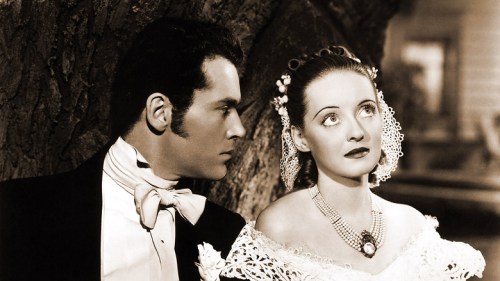
Jezebel has always fascinated me. The story of Julie Marsden (Bette Davis), a rebellious young southern belle in 1852, who defies convention and alienates her companion Pres (Henry Fonda) only to have him leave and return with a new wife, it is a beautifully directed, beautifully costumed movie that plays with the idea of women’s rights long before the women’s rights movement, while still reining itself in with the restrictions of the production code. We see a strong woman who fights for what she wants, but who repents when her companion leaves. Then when he comes back with a new wife, she rebels again, only to give her final repentance at the dramatic ending.
I arrived at the movie relatively late in my classic film life, having somehow missed it until my first year in college, and due to the nuanced and textured performances of Bette Davis and Fay Bainter, I’m rather glad that I came to it late. As I watched Jezebel for the first time, I was able to grasp right away the meticulous and fine acting details that define the movie.
Jezebel is best-known for the scene in which Julie appears at the Olympus ball in a red dress, in direct defiance of what Pres wants her to do. All unmarried women appear in white, he tells her, but when Julie insinuates that he’s just afraid of having to defend her, he relents and takes her to the ball in the red dress. It is indeed a marvelous scene, filled with discomfort and palpable tension. But what I consider to be the greatest moment in the movie occurs afterward.
Following the dance, Pres leaves Julie, humiliated. A year later, he returns and Julie has repented, appearing to him in a white dress and asking him to forgive her. She kneels down to the floor, her dress flowing around her, and tells him “Pres, I’m kneelin’ to ya.” A few seconds later, Julie finds out that Pres has married during his absence. The woman walks into the room and is introduced as Pres’ new wife from New York. What follows is a phenomenal 7-second performance by Bette Davis. Start the video at 2:31.
Davis immediately transforms from the angelic, saintly creature that was kneeling to Pres on the ground, into a confused, startled person. She starts with a blank stare, almost as if she hadn’t heard what was said. Then, she gets a look on her face that shows comprehension, but a disbelief that he had done it. Leaning forward slightly, she looks for a moment as if she were about to move toward him, but thinks better of it. She looks at Amy, scrutinizing her, looking her up and down, then gets a puzzled look on her face, and turns back to Pres before she says, in shocked disbelief, “Your wife.” This all happens over the span of 7 seconds.
The entire moment is played in the face–except for a small movement of her arms when she is leaning forward. It works due to Davis’ naturally expressive features, and her ability to use them and them alone. These 7 seconds are a testament to Davis’ skill as an actress, and to her ability to work effectively with director William Wyler. By this time, Wyler knew Bette Davis extraordinarily well, onscreen and off. By the time of Jezebel‘s filming, Davis and Wyler were spending a great deal of time together as romantic companions, and Wyler used his knowledge of Davis to direct her to her second Academy Award. Whatever direction Wyler gave her in that moment prompted Davis to create one of the most impressive physical moments of her career.
Stay tuned for more reports from the TCM Classic Film Festival as it rolls on through the weekend. Tomorrow’s schedule includes screenings of The Maltese Falcon, Born Yesterday, and Red-Headed Woman. Thanks for reading!
The TCM Classic Film Festival released its full schedule this past week, and social media has been abuzz ever since with attendees announcing their festival picks. Some festivalgoers opt to prioritize screenings of movies new to them, others prefer to see old favorites alongside others who love the film as they do.
It seems to come down to a difference in what attendees hope to get out of the festival. For those who give priority to the “new-to-me” screenings, the TCM Classic Film Festival serves as a pathway to expanded film fluency, an opportunity to close the gaps in their film repertoire, gaps that we all have regardless of our level of knowledge. For those who prefer to put movies they’ve seen before at the top of their list, sometimes movies they’ve seen dozens of times, the festival is a way to bond with other classic film lovers, to visit with those who have a special connection to a particular movie or genre. And, naturally, there are those who consciously combine the two practices.
Historically speaking, I’ve tended to run with the “old favorites” crowd. Over the past 6 years that I’ve attended what is known affectionately as “TCMFF,” I’ve found that the most useful gift that the festival can give me personally, and that I can then give to Backlots’ readers, is a connection with the movies and the people who attend the festival. At last year’s screening of The More the Merrier, for example, I knew about half the audience, and I knew how much they loved the movie. There is a sense of community that comes from that, one that I wouldn’t have gotten if I had gone to see a movie with which I was unfamiliar.
I’m aware that I have a bit of privilege when it comes to picking movies for TCMFF. The San Francisco Bay Area provides easy access to classic movies, and chances are good that a movie shown at TCMFF that I’ve never seen will also play at the Castro or the Roxie at some point, so I can feel comfortable settling in with an old favorite on the big screen. Many attendees don’t have such easy access to classics, and seeing an old favorite on the big screen would be a wasted opportunity to expand their viewing repertoire. One of the beautiful things about TCMFF is that it can be easily customized for the individual attendee–her interests, preferences, and what she wants to get out of the festival as a whole.
With that context in mind, here is my TCMFF schedule:
THURSDAY, APRIL 6
6:30 PM: Jezebel (1938)
9:30 PM: The Man Who Knew Too Much (1934)
FRIDAY, APRIL 7
9:00 AM: The Maltese Falcon (1941)
11:30 AM: Born Yesterday (1950)
2:00 PM: Trivia at the Roosevelt
4:30 PM: So This is Paris (1926)
7:00 PM: Red-Headed Woman (1932)
9:30 PM: Laura (1944)
SATURDAY, APRIL 8
9:00 AM: Arsenic and Old Lace (1944)
12:00 PM: The Awful Truth (1937)
5:00 PM: Hollywood Home Movies
6:30 PM: Theodora Goes Wild (1936)
9:30 PM: Black Narcissus (1947)
SUNDAY APRIL 9
10:15 AM: The Egg and I (1947)
1:30 PM: The Palm Beach Story (1942)
4:30 PM: Singin’ In the Rain (1952)
8:00 PM: Speedy (1928)
Some notes on my choices:
Black Narcissus and Laura are both on nitrate. Nitrate film is rarely shown in theaters today–due to the fragility and flammability of the stock (it has its own source of oxygen, and famously keeps burning when submerged in water), theaters have to have a special license to be able to use the stock in a projection booth. Nitrate is known for the “shimmering” quality it gives the film, and suffice it to say I’m extraordinarily excited to see this on nitrate:
The 9:30 PM slot on Friday is very difficult, as it pits Laura against Twentieth Century (1934) against Cat People (1942). Laura barely ekes out a win over Twentieth Century simply because of the nitrate, but it pains me to abandon Carole Lombard. TCMFF reserves several TBA slots at the end of the festival for movies that overflow, and I’m hoping that Twentieth Century fills one of those spots.
While not a movie per se, the Hollywood Home Movies event at Club TCM is always a highlight of the festival for me. In cooperation with the Academy of Motion Picture Arts and Sciences, TCM brings in rare video of the stars at home and on the set, providing glimpses into their lives often narrated by the children or relatives of the people depicted sitting right there on the stage. It’s marvelous.
I’ll keep you posted with any more news. Thanks for reading!
For the 5th year in a row, Backlots will be joining the ranks of the media in early April, covering the TCM Classic Film Festival in Hollywood. In the years since its inception in 2010, the TCM Classic Film Festival has easily become the most prominent classic film festival in the country, attracting world-class speakers and attended by fans from all over the world.
The festival always has an overarching theme, and this year TCM is saluting comedy in the movies with a theme they call “Make ‘Em Laugh.”
The schedule is still in the works, but the lineup announced so far is phenomenal, even by TCM’s standards. Some of the highlights for me thus far:
The Palm Beach Story
Starring Claudette Colbert, Joel McCrea, and a marvelously funny Mary Astor, The Palm Beach Story is a staple of the screwball comedy genre about a woman who divorces her husband to finance his career with the money of a millionaire she starts to date. This is a movie that we’ve been hoping to have at the festival for some time, as it’s a real crowd-pleaser and very much in the vein of The More the Merrier, which was such a big hit last year.
Red-Headed Woman
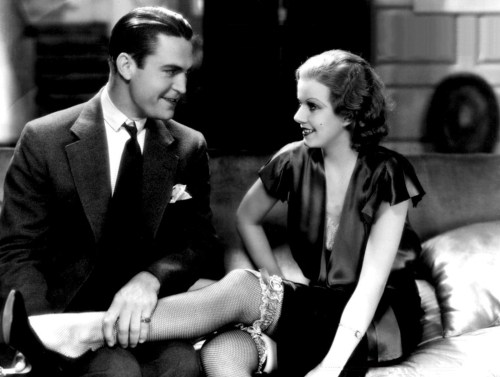
In this steamy pre-code, Jean Harlow uses her feminine power to climb the ladder of success, wrecking marriages, engaging in affairs, and attempting murder along the way. With a screenplay written by Anita Loos, Red-Headed Woman is a must-see in Jean Harlow’s filmography, and a delicious example of what we think of when we think of that raw and glorious era between 1929 and 1934.
Having attended the TCM Classic Film Festival 6 times (5 as press with Backlots), I have come to recognize general trends among festivalgoers, and which movies will be sellouts. TCM has an intricate ticketing system–about an hour before the movie starts, the staff starts passing out numbers to passholders in line, starting with the Spotlight and Essential passes and then moving to the Classic and Media. Once the numbers get past the number of seats in the theater, the movie has sold out. Thus, if you hold a Classic or Media pass, it is important to get in line as early as possible, in order to avoid being shut out of a movie. The festival leaves TBA slots open on the last day of the festival to re-screen select movies that sold out, but it is left to their discretion which ones are re-screened.
Red-Headed Woman is a sellout if I’ve ever seen one. Pre-codes are immensely popular at the TCM Festival, as is Jean Harlow, as are movies from any year of the 1930s. Last year, Double Harness sold out, was re-screened, and sold out again. I would expect this event to repeat with Red-Headed Woman. If you’re attending the festival and would like to see Red-Headed Woman, I would advise you to get in line about 2 hours ahead of time. It will fill up so quickly your head will spin.
Twentieth Century
Considered to be one of the first screwball comedies, Twentieth Century features Carole Lombard and John Barrymore in a zany piece filled with hilarious Carole Lombard lines and over-the-top acting by Barrymore that leaves the viewer in stitches. It’s one that I’m surprised hasn’t been shown up to now, it’s such a marvelous fit for TCM. Watch for this one being sold out too–Carole Lombard always sells well at this festival.
Born Yesterday
The winner of the Best Actress Oscar of 1950 (it came as a thrilling surprise–Judy Holliday was up against Gloria Swanson in Sunset Boulevard and Bette Davis for All About Eve), Born Yesterday is an exploration of how a newly-educated woman equips herself to leave her abusive boyfriend. While on the surface it may look like a standard 1950s comedy, the movie is really an ode to the powers of education, and to a woman’s right to her own happiness. It seems especially significant in this day and age, when both education and women’s rights are under threat. I wrote a blog post about Born Yesterday some time ago, feel free to take a look.
Stay tuned to hear more festival news as it comes in. Looking forward to reporting to you from Hollywood!
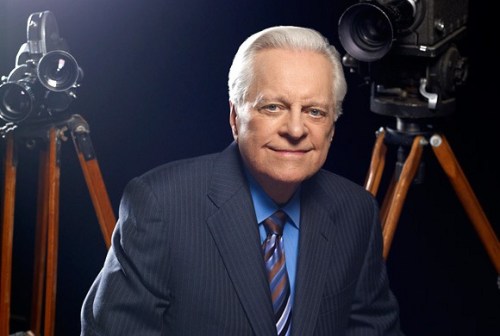
The classic film world has lost a monumental force, one of our preeminent modern film historians and certainly among the most visible. Robert Osborne, the beloved host of Turner Classic Movies since 1994, died on Monday at the age of 84.
Osborne had been on a long hiatus from TCM due to illness, and was absent from the past few TCM festivals in Hollywood. His death hit the classic film world hard, with posts and tributes written almost immediately and emotions running high.
TCM has a unique fan base, and Osborne was the face of the network. Many of us grew up with him, his soothing voice becoming synonymous with evenings in front of the television watching a classic movie. More than just a representative of TCM, however, Osborne transcended the network. His knowledge of movie history, and of the stars and directors who made it, was staggeringly detailed, nuanced, and deep. Always polished and dapper on air, Osborne’s presence on the network was representative of a different era of television–one that seems to have otherwise disappeared. His sophistication and elegance harkened back to the news programs of Edward R. Murrow and Walter Cronkite, as he informed us respectfully, intelligently, and passionately, about the movies he loved as we did.
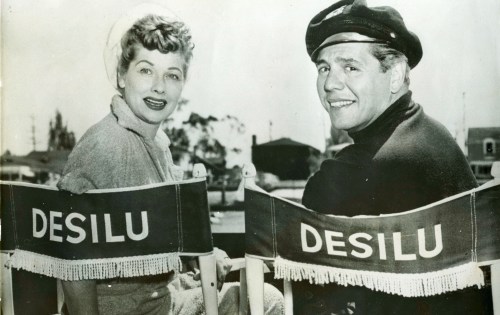
Osborne began his career as an actor with Desilu, and it was Lucille Ball, in her infinite wisdom, who first noticed Osborne’s talent for journalism when he was still a young actor. He published his first book in 1965, then became a longstanding columnist for The Hollywood Reporter. Osborne enjoyed relating the story of his first major interview, for which his subject was Natalie Wood. Osborne told of the incident in an article for a Natalie Wood tribute on TCM:
By the time I met her in 1965, she was already a Hollywood veteran at the age of 27. And along with her determination and brilliance, she also turned out to be incredibly kind, especially to an admittedly novice journalist like me. She was, in fact, my first major celebrity interview and when I arrived at her home, with those beautiful brown eyes looking at me, waiting for me to begin, I realized just how much of a beginner I was. My questions had no rhythm to them, and my notes were, I realized too late, completely disorganized. Looking back, she could have stopped that interview then and there, or quickly answered my questions and ended it almost as soon as it had begun. But she didn’t. Instead, Natalie ended up sitting down on the floor with me and giving me suggestions on how to best organize the interview to get the most interesting story.
That day she became my mentor and, more importantly, my friend.
He went on to be one of the great classic Hollywood interviewers and the author of several books, including a series on the Academy Awards. The series began in 1965 with The Academy Awards Illustrated, and culminated in 85 Years of the Oscar, published in 2013. He was a respected and sought-after co-author, with credits on a seemingly endless list of classic film books.
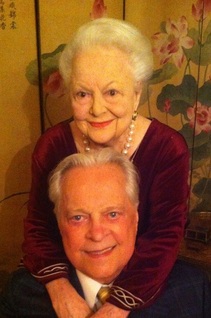
Osborne was a dear friend of many classic Hollywood stars, including Lucille Ball, Bette Davis, and particularly Olivia de Havilland, with whom Osborne spoke every Sunday. It was de Havilland who introduced him to Bette Davis, and the two became fast friends. When he was looking for an apartment in Manhattan in the late 1980s and had finally found one he liked, he called Bette Davis to come see it with him, to get her opinion. Davis liked it, and Osborne took it. The building, serendipitously enough, was called the Osborne, and he lived there for the rest of his life.
I had the great fortune to meet Robert Osborne at the TCM Classic Film Festival in 2012. It wasn’t a very formal meeting, but it was incredibly memorable for me. I related to him my love of Rita Hayworth, and we chatted for a few minutes about her. I feel so fortunate to have met a scholar and man of his stature, and to be able to talk about a mutual love.
Here he is introducing Cover Girl, one of his favorite Rita Hayworth movies. Robert Osborne’s loss is immeasurable, and will be felt forever in the classic film community. He is and will continue to be greatly missed.
For the second year in a row, Turner Classic Movies will pay tribute to significant contributions to the film industry by women, through their Trailblazing Women series in partnership with Women in Film. Last year’s programming was a huge success, with a spotlight on female directors in what has become a crushingly male-dominated industry. This year’s theme will be “Actresses Who Made a Difference,” focusing on those women who contributed to issues outside of acting, and made waves that are still felt today in the film world and beyond.
The month-long Tuesday/Thursday night programming is hosted by Illeana Douglas, joined by a different female guest each night who will discuss the actresses, why they were chosen, and introduce a film made during a significant period in their life. On the first night, October 4, Douglas will be joined by the leading expert on women in early Hollywood, Cari Beauchamp, author of Without Lying Down: Frances Marion and the Powerful Women of Early Hollywood. The subjects on the first night will be three actresses who seized the idea of the traditionally male studio executive and turned it on its head.
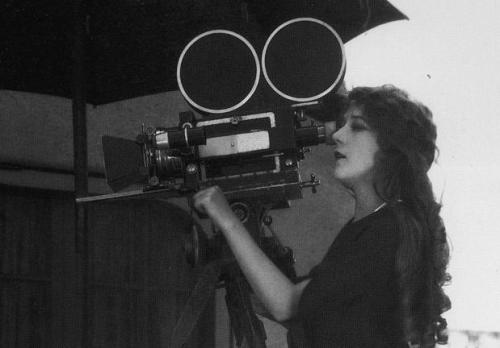
Mary Pickford was one of the most prominent figures in early Hollywood, both on and off the screen. While moviegoing audiences knew her as “Little Mary,” a perpetual little girl in curls even at the age of 30, in reality she was a woman with an steel will and iron constitution, a shrewd businesswoman and a savvy investor who knew the industry inside and out. In 1919, she founded United Artists with Charlie Chaplin, Douglas Fairbanks, and D.W. Griffith, and subsequently founded the Academy of Motion Picture Arts and Sciences and the Motion Picture Relief Fund, which (now operating as the Motion Picture and Television Fund) still serves those in need in the industry. She will be discussed and profiled in conjunction with Little Annie Rooney, a movie she produced and performed in at the height of her position as a head of United Artists Studio in 1925.
Lucille Ball, former contract player at RKO and “Queen of the Bs,” decided in 1950 to join with her husband Desi Arnaz to form their own production company, Desilu, in order to pitch a series based on Ball’s radio program My Favorite Wife. The series eventually became I Love Lucy, the production company became one of the most formidable forces in the business, and Lucille Ball became one of the most influential figures in movies and television. In 1960, she became the sole owner of Desilu and was directly responsible for shows such as Star Trek and The Untouchables getting to air. The movie Yours, Mine, and Ours was made in 1968, while Lucille Ball was serving as the powerful president of Desilu.
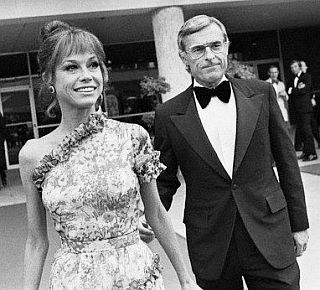
Following directly in Lucille Ball’s footsteps was Mary Tyler Moore. 3 years out of her debut hit series The Dick Van Dyke Show (in which she broke significant ground for women on television in her own right), Moore created MTM Enterprises with husband Grant Tinker in order to pitch The Mary Tyler Moore Show in 1969. The show premiered the following year and lasted for 7 phenomenal seasons, during which time MTM Enterprises grew and produced not only the show’s spinoffs, Rhoda, Phyllis, and Lou Grant, but also the popular The Bob Newhart Show,Hill Street Blues, and St. Elsewhere. The movie Thoroughly Modern Millie, chosen to represent Mary Tyler Moore this first evening, was made in 1967, in the in-between time just after Moore’s run on The Dick Van Dyke Show ended, and MTM Enterprises began.
Other nights to watch with significant women profiled:
Bette Midler, discussing women who controlled their own destiny, including:
Olivia de Havilland, the first person to make a major dent in the studio system by winning a contract case against Warner Bros. The ruling, the De Havilland Decision, is still cited often in entertainment law cases. She will be profiled in conjunction with Devotion (1946), filmed in 1943 but unable to be released until after she won the lawsuit.
Marilyn Monroe, who left her Twentieth Century Fox contract behind to study at the Actor’s Studio in New York, only to return and demand director approval on all her projects–then form Marilyn Monroe Productions in 1956 in which she had full control over her work. Her work will be discussed with The Prince and the Showgirl (1956), produced by Marilyn Monroe Productions, as an example.
Jane Fonda, discussing women activists, including:
Myrna Loy, who served as the co-chair on the Advisory Council of the National Committee Against Discrimination in Housing, campaigned actively against McCarthyism and the Vietnam War, and became the first Hollywood personality appointed to U.S. National Commission for UNESCO. One of her best-loved movies, The Thin Man (1934), will be shown to profile her onscreen work.
Dr. Emily Carman, discussing actresses’ wartime contributions, including:
Bette Davis, who together with John Garfield established the Hollywood Canteen, where soldiers could eat and be entertained for free while on leave. A semi-Hollywood movie, Hollywood Canteen, was made in 1944 to promote the canteen and enhance the war effort, and TCM will show it this evening.
Hedy Lamarr, who developed frequency-hopping technology to help with communication between Allied forces, an invention that is still used today in cell phones, wifi networks, and Bluetooth technology. The Conspirators (1944) will be shown to highlight Hedy Lamarr’s war efforts as well as her film work.
Be sure to tune in every Tuesday/Thursday in October for what promises to be a timely and informative look at a group of women who made a difference in the betterment of their industry and their world.
On August 1, TCM began its annual summer tradition of Summer Under the Stars, a full month of specialized programming that honors one classic film star per day. Yesterday was devoted to the films of Edward G. Robinson, and the rest of the month will see days dedicated to such stars as Esther Williams, Ruby Keeler, Karl Malden, and Cyd Charisse. TCM fans look forward to Summer Under the Stars all year, and the announcement of the lineup is always a popular topic of discussion in the online classic film world.
Today we are watching movies starring a very familiar face–but those more versed in television may be surprised to see it on TCM. Before Lucy Ricardo, before the founding of Desilu and the immortal show that cemented Lucille Ball in our collective conscience, she was a rising star at RKO and later MGM, starring with all the big names of both studios and creating a reputation for herself as the “Queen of the B’s.”
Some of the highlights of today’s programming are windows into Lucille Ball’s career as few people know it–that of a talented dramatic actress whose foray into comedy was simply one of the many roads her career could have taken. Ball herself once said “I’m not funny. My writers were funny. My direction was funny. I am not funny. What I am is brave.” Her comedy was a manifestation of a woman driven not toward being funny, but toward perfection and success. Movies like The Big Street and The Dark Corner give us a glimpse into what Ball’s career could have been like had she chosen drama rather than comedy.
In The Big Street, Ball plays a singer who becomes disabled after being pushed down a flight of stairs by her jealous lover, and takes refuge with Pinks (played by Henry Fonda). After a series of circumstances that include being rejected by a former lover for being in a wheelchair, she lashes out at Pinks in a scene that merits Ball an Oscar for her raw, nuanced performance. Unfortunately, the clip does not exist online.
The Dark Corner features Lucille Ball in a film noir, one that is so steeped in the noir trope that it almost seems a parody of itself. Ball is the femme fatale, the beautiful secretary who unwittingly becomes involved in an intricate murder plot. Starring with Mark Stevens and Clifton Webb in a delightful thriller, this is Lucy as you’ve never seen her. She is a convincing and attractive femme fatale, possessing an energy that holds your eyes on her whenever she is onscreen. I first saw this movie at Noir City this past year, and it was a wonderful experience to see it on the big screen for the first time with hundreds of other fans.
Other programming choices today like Best Foot Forward and The Long, Long Trailer show Lucille Ball in roles familiar to the I Love Lucy-loving public–involving raucous comedy and situational humor. But even here, the carefree nature of Ball’s comedy that has become her trademark is carefully planned and calculated to appear so.
The Long, Long Trailer, co-starring none other than Desi Arnaz, was filmed and released during the fourth season of I Love Lucy, and the influence of the show’s characters is clear in Lucy and Desi’s portrayals of their characters in this movie (in a less-than-subtle move, Desi’s character is even named “Nicky”). Talking with a friend of mine about this The Long, Long Trailer the other day, we came to the conclusion that The Long, Long Trailer is really just one big, extended episode of I Love Lucy, with similar characterizations and even similar gags used in each.
I was slightly surprised to see that TCM hadn’t programmed Dance, Girl, Dance this year for Lucille Ball day. It is one of my favorite roles of hers, and a marvelous example of how filmmakers circumvented the code to make the movies they wanted to make. Ball’s character of Bubbles in Dance, Girl, Dance is clearly a “kept woman,” in view of the massive amounts of furs, jewels, and fancy clothes that accompany her wherever she goes. And it features Lucy doing the hula, just about the most seductive dance that could ever have made it past the censors. It also sums up how Lucille Ball, despite her legacy as a comedic genius, was a woman whose genuine talent in many arenas and drive for success defied categorization.
I leave you with Lucille Ball doing the hula in Dance, Girl, Dance. Happy watching, readers!
This is an entry for the Summer Under the Stars blogathon, hosted by my friend Kristen Lopez. Check out the other entries athttp://www.journeysinclassicfilm.com
100 years ago today, Olivia de Havilland was born.
5 years ago this past March (and in the very wee infancy of this blog), I was studying abroad in Paris and heard that the great Olivia de Havilland would be introducing a movie she had recently narrated, a documentary about Alzheimer’s called I Remember Better When I Paint, at the American Library in Paris.
I was ecstatic. This was at a point in my studies where I was becoming quite homesick, and had spent the past few weeks binging classic movies at the Rue Christine in order to give myself a taste of home and comfort. I had become a huge fan of Olivia de Havilland over the past few years, had seen nearly every movie she ever made, and the fact that she would be appearing at the American Library while I was there in Paris seemed almost too good to be true.
She was 94 then, and I had no idea what to expect. Her onscreen persona had been a strange and appealing combination of sweetness and vulnerability, paired with a lion’s strength and an iron will in her eyes. Her life had been a series of triumphs and challenges in the extreme–from rocky relationships with her sister Joan Fontaine and first husband Marcus Goodrich, to loving and beautiful ones with her two children and her second husband, Pierre Galante. She won two Oscars and was nominated for three more. Her childhood had been difficult in many ways, and she overcame it to become one of Hollywood’s brightest superstars and a powerful advocate for the rights of entertainment workers who almost singlehandedly destroyed the studio system. This was a woman of enormous strength.
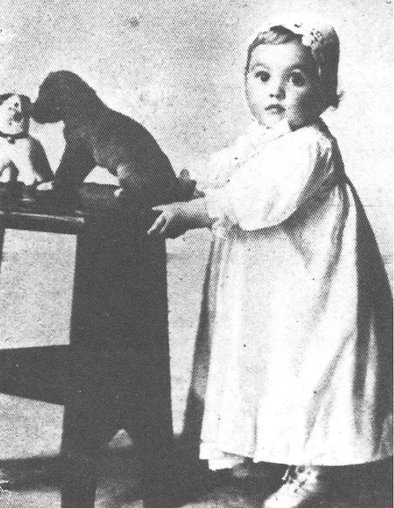
She was born in Tokyo, Japan on July 1, 1916, the first of two daughters to Lilian and Walter de Havilland, a British couple living abroad in Tokyo’s international district. Her sister Joan was born in 1917. In the aftermath of World War I, in March 1919, she moved with her mother and younger sister to San Francisco. Her parents were separating, and Walter stayed behind to work in Tokyo while Lilian moved with the girls to a warmer climate that would be better for their health. They soon moved from San Francisco to a smaller town an hour south, the village of Saratoga, CA. Lilian became involved with the owner of a San Jose department store, a man named George Milan Fontaine, whom she married when Olivia was 8. He was immensely strict with the girls, his harshness prompting at least one runaway attempt. They weren’t allowed any extracurricular activities, but Olivia was beginning to show a talent for drama and disobeyed her stepfather’s orders by joining the school play.
When Fontaine found out, he gave her an ultimatum. “You will either give up the play,” Olivia recalled him saying later, “or leave this house forever.” Olivia chose the latter, and at the age of 16, she left home.
–
I had invited several European friends, all fans of Olivia de Havilland, to come with me to the American Library to hear Olivia introduce the movie. They flew in, two from Sweden, one from Italy by way of England, the afternoon of the movie and after cramming all of our stuff into my tiny apartment near Parc Monceau, we headed over to the library. Shortly after our arrival, we saw a regal, perfectly arranged shock of white hair sticking up from the front row of chairs. It was Olivia. She was sitting perfectly straight, talking and smiling with the people introduced to her, a perfect lady. She stood up whenever she was introduced to someone, leaping out of her chair faster than someone half her age. We watched her in awe. Essentially shunned by her family, left to fend for herself at 16 years old, she had forged her own path, never looking back and creating a livelihood entirely on her own, standing tall and maintaining her dignity all the way through her life. Even at 94 years old.
In a local production of Alice in Wonderland, shortly after she left home.
Despite the difficulties she encountered as a teenager living on her own, Olivia received a full scholarship to Mills College based on her exemplary grades. But at the same time, she auditioned and got the role of understudy for Hermia in A Midsummer Night’s Dream, directed by Max Reinhardt, to be performed at the Hollywood Bowl and various other places in California. Olivia decided to do the play in order to build up her resume and perhaps get more scholarship money for Mills, but after going onstage several times as the understudy, Max Reinhardt was so impressed with her that he selected her to go to Hollywood with him to make the movie version.
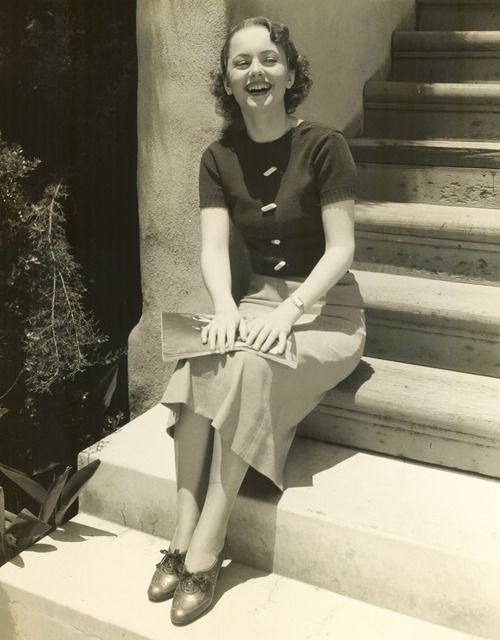
And thus began the career of Olivia de Havilland. She was signed to Warner Bros, where she made an impression not only with the acting talent that had so impressed Max Reinhardt, but also with her huge, winsome brown eyes and distinctive voice, perfectly suited for recording with the equipment in the mid-1930s.
–
When the program was to start at the American Library, the producer of I Remember Better When I Paint, Berna Huebner, went to the podium and introduced Olivia, who would introduce the movie. Her words were loving and kind, speaking of a woman whom she had clearly come to love as a dear friend. Then Olivia came up to the podium and began to talk about the movie. I was so profoundly struck by the sound of her voice, I could barely pay attention to anything but the beautiful deep tones that were coming out of her mouth. Her voice was like melted chocolate, rising and falling dramatically with each clearly enunciated word, articulated slowly and deliberately. I have never heard a voice like hers in my life. It seemed to come from an era that is long gone–and of course it does.
During her years at Warner Bros, Olivia was often cast in damsel-in-distress roles, paired a whopping nine times with Errol Flynn. Their feelings for each other were palpable onscreen and off, but Flynn was married and Olivia refused to be the “other woman.” Still, Olivia continued to speak giddily about Flynn even in interviews many decades later, and it was clear that the love had never faded.
In 1938, she persuaded Jack Warner to loan her to Selznick International for a movie that Selznick was making based on the hit novel Gone With the Wind. Warner was reluctant, but finally allowed her to go, and Olivia signed on to play the shy, demure, ever-trusting Melanie Hamilton to Vivien Leigh’s Scarlett O’Hara.
Cast members sign the contracts for Gone With the Wind.
It became the role of her lifetime. Above anything else, Olivia de Havilland is remembered as Melanie Hamilton, playing the character to nuanced perfection. She received her first Oscar nomination for Best Supporting Actress against costar Hattie McDaniel, with McDaniel winning the Oscar and becoming the first African-American actress to do so. De Havilland took it very much in stride.
People were very attached to Melanie, but they knew I wasn’t a supporting actress. They knew that Hattie was, and they were not tricked, and they were not deceived, and they voted for Hattie.
-Olivia de Havilland, Academy of Achievement, 2006
Back at Warner Bros, she was beginning to tire of being the damsel-in-distress, finding those parts too limiting and itching to expand her repertoire. She had been nominated for an Oscar again in 1942 for her performance in Hold Back the Dawn, but had lost to her younger sister, who had come to Hollywood and started acting under the name Joan Fontaine. Joan and Olivia eventually became fodder for the press, who scavenged for stories and contributed to the crumbling of their sibling relationship, which had never been strong. But on Oscar night, Olivia was extremely gracious and proud of her younger sister, and the press captured it.
In the wake of her second Oscar loss, Olivia started refusing scripts from Warner Bros, resulting in suspensions that were then tacked on to the end of her contract. She seemed forever destined to the roles that she hated–and saw no light at the end of the tunnel for her career. She became very depressed, and consulted her agents to try to help her. The agents called a lawyer, who informed her of an obscure California law restricting the duration of time that a worker can be held under contract to seven years.
She went to court, and after an appeal, she won in a unanimous decision of the California Superior Court. The De Havilland Law, as the decision is now called, had and continues to have huge implications for workers in the entertainment business. It limited the power of the studios over their stars, and gave stars greater freedom to seek projects that they felt suited them, and set a precedent for workers in the music and sports fields. Most recently, Jared and Shannon Leto of the band Thirty Seconds to Mars sued in response to a musical contract issue, and won based on the De Havilland Law. They wrote Olivia personally to thank her.
From then on, Olivia’s career soared. In 1946, she played the role of a mother who gives up her illegitimate child and then tries to adopt him back in To Each His Own. The role finally won her her first Oscar. In 1948, she received another Oscar nomination for playing a mentally unstable woman whose treatment in a mental institution is documented in The Snake Pit, one of the first serious treatments of mental illness on film. Then in 1949 came another role of a lifetime, the role of a simple embroiderer set to inherit a large fortune who is courted by a man of questionable intentions in The Heiress, for which she won her second Oscar. Olivia’s metamorphosis from naïve, schoolgirlish embroiderer to bitter, jaded woman getting her revenge stands as one of the most brilliant transformations in film history.
At home, her life was becoming difficult. She was on the brink of divorce from Marcus Goodrich, whom she had married in 1946, and with whom she had had a son, Benjamin. They finally divorced in 1953, and shortly thereafter Olivia moved to France with Benjamin. Life got better in France–she married a Frenchman, Pierre Galante, the editor of Paris Match, with whom she had a daughter, Gisèle. She continued to work, though more sporadically now than before, and focus her energy on raising her children. She wrote a witty memoir in 1962 called Every Frenchman Has One, recounting anecdotes of living as a foreigner in France.
With her two children: Benjamin (left) and Gisèle (right).
Benjamin, a prodigious mathematician, grew up to be a statistical analyst and died from non-Hodgkin’s lymphoma in 1993. Gisèle became a respected journalist like her father, and currently lives in the Los Angeles area.
–
Olivia became an American citizen in 1943 and has long been dedicated to the bastions of American culture in Paris, devoting her time and resources to the American University, the American Library, and the American Cathedral. It was her commitment to the American Library that brought I Remember Better When I Paint to France, and Olivia de Havilland to me. After her introduction, she sat down and watched the movie with the crowd–delighting in the movie as a simple member of the audience. It was a memorable moment. I watched one of the towers of the entertainment world sitting on a simple folding chair, laughing at a movie’s funny parts and furrowing her brow at the sad parts, just like the rest of us.
After it was over, we prepared to leave. Olivia was taken by the arm by one of the library staff, and accompanied out of the main room. But just as we were about to head out the door, we saw that shock of white hair again–this time behind the library desk, as Olivia chatted with the audience members who had come to see her. She had somehow broken free of the library staff member who was supposed to lead her to her car, and she was simply interacting with those who had loved her for so many years.
Just in case, we had brought things for Olivia to sign. I had brought my copy of Every Frenchman Has One, and my friends and I excitedly positioned ourselves in the crowd. She talked with us for several minutes, asking us where we had gotten our long out-of-print books and interacting in just as charming and gracious a way as she did on the screen.
When it finally came time for her to leave, she went unwillingly. “They’re making me leave!” she exclaimed. It took her another good few minutes to get out the door, and when she did, we saw that she had come to the event alone at 94 years old.
And so it has always been. She did it all herself.
Happy 100th birthday, Olivia. There is no one more deserving of this special birthday than you.
The TCM Classic Film Festival came to a close last night, and I am currently fighting off a tremendous case of sleep deprivation following my flight home at 6:15 in the morning. Despite my lack of sleep, I still feel the elation of the festival in every fiber of my being.
What a weekend it was. Attendees come from all over the country and the world, and every year it feels like a family reunion–except, as a friend of mine put it, for the fact that “everyone likes each other.” Those of us who are regular attendees can hardly walk 10 feet across the Roosevelt Hotel lobby in less than half an hour, because everyone we see is a close friend whom we haven’t seen in a year. It’s truly unlike anywhere else.
As expected, the highlight of the festival was the screening of The More the Merrier at the Egyptian Theatre. The pure joy and infectious laughter of the crowd was something very rare and unique to festivals like TCM–this level of excitement is not something one encounters at the standard neighborhood movie theater. It reminded me of just how special this festival is, and why we keep coming back year after year.
The More the Merrier is a movie that we had been fighting tooth and nail to bring to TCM for some time now. Along with my fellowfans of the movie, I was slightly concerned that it wouldn’t get much of a showing, owing to the fact that it was scheduled opposite Shanghai Express and Love Me or Leave Me. We shouldn’t have worried. The theater was packed, and the audience enjoyed themselves more than at any other screening I attended, 9:00 in the morning or not.
Another highlight for me was the wonderful Midnight, starring Claudette Colbert and Don Ameche. The movie was introduced by Bonnie Hunt, who lauded it as one of her favorites, and then backed up her claim by staying to watch it with us. She is a charming presenter, filled with humor and a down-to-earth air about her. As with The More the Merrier, the audience was enthusiastic and involved, laughing out loud at the perfect Billy Wilder/Charles Brackett script about a chorus girl who gets caught up in a millionaire’s scheme. My favorite line: “When I married, I didn’t realize that in the Czerny family there was a streak of… shall we say, eccentricity. And yet, I had warning. Why else should his grandfather have sent me, as an engagement present, one roller skate covered with thousand island dressing?” Claudette Colbert is a gem, and John Barrymore does a hilarious scene on the telephone in which he pretends to be Ameche’s wife and daughter.
Barrymore died a mere 3 years later. While he showed a talent for comedy early on, he never truly became known as a comedy star–something that may have come had he lived longer. His performances in Midnight and Twentieth Century 5 years earlier are world-class.
On Friday night, I went to see Angela Lansbury interviewed before a showing of The Manchurian Candidate. The line to get in was one of the longest I have ever seen in any of my years attending the TCM Festival. I knew it was going to be packed, so I got there over an hour early. By the time I arrived around 6:45 for the 8:00 interview, the line had snaked around to the side of Grauman’s Chinese Theatre, up the stairs, through Hollywood and Highland center, and almost around to the back of the complex. Despite my early arrival, I was number 293 in line.
Angela Lansbury is one of the most versatile and prolific actors alive. She has excelled phenomenally in every medium she has attempted, becoming a legend of film, a legend of the Broadway stage, and a legend of television in equal measure. Very few people achieve the level of stardom that she has, even in one medium–and she has conquered them all. TCM festivalgoers know this, and the level of respect that she has earned among this crowd is immense.
Trying to contain an interview with Angela Lansbury within the confines of one single movie is futile. Lansbury’s career is so immense and far-reaching that a focus only on The Manchurian Candidate gives the impression of a big elephant in the room–the rest of her career. While interviewers have set guidelines to follow, and interviewer Alec Baldwin had to bring her back to The Manchurian Candidate at some point, there were moments where Angela Lansbury clearly wanted to talk about her early career in film, and about her roles as Mame Dennis in Mame and Mrs. Lovett in Sweeney Todd. She is prime material for a lengthy interview, along the lines of what TCM does every year–last year with Sophia Loren and this year with Faye Dunaway. And judging by the line I stood in, number 293 over an hour before the interview, there is a Grauman’s Chinese Theater-full of people who agree.
The Hollywood home movies were a joy. We were treated to behind-the-scenes footage from the filming of The More the Merrier (which obviously made me happy), footage from Marjorie Morningstar, and home movies of the Nicholas Brothers, presented by Fayard Nicholas’ son, Tony. Tony’s daughters and grandchildren were there as well, and we had a nice surprise when one of the grandchildren, who looked to be about 9 years old, did an impromptu tap routine. It is comforting to know that the out-of-this-world talent of the Nicholas Brothers is being passed on through the generations.
The reasoning behind my current sleep deprivation is the fact that I was originally scheduled to fly home last night. But when I saw the schedule and realized that Network was playing on Sunday night, I changed my flight to early the next morning. There was no way I was going to miss it.
As I have mentioned before, I consider Network to be one of the most timely, prescient and telling movies ever made. It was a thrill to hear audiences gasping with recognition at lines such as “We are talking about putting a manifestly irresponsible man on national television,” recognizing the eerie parallels with today’s election news cycles. There were some people who laughed all the way through the movie, something that I felt to be a recognition of the absurdity of the story. But upon leaving the theater, a friend of mine expressed that she was upset that people laughed during the movie, that it trivialized the brilliance of it. I’m not sure which one of us is in the right, but I think it was unexpected for us both.
Once again, a remarkable festival. Here are some things that I would like to see next year:
A Conversation With Angela Lansbury
More pre-Codes. Double Harness, the William Powell pre-Code that showed on Friday morning, filled up quickly and left many people disappointed. It was rescheduled for Sunday, and filled up yet again. Every year, the pre-Codes fill up. This, to me, means that the TCM Film Festival crowd has a special affinity for this era.
As an addendum to the previous point, I would love to see a showing of Ladies They Talk About (1933). Combining Barbara Stanwyck with pre-Codes would be a surefire hit for the festival.
Thank you, TCM, for a wonderful festival this year. I can’t wait for next year’s “family reunion!”
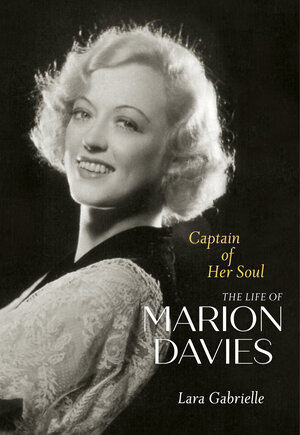
Captain of Her Soul: The Life of Marion Davies is now available at your favorite bookseller! Click hereto order it, and visit mariondaviesbook.com for all the latest.
Backlots is devoted to honoring and celebrating all aspects of classic film and is written by Lara Gabrielle, a California-based classic film writer and historian. Lara is the author of CAPTAIN OF HER SOUL: The Life of Marion Davies (UC Press, 2022).
Here you will find pieces on frequently seen classics and some lesser-known gems, as well as book reviews, festival coverage, and pieces on the history, theory and culture of film as it relates to the study of classic cinema.
Enjoy the site, and thanks for reading!
AFFILIATIONS & AWARDS
2019 CMBA Award for Best Profile of Classic Movie Performer or Filmmaker--"The Activism of Myrna Loy"
Winner of the 2018 CiMBA Award for Best Classic Movie Series, BACKLOTS AT THE COURTHOUSE: OLIVIA DE HAVILLAND VS. FX
Winner of the 2014 CiMBA Award for Best Profile of a Classic Movie Performer or Filmmaker: A Q&A WITH JOAN FONTAINE IN HONOR OF HER 96TH BIRTHDAY
Winner of the 2011 CiMBA Award for Best Classic Movie Discussion, THE FINAL SCENE OF THE HEIRESS
I am honored to be a judge of the Animal Film Festival in Grass Valley, CA.
EVENTS
BACKLOTS ON THE WEB
Join us at the Backlot Commissary, the place for Backlots' readers to share content and discuss movies!
Walter Pidgeon and Greer Garson in "Mrs. Miniver."




































_03.jpg)

 Backlots