China’s Upcoming Anna May Wong Biopic–The Controversy

In late July, Shanghai-based film production company Fundamental Films announced that a biopic of legendary Chinese-American actress Anna May Wong is in the works, slated for release in China within the next few years. This announcement has generated a lot of attention within the film community, with many voicing concerns about the details of the production and how they will reflect upon Wong, whose struggles with stereotyping and prejudice ultimately led to the downfall of her career.

Anna May Wong was born in Los Angeles in 1905. Her family had resided in California since 1855, and she grew up in a diverse neighborhood alongside Mexican and Eastern European families that had settled in Los Angeles. Curious about the new picture industry growing around her neighborhood, she received her first film role as an extra at age 14 and was noticed by Hollywood when she played opposite Douglas Fairbanks in The Thief of Baghdad (1924). Though critics saw her talent and potential, her parts were restricted due to U.S. anti-miscegenation laws, which prevented onscreen romance between two actors of different races. As the only Asian-American leading man at the time was Sessue Hayakawa, Anna May Wong could never advance in her career and she was relegated to stereotypical Chinese roles. Often, though, even those roles were few and far between for her. “There seems little for me in Hollywood,” she said,” because rather than real Chinese, producers prefer Hungarians, Mexicans, American Indians for Chinese roles.”
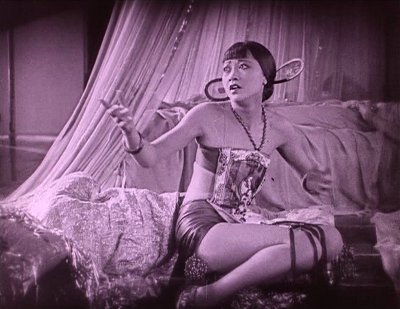
Anna May Wong in THE THIEF OF BAGHDAD (1924).

Tired of the prejudiced attitudes of the American film industry, Wong moved to Europe, where she acted on both stage and screen and became a European sensation. Hollywood filmmakers spotted her and expressed a renewed interest in what she had to offer, so she moved back to the United States and, to her dismay, found herself cast once again in stereotypical Chinese roles. When passed up by Luise Rainer, a German, for the role of a Chinese villager in The Good Earth, she finally quit Hollywood in frustration.

Luise Rainer in THE GOOD EARTH (1937).

The biopic is called Dragon Lady, a reference to Anna May Wong’s role in The Thief of Baghdad. The film’s title has been a point of contention among those concerned about the project, saying that it unfairly perpetuates the Asian stereotype that plagued Wong throughout her career. In addition, for the coveted role of Anna May Wong, Fundamental Films has chosen Fan Bingbing, a Chinese actress and singer. At the outset, I was upset that Anna May Wong’s story features a Chinese actress playing an American role. Upon further research, I found that this is a Chinese production, and a Chinese-language production perhaps requires a native Chinese actress, rather than the Asian-American actress that might be better suited to portray Wong’s identity and life story.

My biggest point of contention with the project lies not with Fundamental Films, but with the American film industry for not telling her story here. The fact that Anna May Wong’s story is being told in China before it is told in the United States is, to me, a disappointment. This is an American story, about an American woman who suffered under our laws and faced the brutality of American prejudice. Her story should be told here, by the same Hollywood that so ostracized and isolated her, before it is told anywhere else.

Hollywood owes her that.

San Francisco Silent Film Festival Announces Silent Autumn

Oh my heavens, readers. It has been way too long since my last post. I feel like I’m faulting at my post as a blogger–but I’ve been so extremely busy lately that it has been hard to find time to sit down and write a lengthy post.

A new announcement, however, brings me back. The San Francisco Silent Film Festival, for which I have the highest respect, has announced Silent Autumn, a day-long mini film festival to take place in September at the Castro Theater in San Francisco.

In previous years, the San Francisco Silent Film Festival has hosted a similar event called Silent Winter, but the festival is experimenting with scheduling this year. The 2014 main festival took place in May instead of July, and it seems that Silent Autumn has taken the place of Silent Winter. The lineup is fantastic. Here is what we have to look forward to when Silent Autumn takes place on September 20, 2014:

ANOTHER FINE MESS: Laurel and Hardy shorts (11:00 AM)

The Son of the Sheik (1:00 PM)

A Night at the Cinema in 1914 (3:30 PM), a celebration of the movies at the start of World War I

The General (7:00 PM)

The Cabinet of Dr. Caligari (9:00 PM)

As usual, Backlots will be covering all the excitement. If you will be in the area and would like more information about the lineup, visit the San Francisco Silent Film Festival site here. It promises to be a very fun day!

I’m off to the East Coast on Tuesday, but I promise to make a post before I go. Lots of great things are happening in the classic film world right now, and Backlots will be right there on the pulse of it!

See you soon!

TREASURES FROM THE WARNER ARCHIVE: Going Hollywood (1933)

Logo_WarnerArchive-square

Readers, it has been an unusually busy month! I apologize profusely for my lack of posts over the past 2 weeks, but between various film-related projects and trying to work to fund them, I have been lax with my blogging. But I am back, and ready to dive back in with another installment of Treasures From the Warner Archive!

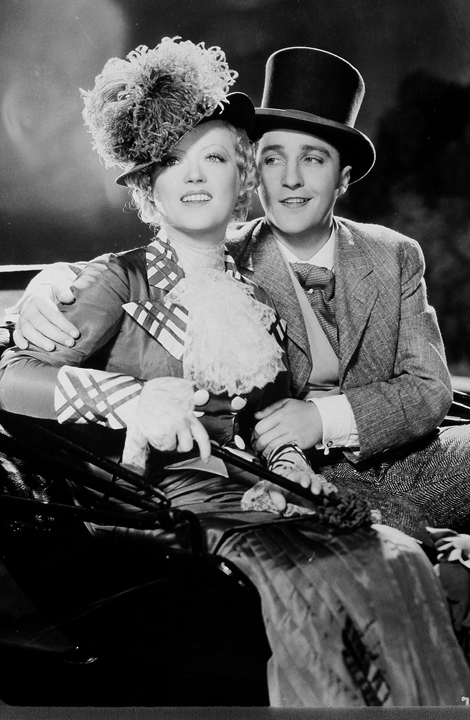
This week’s selection is one of Marion Davies’ (and Bing Crosby’s, for that matter) more bizarre films. With a subtly creepy plot and a completely haywire and inexplicable dream sequence in the middle of the film, Going Hollywood is a movie that confuses, amuses, and drives the audience to want to watch it again and again.

Marion Davies plays Sylvia Bruce, a French teacher who, fed up with the teaching life, decides to follow her singing idol (Bing Crosby) across the country in an attempt to get him to notice her. The problem is, he is involved with a rather frenetic French actress named Lily Yvonne (Fifi d’Orsay), who is jealous of Sylvia and feels threatened by her. Much of the movie revolves around Sylvia and Lily going at each other, and Bing Crosby plays the oblivious and helpless man in the middle.

The dream sequence of the movie is one of the strangest things I have ever seen on film, and I am so happy that it’s on YouTube. I find myself watching it constantly, because it is so delightfully nutty that I can’t get enough. Here are some things to watch for:

  • The scary dancing scarecrows
  • The words PINK PILLS written on the roof of the barn
  • The gigantic daisies moving in unison

Without further ado, I give you “We’ll Make Hay While the Sun Shines.”

Off the set, Marion Davies was known for her spot-on impersonations of Hollywood types. Her boss and companion, William Randolph Hearst, would often ask her to do these impersonations at parties to entertain guests and Marion would gladly oblige. This gift for mimicry became her signature around town, and was often worked into her movies both before and after sound came in. In Going Hollywood, she does a devilish impression of Fifi d’Orsay that is a real testament to her talent. I am sad to say that it is not online, but this is another reason to see the movie. It is brilliant.

Marion and Bing Crosby got along well, and often clowned together and pulled good-natured pranks on the set. A problem, though, was the fact that they were both predisposed to alcoholism and this took a toll on both of them during production. There is a moment during “We’ll Make Hay While the Sun Shines” (the “Farmer Doakes” bit) where I suspected for a time that they had been drinking. However, a few months ago, I was lucky enough to hear some outtakes from “We’ll Make Hay While the Sun Shines,” in which Marion flubs a line and reacts alertly, professionally, and soberly. She repeats the scene and nails the line, adding jokingly at the end “Can I go home now?” 100% Marion. I am now of the opinion that that scene was done without the influence of alcohol.

If there is one reason that this movie should be seen, it is for Bing Crosby’s beautiful, emotional, and heartfelt rendition of “Temptation.” Sung in a bar to Fifi d’Orsay, Bing gives this song meaning that I have never heard before. If you are a Bing Crosby fan, this is a must-see, and it shows without a doubt why Bing Crosby was as wildly popular as he was. The man could sing like no one else, and extract subtle meaning from the most obtuse lyrics. See this movie for this scene. You won’t regret it.

If you would like to order Going Hollywood, please do so here. Despite (or perhaps because of!) its bizarreness, it is great fun to watch.

See you next time!

Broncho Billy Silent Film Festival Comes to the Niles Essanay Silent Film Museum

niles-essanay-silent-film-museum_lg

Hello, dear readers! I usually make it a point to post at least once a week, but due to an inordinately busy schedule over the past few days, that goal has eluded me. But here I am, ready to post about one of the things that has been occupying my time away from the blog.

In the quaint Niles district of Fremont, CA lives the Niles Essanay Silent Film Museum, a little theater with a huge heart. It celebrates an integral part of this town’s heritage–one of which few people are aware. When visitors come to Fremont, little do most people know that it was here that one of the top early film companies, Essanay Studios, flourished and produced a multitude of films in the early 1900s. Charlie Chaplin produced many of his early films here. Broncho Billy Anderson, the first Western star, was born out of Essanay Studios. It was a major focal point for the film industry, and the Niles Essanay Silent Film Museum aims to educate the public about its history through tours, films, and festivals.

kDd8cBcik7R7Ij9mwe8zxq9qiIY

This weekend will be the Broncho Billy Silent Film Festival, an annual occasion that celebrates not only the legacy of Broncho Billy in Niles, but also the art of silent film as a whole. I have been busy volunteering and preparing for this festival, and I am happy to say that it’s going to be a great one this year. The opening night movie will be The Big Parade, the 1925 King Vidor epic that I consider to be among the top 5 silent films ever made. It will be followed by many other great features and shorts throughout the weekend, including a showing of Charlie Chaplin’s The Circus and the rarely seen 1928 comedy The Spieler, starring Alan Hale and Renee Adoree.

Sunday is the real kicker. Following group of her films, the festival will be graced with its guest of honor, the beautiful and talented 95-year-old Diana Serra Cary–the former Baby Peggy.

baby-peggy

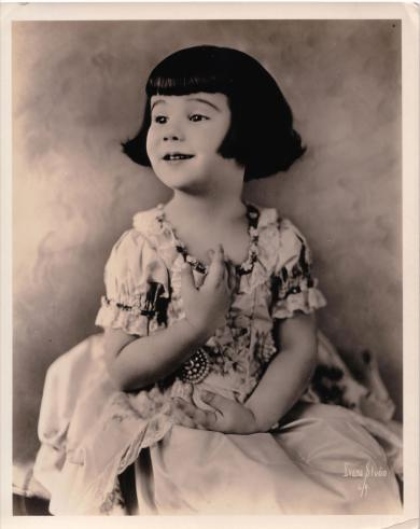
Between 1920 and 1924, Baby Peggy-Jean Montgomery was the toast of Hollywood. At the height of her fame, her film grosses equaled those of Charlie Chaplin, and she was one of the top three child stars of the silent era along with Jackie Coogan and Baby Marie. In 1924, her career took the turn of far too many Hollywood child stars–her stardom waned after her money was squandered by her father. She was relegated to vaudeville, and ultimately returned to Hollywood to work in bit parts to pay the bills. Later on, wanting to rid herself of the pain of Baby Peggy, she reinvented herself as Diana Serra Cary–becoming a prominent author, film historian, and activist for children’s rights. It was as Diana Serra Cary that she wrote a biography of former Hollywood rival Jackie Coogan, and that she became active in A Minor Consideration, an organization that advocates for children in the entertainment industry. And at 95 years old, she’s still going.

Baby-Peggy_2012-07-01

Diana Serra Cary today.

Now for the big news. I will have the unparalleled honor of interviewing Diana Serra Cary onstage at the Broncho Billy Silent Film Festival on Sunday. If you are in the area, please come out and see Circus Clowns, Peg O’ the Mounted, and the 2013 film Broncho Billy and the Bandit’s Secret in which Diana Serra Cary has an appearance at the age of 94. And see my Q&A with her between films! It promises to be a great day.

Here is the site for ticket information. You can reserve them online, or buy them at the door. I look forward to seeing you there!

TREASURES FROM THE WARNER ARCHIVE: Lady of the Night (1925)

Logo_WarnerArchive-square

The next film in Treasures From the Warner Archive is one to which I’ve been looking forward for some time. Perhaps the most highly respected film of Norma Shearer’s silent career and featuring the screen debut of a future Hollywood legend (more on that later!), it is a hallmark of the early MGM period and a shining example of the beautiful and complex character-driven narratives that came out of the silent era. The film is Lady of the Night, and it’s a real crowd pleaser.

A father is sentenced to 20 years in prison by a judge who has a daughter around the same age. Leaving the courthouse, he sees the judge cuddling with his daughter. “Pretty soft for your kid, but what about mine?” he cries, as he is carted off to jail.

Eighteen years pass, and both daughters are graduating from school–Florence, the judge’s daughter (Norma Shearer) from a select school for young women, and the convict’s daughter Molly (also Norma Shearer) from a reform school. The stark contrast between the lives of the two girls is seen right away–Florence’s world is photographed in a red tint, and her school is surrounded by flowers and trees, her friends smiling and skipping down the path following their graduation. Molly’s world, on the other hand, is photographed in stark black and white, and her school is nothing but a block of cement. She is dressed in a drab black dress, with a simple hat and no makeup. Molly’s world is a grim one, and with nowhere to go and nothing to do, she turns to taxi dancing to earn a living. At the club where she works, Molly is assaulted by a stranger and resists with all her might–kicking, hitting, and biting him. A man by the name of David Page helps wrench the man off of Molly, and to thank him for his kindness, Molly accepts a dance with him much to the chagrin of her boyfriend, Chunky (George K. Arthur). Soon, Molly begins to fall in love with David but David doesn’t see her as a romantic partner, only a good friend. David, an inventor, has invented a device that can crack safes, and Molly advises him not to give his invention to crooks, despite the high price they might pay. “Don’t go crooked, it don’t pay,” she says, drawing on her own experience growing up fatherless. She tells him to sell his idea to a bank, who will use it to keep thieves out.

Molly.

The next day, David goes to the board of a bank to pitch his idea. The meeting was held at board member Judge Banning’s house, and on his way, he bumps into Florence. The two lock eyes, and Florence also begins to fall in love with Dave. This time, it is mutual and they begin dating. One day David takes Florence to his studio when Molly walks in, unaware that he wasn’t alone. She and Florence meet, and after Molly walks out, she says to David “She loves you, David, I can see it in her eyes.” She follows shortly after Molly and finds her sitting in Florence’s carriage. Molly implores Florence to marry David and make him happy. Florence expresses concern for Molly, and when Molly says she can be happy with her own boyfriend, Chunky, the two hug. All ends well with a tinge of bittersweetness at what could have been–with Florence marrying David and Molly marrying Chunky.

It is in the carriage scene that we see the very, very brief screen debut of an actress who would become an immortal Hollywood star. A young actress by the name of Lucille LeSueur had recently come to Hollywood and was being tested out in bit parts. In this role, she plays Norma Shearer’s double for the hugging shot. Within 2 years she would hit it big, and under the name of Joan Crawford, she would become perhaps one of the most important and influential stars of Hollywood’s Golden Age.

Norma Shearer, on the left, with Joan Crawford acting as Molly’s double on the right.

The significance of Joan Crawford’s screen debut against Norma Shearer is lost on very few fans who are familiar with the backstory of classic Hollywood. Joan Crawford’s career skyrocketed very quickly, and by the early 1930s she was one of the reigning queens of the MGM lot. Norma Shearer, always a huge star in her own right, married MGM production chief Irving Thalberg in 1927, becoming not only one of MGM’s biggest assets financially but also gaining an influence and control within the studio that was hard to shake. Joan Crawford and Norma Shearer became bitter rivals at MGM in the 1930s, with both asserting their power to its full extent. Because of her political influence within the studio, however, Norma usually won out, prompting Joan to quip “How can I compete with Norma when she’s sleeping with the boss?” They later appeared in 1939’s The Women playing competitors for a man’s affections–not far from their real life situation.

At its core, the story of Lady of the Night has a complexity that is quite thought-provoking. Much of it, in my analysis, has to do with the fact that Norma Shearer plays the dual role of a judge’s daughter and a convict’s daughter. This prompts the audience to rethink any prejudices they may have had coming in regarding “the girl from the wrong side of the tracks,” and instead judge the characters by their internal qualities. In addition, this dual role shows us the remarkable range of Norma Shearer’s acting abilities. Shearer was one of the rare performers in Hollywood who successfully made the transition from silent film to sound, and 5 years before her Oscar-winning turn in the sound film The Divorcee, Shearer was proving that she had the versatility of the best in the business. As Molly, she is hardened and rough but with a heart of gold–and as Florence, she is soft and demure. The ability to be able to switch from character to character with such aplomb and so quickly is a gift rare indeed.

If you would like to watch Lady of the Night, click here. It is worth watching for the tremendous performance of Norma Shearer, and for the place it has in the silent film pantheon.

See you next time!

TREASURES FROM THE WARNER ARCHIVE: The Patsy (1928)

Logo_WarnerArchive-square

Hello readers! I am happy to report that following a 2-week delay in delivery, the USPS has finally succeeded in delivering my next two Warner Archive titles, and they are great ones. I will start with one of my favorite silent comedies, a great treat from director King Vidor and one of Marion Davies’ masterpieces–The Patsy (1928).

You may notice that I am going very heavy on the Marion Davies titles lately. We are lucky in that the Warner Archive has several Marion Davies films available, and I would like to review all of them for the blog.

Marion Davies is one of the most severely underrated actresses on the screen. She had extraordinary natural abilities for mimicry, physical comedy, and timing, and at times she gives off an almost uncanny Carole Lombard vibe. Indeed, in Captured on Film: The Story of Marion Davies, Kevin Brownlow states that Marion Davies could be called the first screwball comedienne, before the term was coined for Carole Lombard. Critics saw that Marion had a certain charm and a unique ability to portray zany and cunning characters, but they couldn’t attribute her style to any specific type of comedy that had come before. That style, Brownlow argues, was a sort of proto-screwball comedy.

Nowhere in Marion Davies’ filmography is this more present than in The Patsy. Marion had dabbled in comedy since the early 1920s, and always successfully, despite the misgivings of her boss and live-in romantic partner, William Randolph Hearst. Hearst wanted to see Marion in costume dramas, in roles that would put her in an elegant and dignified light, and not in what he considered to be the lowbrow world of slapstick comedy. Though many of her early Hearst costume dramas are not inherently great films, Marion had great dramatic skill and makes them work to the full extent that the material will allow her. Marion did Hearst’s bidding in terms of what he wanted for her pictures, but comedy was always her preference–and where she felt she was at her best. Hearst finally allowed her to test her comedic waters to great acclaim in The Red Mill in 1927, and finally got her wish granted in full when The Patsy came along in 1928.

Centering on the story of a young woman who is picked on by her family and tries to seduce a beau of her sister’s, The Patsy may be Marion Davies’ best film (perhaps a photo finish with Show People from the same year). She gets ample time to show off her delightful comedic skill (at one point doing wicked impressions of Mae Murray, Lillian Gish, and Pola Negri–so accurate are these impressions that one would think the three actresses were actually in the movie), and deliver some of the most unbelievable lines during a scene when she is pretending to be insane (to get what she wants from her domineering mother). One of my favorite title cards in the movie is “A caterpillar is nothing but an upholstered worm.” It is a comedy that leaves the audience laughing out loud at nearly every line.

Marion’s impersonations of Murray, Gish, and Negri were a familiar sight to Marion’s frequent party guests at Hearst Castle. Hearst, who delighted in Marion’s incredible knack for mimicry, often asked her to perform impersonations to entertain the guests at parties they gave together. Marion Davies was extremely well-liked in Hollywood, and given the fondness that the Hollywood community had for her, nearly all the stars she impersonated were beloved friends. No one was safe from Marion’s wickedly accurate impressions, and everyone seemed to delight in them as much as she did.

The Patsy was also a significant movie for Marie Dressler, who played the matriarch of the family. After 10 years of not working, Dressler returned to the screen in 1927 for several small-scale flops. It seemed as though she would remain in a career slump, until The Patsy. This was the film that singlehandedly revived Marie Dressler’s career, and after The Patsy she skyrocketed into the 1930s, becoming one of the biggest box office draws of the early sound era.

If you would like to order The Patsy, click here. In fact, if you haven’t seen it, I urge you to order The Patsy. It is one of the most hilarious movies of the 1920s, and you will not regret it. This movie is also a great introduction to Marion Davies, for people who are not familiar with her work, and I always recommend this and Show People as the masterpieces in Marion Davies’ filmography.

See you next time!

THE HAPPIEST MARRIAGE IN HOLLYWOOD: The Story of William Haines and Jimmy Shields

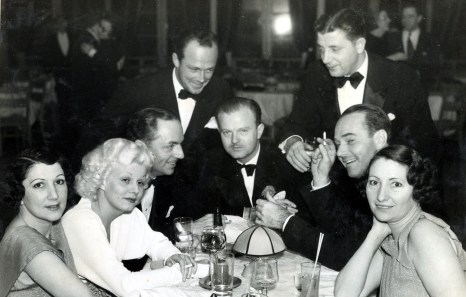
William Haines and Jimmy Shields with Jean Harlow, William Powell, and friends.

William Haines and Jimmy Shields with Jean Harlow, William Powell, and friends.

In 1933, a young and successful actor lost his job in Hollywood. His name had been featured in many wildly popular hits in the 1920s, and his appeal was so great that he had been one of the lucky ones to make the transition to sound. The public loved him, and his contemporaries loved him. He was a huge moneymaker at the studio. So what could have prompted Louis B. Mayer to let him go so abruptly?

Louis B. Mayer called William Haines into his office one day in 1933, to deliver him an ultimatum. He had been seen with a man, and to quiet rumors about his sexuality, Mayer wanted Haines to enter into a “lavender marriage” that would save the studio from public scandal. If he did not, Mayer would have to let him go. Haines looked Mayer straight in the eye and stated “But I am already married.” He was referring to his relationship of 7 years with his partner, a man named Jimmy Shields.

Gay classic Hollywood is a topic that is little discussed in mainstream circles, and its neglect in general discourse has led to surprise from an unaware public when they hear of the gay community’s thriving existence in the Golden Age of Hollywood. The beautiful 1995 documentary The Celluloid Closet works to ease that surprise and clarify misunderstandings, and it has become essential viewing for anyone interested in the inner workings of Hollywood. But for many, the vibrant gay community of classic Hollywood remains an enigma, and many of the stars who were part of that community have sadly disappeared into obscurity.

For William Haines, the decision to allow his career to lapse was an easy one.

Born in Staunton, VA, Haines became enamored with the movies at a young age. After winning the “New Faces of 1922” contest, he traveled to Hollywood to begin his movie career, which took off the following year with his first film Three Wise Fools at Goldwyn Pictures (a studio that would merge with Metro in 1924 to become Metro Goldwyn Mayer). The studio was impressed with him, and began building him as a star. By 1926 he was an established name, and his role in Brown of Harvard (1926) cemented his onscreen persona as a young man “too big for his britches” that ultimately comes around.

On a publicity trip to New York during the same year, Haines met Jimmy Shields for the first time. It is unclear exactly how they met, but scholars believe that Jimmy may have been down on his luck, working as a prostitute on the streets of New York. Haines picked him up, telling him that he would bring Jimmy out to Hollywood to work as an extra, and soon they fell in love and were living together as a couple.

With Joan Crawford and her husband, Al Steele.

Haines and Shields were very well-liked in Hollywood, counting Jean Harlow, Joan Crawford, Marion Davies, and Gloria Swanson as close friends. They were invited to all the parties around town, treated just as any other couple would be, with no attention to their sexuality.

Haines, with his melodic and pleasing voice, made an easy transition to sound. The public still flocked to his pictures. But the country remained very religious and intolerant of “alternative lifestyles,” and Louis B. Mayer knew this. If MGM were to keep William Haines on and the public got a hold of the fact that he was in a long-term, committed relationship with a man, it could spell ruin for the studio. By this time, Haines and Shields were inseparable. They were married in everything but name, and Haines refused to give Jimmy up for the sake of his career. So he opted to be fired, and his film career was over.

This could have easily meant financial and emotional disaster for Haines and Shields. But drawing on the huge affection that their Hollywood friends felt for them, they decided to go into business together and open William Haines Designs, an interior decorating company that became very successful. They gave free decorating advice to their friends, and many became loyal clients. Joan Crawford, unhappy with the dark look of her home, hired her good friends to do a complete overhaul and transform it into a softer and more sophisticated style. Crawford was one of Haines and Shields’ oldest and dearest friends, and she called their relationship “the happiest marriage in Hollywood.”

Joan Crawford in the home designed by William Haines and Jimmy Shields.

In 1936, Haines and Shields were staying at their beach home in Manhattan when they were accosted, dragged outside and beaten by 100 members of the Ku Klux Klan, after a neighbor accused the two of propositioning her son. The accusations were wildly unfounded, and the scandal infuriated those who knew the couple well. Marion Davies, another very close friend, pleaded with her companion William Randolph Hearst to use his influence to make sure the neighbor was prosecuted and punished for what she had said about Haines and Shields. But ultimately, Haines and Shields did not press charges, and they were cleared of all wrongdoing due to lack of evidence against them.

The two continued their design business until the early 1970s. Haines’ death from lung cancer came shortly thereafter, in 1973, and after 47 years of companionship, Jimmy Shields could not go on. He slipped into Haines’ pajamas, took a bottle of pills, and wrote a note:

Goodbye to all of you who have tried so hard to comfort me in my loss of William Haines, whom I have been with since 1926. I now find it impossible to go it alone, I am much too lonely.

They are buried next to each other at Woodlawn Cemetery in Santa Monica.

A true Hollywood love story.

If you haven’t seen The Celluloid Closet, I would highly recommend it. It is available on Netflix, and it is a loving and informative tribute to a part of Hollywood history that is sadly and unfairly overlooked.

See you next time!

Live From the San Francisco Silent Film Festival Day 4: SEVEN YEARS BAD LUCK (1921), DRAGNET GIRL (1933), THE GIRL IN TAILS (1926), THE SIGN OF FOUR (1923), HARBOR DRIFT (1929), THE NAVIGATOR (1924)

SilentLogo-640x479

The San Francisco Silent Film Festival came to a close yesterday, and what a day it was. This was perhaps the strongest day of the festival, with some wonderful comedic fare to lighten the rather serious tone of the festival overall this year.

First up was Max Linder’s comedy Seven Years Bad Luck, in which Linder is destined for seven years of bad luck after breaking a mirror. It is quite a funny movie, and is considered to be one of Linder’s best. It was preceded by another very funny short called Max Wants a Divorce, in which the main character hatches an elaborate scheme to collect his inheritance money (to be given to him only on the condition that he remain a bachelor) after his marriage. Linder was a very skilled filmmaker, and these two shorts show his talent impeccably.

SEVEN YEARS BAD LUCK (1921).

The movie was introduced by Serge Bromberg of Lobster Films in Paris, and he provided a bit of a tragic backstory to the film. Max Linder was beset by severe emotional problems as a result of his service in World War I, and in 1925 Linder and his wife were found dead in Paris , the result of a suicide pact they had made several years before. In addition, Linder’s co-star in Max Wants a Divorce was a woman by the name of Martha Mansfield, who also suffered a tragic death when her costume caught fire while she was on the set of a film. These horrible tragedies are ironic given how funny the movies are, and knowing the fates of the leading actors gave a bittersweet quality to the comedies.

Next up was a very interesting film by the Japanese director Yasujiro Ozu, one of the pre-eminent names in Japanese cinema. Ozu’s films are normally marked by thoughtful examinations of the human condition, with calm, tranquil camerawork and character-driven narratives. This film was completely different. Introduced by Eddie Muller, Dragnet Girl was an American-style proto-noir gangster film, that Muller noted “could easily have featured James Cagney and Joan Blondell as the leads.” It was so American in tone that all the signs were in English, and newspaper articles about Jack Dempsey, who had never been to Japan, decorated the walls. A very unusual film from Ozu, and a reminder of just how much American films influenced foreign markets. It was quite enjoyable, a suspenseful thriller that brought out the best of Japanese filmmaking paired with the most popular American genre of the era.

DRAGNET GIRL (1933).

The Girl in Tails was something quite unusual. Made in Sweden in 1926, it is one of the most distinctly feminist movies I have seen from that era, and even pushes the boundaries for what is accepted today. The story deals with a young girl who wants to go to a ball, but has nothing to wear. Her father has just bought her brother a new coat and tails, but refuses to buy his daughter a new dress, saying she has enough and if she had been a boy, she would have gotten a new tuxedo, too. Deeming this unfair, she gets back at her father by showing up at the ball dressed in a tuxedo–much to the horror of those around her. She is chastised by everyone except for her former schoolteacher, who tells her that she is correct for reacting when she is treated unfairly simply because she is a girl. The movie deals with the aftershocks to her act in the small, conservative town where she lives–with the ending message being that acceptance is important. Its tone was rather shocking, as a movie from 1926 is not expected to be thinking in terms of women’s rights. But this one was, and it was an absolute delight. Artistic director Anita Monga said that this was one of her favorites that was shown at the Pordenone Silent Film Festival in Pordenone, Italy last year, and just had to bring it to San Francisco. I’m glad she did.

THE GIRL IN TAILS (1926).

The Sign of Four was the only movie in the festival this year that I did not particularly care for. It was a Sherlock Holmes story, and to me not a very thrilling one. I was distracted during the movie, and it did not grab me as it did others. A gentleman I talked to after the movie described it to me as a “guy movie,” a term I generally don’t like because of the gender role reinforcement that it carries. But I see what he means, and indeed, nobody in the group of women I was sitting with liked the movie–while the group of men sitting below us felt it was one of the best films of the festival. If I could live yesterday over again, I would have left before Sign of Four and come back for Harbor Drift, the next film on the program. But alas, I left for a dinner break during Harbor Drift, and did not get to experience what was by all accounts the best event of the festival. It was another German melodrama, but everyone I talked to said it was an immensely well-made film, and counted it as one of, if not their number 1, favorite. A mistake on my part, and I will know for next year that dinner should be had between films, lest a gem be missed.

The final film of the night, and of the festival, was the Buster Keaton classic The Navigator. As is standard for Keaton films, the theater was filled to the brim with enthusiastic fans and silent film novices. There was nary an empty seat to be seen, and with good reason. The film is incredibly funny. It deals with a young man and his fiancee (he hopes) on a boat off the coast of an island inhabited by cannibals, and they have to do what they can to avoid them. One of the funniest moments of the movie is when Buster’s fiancee-to-be throws a painting of the boat’s former captain (the painting is clearly Donald Crisp, the co-director of the movie) out the window, but it latches onto Buster’s porthole and Donald Crisp’s face peers in at Buster. It is a brilliant film, and Keaton described it as one of his two favorites, alongside The General.

And that’s a wrap for this year, folks! Thank you so much for reading, and I’ll be back at the San Francisco Silent Film Festival next year for more coverage!

Live From the San Francisco Silent Film Festival Day 3: THE GOOD BAD MAN (1916), Serge Bromberg’s Treasure Trove, THE EPIC OF EVEREST (1924), UNDERGROUND (1928), UNDER THE LANTERN (1928), THE EXTRAORDINARY ADVENTURES OF MR. WEST IN THE LAND OF THE BOLSHEVIKS (1924)

SilentLogo-640x479

Owing to a long day of movies yesterday plus a 2 AM blog post, followed by a 4 AM wake up call by my yowling cat and my actual alarm at 7, suffice it to say that I went into today’s movies feeling massively sleep-deprived. Fueled only by my enthusiasm (and several cups of coffee from the press lounge), I managed to watch all the movies on tap for today and am here, as promised, to report back on them for you.

Today was heavy on the dramatic titles, and indeed the festival this year is tending toward drama on the whole. The first film we watched is one I had seen before–Cinecon screened it this past year and I was sure to attend, as I adore Douglas Fairbanks in any role. This movie was The Good Bad Man, starring Fairbanks and the underappreciated Bessie Love who, in addition to her acting talent and good looks, has some of the most unusual and beautiful hair on the silent screen.

Bessie Love.


The Good Bad Man focuses on the experience of a Robin Hood-esque thief known only as “Passin’ Through,” who steals items and gives them to orphaned children. We soon learn that Passin’ Through grew up without a father, and over the course of the movie we learn who his father was, how he died, and how Passin’ Through ultimately avenges his father’s death and is able to marry the woman he loves. It is an interesting take on the Old West, and one that balances the film’s narrative and action beautifully. Fairbanks had a penchant for stories about ancestry and bloodlines, and Fairbanks himself supervised the script for this movie. It is a new restoration, and a lovely one. I hope it will be out on DVD soon so that the public can enjoy it as much as I have.

Next up was a program called Serge Bromberg’s Treasure Trove, in which the legendary film preservationist Serge Bromberg from Lobster Films chats with the audience about new discoveries from the archive. Today we had a special treat because not only did Bromberg show the piece de resistance of his presentation, the newly discovered footage from Buster Keaton’s The Blacksmith (originally found in Argentina by Fernando Pena and consisting of some uproariously funny new moments), but we also got a practical demonstration of the differences between modern film technology and nitrate…when Bromberg lit them both on fire, right there on the stage in front of the audience. The modern film stock remained intact, while the nitrate went up in large flames, soon becoming completely useless. Bromberg used this demonstration to relate the importance of film preservation and proper storage of films, if you have them at home. Very important information.

Nitrate deterioration. This is a huge issue in film preservation.

By this time my first cup of coffee was starting to wear off, and I was beginning to get exhausted again. My exhaustion was so great that I missed several minutes of the next two films. The Epic of Everest, which was a breathtakingly beautiful documentary look at the first attempt to climb Mount Everest, is quite a monumental film. The photography was stunning, the title cards were well written, and the film as a whole was very informative. I greatly enjoyed it and I look forward to being able to  see it again. This print and that of Underground, the next film on the program, came from the British Film Institute and specifically Bryony Dixon, the archive curator. Underground, the story of a shop girl with two suitors, is also an extremely advanced film for its day in terms of its storyline and effects. Its camerawork reminded me greatly of Hitchcock, complete with trick photography and psychological manipulation of the audience. It might also be classified as a bit of a proto-noir, having many of the dark thematic elements that became synonymous with the genre of film noir several years later. There were several moments in this film that made me gasp in suspense, which I think is the sign of a great film.

Under the Lantern,  with a plot centering on a young girl whose life keeps handing her one degradation after another, is a classic example of how German cinema looked when it came out of Weimar Berlin between 1921 and 1933. Intensely serious, often existential or philosophical plots emerge in this period, and it is some of the most influential filmmaking to come out of world cinema. Under the Lantern is long, consisting of 8 acts each focusing on a chapter of the girl’s difficult life, and it is tough on the soul. Though the film itself is very good and is standard German filmmaking for the time, it is dark and depressing, making it one for sensitive souls to try to avoid.

UNDER THE LANTERN (1928)

Lastly, another goofy Russian movie, this time about a young American who forms an “incorrect” opinion about the Bolsheviks and ultimately ends up advocating for them. It is a quirky, oddball movie, and perfect for a 10:00 showing. Unlike the movie from last night, this one had no one reading the subtitles aloud, so I was left to read the subtitles in Russian for myself, which was wonderful for me to be able to do. This was the only relatively light fare for the day, and I think if they had shown it earlier in the day, it wouldn’t have been very popular. There is something to be said for watching a strange movie when you are exhausted and too tired to think, and this was definitely a strange movie. One line, referencing the American putting a picture of Lenin up on his wall in the United States, made me laugh out loud. See this movie if you have previous knowledge of the Bolsheviks. You will get the joke.

That’s all for today, folks! Thanks for reading, and see you tomorrow for the final day!

Live From the San Francisco Silent Film Festival Day 2: AMAZING TALES FROM THE ARCHIVES, SONG OF THE FISHERMEN (1934), MIDNIGHT MADNESS (1928), THE PARSON’S WIDOW (1920), RAMONA (1928), COSMIC VOYAGE (1936)

SilentLogo-640x479

Today’s lineup featured an eclectic mix of American and foreign films, 20s films and 30s films, dramas, comedies, and science fiction fantasies. Today’s lineup truly embodies what I mean when I say that the festival takes a holistic approach to silent cinema–at the San Francisco Silent Film Festival, anything goes and everything is celebrated.

First up today was a beautiful and informative presentation that the festival calls “Amazing Tales From the Archives.” A yearly program at the festival, it is always one of my favorite events, as the audience learns fascinating facts about our favorite films, and perhaps some that we may never have heard of. Today’s presentation was threefold–first, we heard from Bryony Dixon, the silent film curator at the BFI National Archive, who showed us some breathtaking nature documentaries from some of Britain’s most celebrated early film pioneers. We saw films from Oliver Pike, whose capturing of wildlife provided the inspiration for the current work of David Attenborough, and footage of bees from John Charles Bee-Mason, whose fascination with bees provided the first name in his hyphenated surname. We also saw astonishingly beautiful time-lapse photography of flowers in bloom, photographed by F. Percy Smith. Lovely to watch and a unique experience.

Following Dixon’s presentation was one on Edison’s famed Fred Ott’s Sneeze. Film fans and historians know this piece of footage well–but it turns out there is more to the footage than we knew about. After an extensive history of the 2-second film, we were given an extra few seconds that have just been restored to make a complete film. The extra few seconds are not online, so I will give you the original 2 seconds  of Fred Ott’s sneeze. It was very interesting to see the extra few seconds, and hopefully they will be online to share soon!

Finally, we were treated to a talk about Chaplin and the technology he used in his movies, given by Oscar-winning visual effects supervisor Craig Barron and equally legendary Oscar-winning sound designer Ben Burtt. Though Chaplin was initially opposed to sound film, that did not mean, Burtt and Barron tell us, that he did not use the latest technology. Focusing on his last two appearances as The Little Tramp in City Lights and Modern Times, the presentation showed us how Chaplin worked some of his movie magic. I was completely blown away when Burtt and Barron revealed how Chaplin achieved the iconic stunt of roller skating on a ledge in Modern Times. As it turns out, Chaplin used an innovative technique to create the illusion of this dangerous feat. Spoiler alert: Chaplin was not skating on a ledge at all. He painted a transparent ledge onto a piece of glass, and put that glass over the appropriate part of the camera, so that the audience would be privy to the optical illusion while he was on solid ground, in no danger at all. It worked. Take a look at the scene.
Absolutely fascinating.

Next up was a film from the China Film Archive called Song of the Fishermen. It dealt with the difficulties of a family in a poor fishing village in China, and was made long after sound films had become industry standard in Hollywood. As the presenter pointed out beforehand, silent films in China continued on for quite a long time due to the fact that the Chinese people were used to the silent films coming to them from Hollywood, and when sound films started to arrive, they couldn’t understand them. Subtitle technology had not been invented, and due to the Chinese people’s preference for silent films from abroad, Chinese studios also catered to this public demand domestically for much of the 1930s.

SONG OF THE FISHERMEN (1934).

Song of the Fishermen is quite a depressing movie, but a beautiful one. The leading lady, Wang Renmei, is a pleasure to look at and apparently was quite multi-talented. She trained at several elite voice and dance academies in China, and during this screening the festival dubbed her singing voice in whenever her character was to sing the “song of the fishermen.” Her voice is indeed elegantly trained, and the song catchy. It was a well made movie, though the audience definitely leaves feeling quite badly about life.

Next up was a bit of an odd movie–part light comedy, and part dark drama. Directed by Cecil B. De Mille, Midnight Madness is a retelling of The Taming of the Shrew set in an African diamond mine, with several twists from comedy to drama and back again. It was quite unusual, and at times the leading lady, Jacqueline Logan, reminds the viewer of Clara Bow, and at other times she is reminiscent of a Hitchcock victim. I enjoyed the movie for the novelty of it more than anything, as I haven’t really seen anything else like it. Perhaps a second viewing would help me warm up to it a bit more, but as of right now, it was simply an amusing novelty.

The festival’s love for Scandinavian cinema continued next, with a screening of the Swedish drama (with some very funny bits!) The Parson’s Widow, about a new, young parson in a Norwegian village who has to marry the deceased parson’s elderly widow. He hatches a scheme to pass his fiancee off as his sister so she may live in the house with them until the old woman dies. But after a while, he begins to truly care for the widow. It is ultimately a sweet story of love and acceptance, and the plot is quite advanced for 1920. The woman who played the elderly widow was apparently quite sick during filming, and passed away shortly after the movie was completed. Nonetheless, she gave a remarkable performance. I really enjoyed this movie. It was tight and nearly flawless in its execution. Beautiful direction by Carl Dreyer and great performances all around.

After The Parson’s Widow came Ramona, a newly found print of the 1928 film starring Dolores Del Rio and Warner Baxter. There have been several versions of the Ramona story, including one with Mary Pickford made in 1910, but this one may be the best. It tells the story of a young girl who, after discovering she is half Native American, is free to marry the Native American man she loves despite her cruel adoptive mother’s reservations. It then turns into a story about the hardships they face as a couple, with love turning to tragedy. It is a very interesting story, and a wonderful movie. This particular print was found in the Czech Film Archive and restored beautifully. The original score played by the Mont Alto Motion Picture Orchestra was also perfect for the film, and added a great deal.

Finally, a children’s science fiction movie out of the USSR in 1936 called Cosmic Voyage. Like China, Russia continued making silent films long after Hollywood stopped, and had a great silent film tradition that lasted through the 1930s. This film was a great choice with which to end the night, as the lighthearted nature of the plot about an experimental trip to the moon kept the audience engaged and excited at a very late hour. The Russian title cards (some quite ridiculous–my favorite was “You collect the atmosphere, and I’ll rescue the cat!”) were read aloud very enthusiastically, and at first I found it distracting as I wanted to read the title cards myself (I speak Russian), but after a while I realized how funny this man’s delivery was. I got really into it and by the end I had completely eschewed reading the title cards at all, in favor of listening to him. Great movie for 10:00 at night.

Thanks for reading, and see you tomorrow for day 3!