Monthly Archives: April 2022

TCM Classic Film Festival Day 3

Day 3 of the festival was predominantly a pre-Code day for me. Pre-Codes are famously popular at the TCM Festival, but they’re almost always screened in the smallest theaters. The question of why is a point of contention among attendees–some think the organizers simply haven’t learned the audience’s trends, and others think that it’s a strategic marketing decision. Whatever the reason is, seeing a pre-Code at the TCM Festival requires a great deal of planning. To that end, I decided to skip the first block of movies to get in line for Three on a Match at noon. I haven’t seen Three on a Match much since I saw it on the big screen nearly 10 years ago. A rather bizarre movie, in my opinion, and immensely disturbing, but a fascinating pre-Code. It tells the story of three school friends whose lives take them in unexpected directions, and without giving away too much of the plot, the title Three on a Match comes from an old saying: “Three on a match means one will die soon.” The three women as adults are played by Ann Dvorak, Bette Davis, and Joan Blondell, and the young Ann Dvorak is played by a child actress named Dawn O’Day, later known as Anne Shirley. The screening sold out completely, and enough people were turned away that the movie was shown again on Sunday afternoon in one of the TBA slots. This is a recurring theme at every TCM Festival, so it’s difficult for me to believe that there’s not some strategy behind this.

Following Three on a Match, I took the shuttle to the Hollywood Legion to get in line for Baby Face. The movie started at 3–I was in line at 1:45. It is, after all, a pre-Code. And is it ever.

Often hailed as the film that singlehandedly overhauled the Production Code, Baby Face is one of the movies that I tend to show people who are unfamiliar with classic film, or under the impression that old movies are prudish or misogynistic. In Baby Face, Barbara Stanwyck as Lily Powers lives in a saloon in Erie, PA with her father who sells her to customers for sex. When he dies in a gas explosion, she leaves her home with her best friend Chico (Theresa Harris) to start a new life in New York. She is unapologetic about using her body to rise to the top of the business world, regrets nothing, and faces the world with a cold, ruthless ambition.

Baby Face required extensive editing and reshoots to comply with the Code as it existed in 1933, and even after those extensive edits, it pushed the limit of what was acceptable to the censor boards. Following its release, the Production Code was strengthened to include more oversight so that a film like Baby Face wouldn’t be seen as long as the Code was in effect. The original, uncensored film was lost for decades, until it was finally unearthed several years ago and restored.

My favorite moment.

I’ve seen Baby Face more times than I can count, but I never miss it when it’s playing on TCM or at a theater nearby. Barbara Stanwyck is a personal favorite of mine in anything, but this role seemed written for her talents. Bruce Goldstein introduced the movie at the Hollywood Legion, and he presented a revelatory program that included notes from the production office on what was ordered to be changed. After the movie, he showed a 5 minute reel comparing the censored and uncensored versions, including an alternate ending that punished Lily Powers for her actions in compliance with the Code.

I got back in line after that, for another pre-Code called Counsellor at Law, the personal pick of Leonard Maltin, who was receiving the Robert Osborne Award beforehand. The presentation of the award was a wonderful and loving ceremony to one of the most respected critics of all time. Maltin accepted his award with a genuine, sincere speech delivered without the use of notes. After the ceremony, Maltin went right into his introduction of Counsellor at Law, a rarely seen pre-Code from 1932. It is an unusual movie, in which John Barrymore plays an emotionally unstable lawyer who swings between extreme highs and devastating lows. The plot, deceptively thin on the surface, is the gateway into a character’s disturbed mind. If the film were made today, there would inevitably be discussions of bipolar disorder or borderline personality disorder, and mental health triggers in a high stress workplace. John Barrymore plays the character to perfection, showing on his face the character’s joy in one moment, utter despair in the next.

I had originally planned to go back to the room and go to bed after Counsellor at Law, but at the last minute I decided to join my friends for the evening show of Singin’ In the Rain at Grauman’s (officially TCL) Chinese Theatre. Singin’ In the Rain was one of the very first movies I ever saw on the big screen, at the Paramount Theatre in Oakland. I nearly wore out my VHS copy as a child, and learned who Calvin Coolidge was from Lina Lamont at the age of 7.

As many times as I’ve seen this movie, there are often new things that I notice. The character of Lina Lamont was originally written for the talents and persona of Judy Holliday (Betty Comden and Adolph Green were good friends and longtime collaborators), and I can see so much of her in Jean Hagen’s performance. I’ve written about how their careers operated in tandem with one another–in addition to the Singin’ in the Rain connection, Jean Hagen was the understudy in Born Yesterday on Broadway, and the two were in Adam’s Rib together. I can’t help but imagine what Lina Lamont would have been if Judy Holliday had played her.

This viewing, I honed in on the brilliant character development that takes place in the opening sequence. Through Dora Bailey’s radio broadcast, the audience learns the backstory of nearly every important character in the movie in the first 10 minutes. Kathy Selden, of course, enters later. When Don tries to seduce her in the car and she pushes him off yelling “Don’t you touch me!” everyone in the audience of Grauman’s Chinese Theatre applauded. A relevant moment indeed.

Stay tuned for day 4!
TCM Classic Film Festival Day 2

Day 2 of the TCM Classic Film Festival was one filled with laughter. From the first moment the schedule came out, I knew it would be–with The Sunshine Boys and Tootsie on the agenda, there is no other possible outcome. I started the day with The Sunshine Boys, a wonderful screening introduced by Randy Haberkamp of the Academy of Motion Picture Arts and Sciences, with Richard Benjamin as a featured guest afterward. Richard Benjamin plays Walter Matthau’s nephew in the film, an talent agent who represents (and barely tolerates) his ex-vaudeville comic uncle. He tries to reunite his uncle with his old comedy partner, played by George Burns, but there’s one problem…they hate each other.

Randy Haberkamp indicated in his introduction that Richard Benjamin’s performance is often overlooked in favor of the two stars. I find that to be very easy on the small screen, but viewing a film on the big screen can make all the difference. Richard Benjamin’s performance lit up the screen, as did his charisma with Walter Matthau. In his interview afterward, Richard Benjamin discussed how close he came with Walter Matthau in real life, which was very touching to hear.

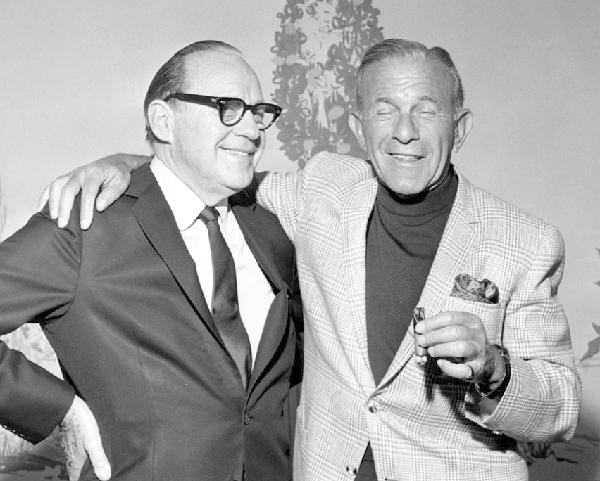
The George Burns role was originally supposed to go to Jack Benny. Jack, however, had recently been diagnosed with pancreatic cancer and was too sick to take on the strain of a new film. To replace him, he recommended his longtime best friend George Burns, who had not been in films since 1939. Jack died in late 1974, and George played the role to perfection, earning an Academy Award for his performance and revitalizing his career. A beautiful end to one of show business’ great friendships.

A wonderful crowd showed up for Tootsie, which is always an exceptionally fun movie to see on the big screen. I have always adored Tootsie, finding it to be unexpectedly deep in its social commentary and the acting is superb. There is hardly a single line that isn’t laugh-out-loud funny. Elaine May was an uncredited screenwriter on the film, and I can hear her influence clearly throughout the script.

It was especially fun for me to watch Tootsie with my friend Sara, a Jessica Lange superfan who was seeing it on the big screen for the first time. Jessica Lange won a much-deserved Oscar for her performance, which is so beautifully nuanced. She conveys complex emotions so clearly in her face–in the scene where she tells Dorothy she can’t see her anymore, you feel her pain viscerally.

Following Tootsie, I had an appointment with my friend Priscilla. Months before the fest began, we had discussed getting together to watch The Jack Benny Show sometime during the festival. We’re both ardent fans of Jack and we had bonded over that over Twitter. So we met poolside at the Roosevelt and watched the Peter, Paul, and Mary episode, laughing until our sides hurt. We then proceeded to watch Jack Benny for a good hour and a half together, and Priscilla showed me this sketch, which sent us into even more hysterical fits of laughter:

While some people come to the festival for the movies, many of us consider these kinds of moments an integral part of the experience. There certainly isn’t anyone in my non-classic film life with whom I can watch Jack Benny for hours on end, and I’m grateful to the festival for providing a place where we can be ourselves with like-minded people. It’s hard to overstate how much this part of the festival means to me, and to all of us who often feel that our interests don’t align with our peers in everyday life.

After our Jack Benny marathon, I went to the Doris Day centennial celebration panel at Club TCM. It was a lovely and loving discussion with several of Doris Day’s friends, discussing their personal histories with Doris Day and what she was like offscreen. In my view, Doris Day is one of the most misinterpreted personalities of classic Hollywood. When people think of her, they often think of a virginal girl-next-door, representative of a wholesome mirage of 1950s culture. In contrast, the real Doris Day was a passionate and vibrant woman who devoted her life to the wellbeing of animals. She had a frequently difficult life, surviving an abusive marriage, the death of a child, and a second husband who squandered all her earnings. In regard to her music, people know “Que Sera Sera” and other light songs (though I could write a treatise on why “Que Sera Sera” is not at all the light song it seems), but her career with Les Brown in the early 1940s established her as one of the top female vocalists of her era, a fact that is often overlooked when we remember Doris Day today. Her friends on the panel described a down-to-earth, loving, and generous woman who lived for animals and adored her fans. It was a moving and gentle tribute.

The next movie on the agenda was The Gay Divorcee, the first star pairing of Fred Astaire and Ginger Rogers. The movie also features a 17-year-old Betty Grable, who performs a delightful number called “Let’s K-nock K-nees” with Edward Everett Horton, which nearly steals the film out from under Fred and Ginger. It’s been stuck in my head for a full day and I don’t have any particular interest in getting it out.

As I mentioned in a previous post, watching Fred and Ginger on the big screen is one of life’s great treats. One of the interstitials playing before movies throughout the festival this year is a clip of Fred Astaire preparing to jump on a couch in a scene from The Gay Divorcee. It fascinates me, and over the course of the festival I’ve been watching it closely to see what it is that he’s doing that I find so interesting. I think it’s the combination of grace and intense strength, especially in his upper body, a seemingly incongruous combination that Fred has in perfect proportion.

While watching The Gay Divorcee, I paid special attention to how Fred and Ginger moved, together and separately. One thing I noticed is that both “Night and Day” and “The Continental” are danced on a floor with white lines running down it. When Fred and Ginger dance together, their feet never land on lines. They dance over them, jump over them, but their dance routines are orchestrated around those lines and it’s a beautiful detail to watch.

I’ll be back tomorrow with more details from day 3!

TCM Classic Film Festival Day 1

“This California dew is a little heavier than usual tonight,” as Debbie Reynolds said in Singin’ in the Rain, and she might have been talking about this evening in Hollywood, where an unexpected downpour punctuates a full first festival day.

The fun kicked off this afternoon with “So You Think You Know Movies?” Bruce Goldstein’s exceptionally difficult TCM trivia game hosted in the Blossom Room of the Hollywood Roosevelt Hotel. It was a crowded and excited audience, filled with many veteran festival attendees. I ran into my friend Karen Hannsberry of The Dark Pages, and we formed a trivia team that consisted of several very knowledgeable people. Thanks to some great deduction skills on the part of Stephan Reginald in particular…we won the game! It was the first time I’ve ever come close to winning “So You Think You Know Movies?” We each received a nice TCM tote bag with a book, a DVD, and some magnets, and the thrill of having succeeded in some of the hardest movie trivia there is.

Following the trivia, several friends and I went to dinner at California Pizza Kitchen. Passover is still observed until Saturday evening and I’ve had a bit of a hard time finding good food options. Fortunately, California Pizza Kitchen had a few Passover-friendly options and my friends and I had a delicious meal as we caught up after many long years apart. It is an interesting phenomenon to be back at a festival like this, after 3 years where we’ve lacked mass socialization. I am very conscious of being “out of practice” with socializing, and it’s a strange feeling to want to talk to people without really being sure of what to say. I’ve expressed this to some of my friends, who admit to the same feelings. I’m glad I’m not alone.

My friends from dinner were all going to Jewel Robbery, so we got in line together and sat together in Multiplex 4. The introduction was by Cari Beauchamp, always one of the most popular presenters of the festival. She gave a detailed and engaging talk about the pre-Code era, and its implications for portrayals of women and their sexual freedom. At several points during the introduction, audience members clapped and cheered for her statements about women’s rights, and reacted with enthusiastic laughter at some of the letters from the Hays Office. It was a marvelous introduction fit for an audience that knows movies. A friend who was sitting near me remarked: “Every presenter at the festival should learn from Cari Beauchamp. Her introductions should be the high standard everyone tries to reach.”

The movie itself is pure joy. It tells the story of a woman who falls for a jewel thief after witnessing a robbery, and it is full of double entendre, innuendo, and all the glorious dialogue we expect from pre-Codes. In addition, there are several scenes featuring “drugged cigarettes,” clearly marijuana. In true pre-Code fashion, it’s not at all discreet–characters who smoke these cigarettes are seen laughing at nothing, on a ridiculous high that William Powell says will culminate in “a good appetite.” Something not able to be seen just a few years later, and rare even for this time period.

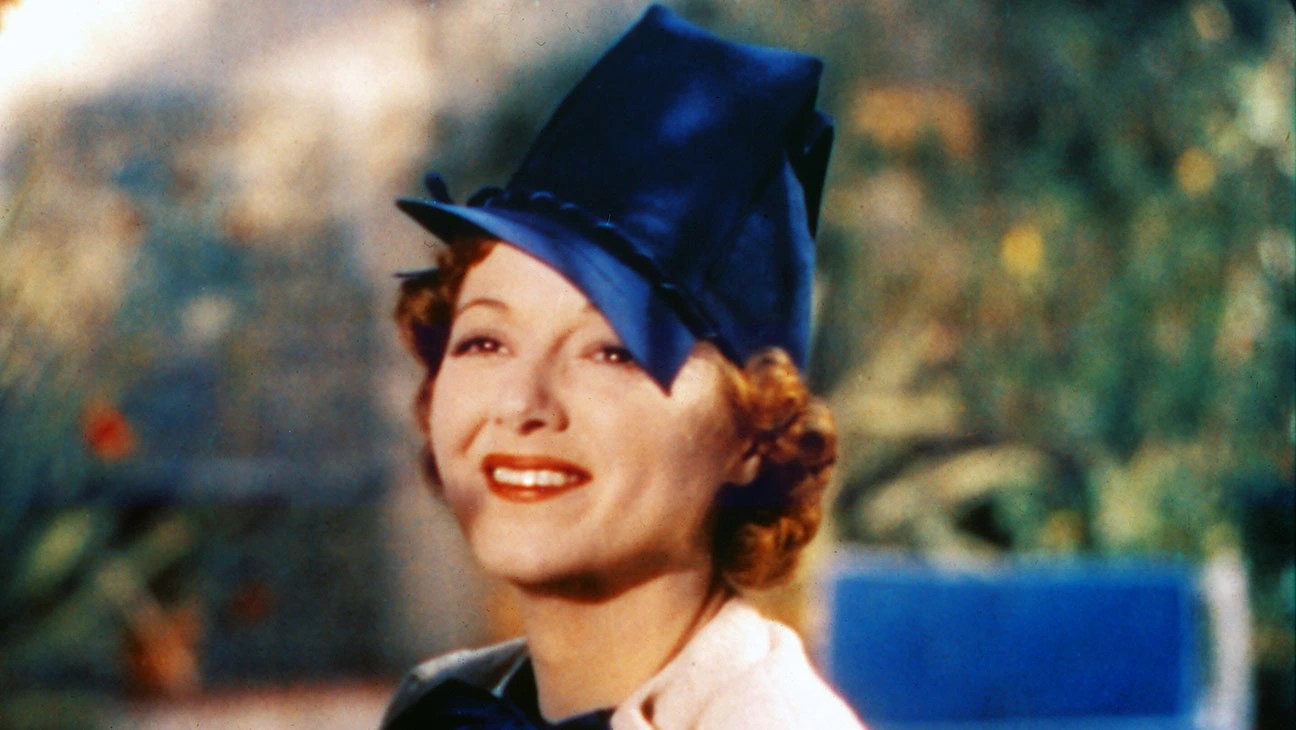
Afterward, I went up to the Hollywood Legion, a beautiful 1940s theater that was renovated in time for the 2019 TCM Festival. I saw Indiscreet there in 2019, and marveled at the uniqueness of this venue that radiates the 1940s. This evening, I saw A Star is Born, the original 1937 version of the story. I wondered what I would notice when I watched it on the big screen, and I found that my eyes were particularly drawn to the color blue. The 1937 A Star is Born is an early example of the 3-strip Technicolor process. Prior to the development of 3-strip technology, the 2-strip Technicolor process had a pastel quality to it, with limitations for blues and reds. Blues appeared green, reds appeared pink. In A Star is Born, we see a scene next to a sparkling clear blue swimming pool, one of the early times an audience could see a color like that on the screen. A dark blue umbrella and the dark blues of Janet Gaynor’s outfit accentuate the brightness of the pool. Putting myself in the place of a 1930s audience member, I can only begin to imagine what a thrill it must have been to see that brilliant color onscreen.

Now I’m back in the room, ready to prepare for another big festival day tomorrow. See you then!

The TCM Classic Film Festival Day 0

Early this morning, operating on minimal sleep (my cat kept tapping my face), I left for the TCM Classic Film Festival in Hollywood, joining classic movie fans from around the world for 4 days of films, activities, and memories rebuilt after three years apart.

This where the classic movie faithful converge. The greatest part of the weekend, for me, is reuniting with like-minded people, who speak the same classic movie “language.” Today I realized that this is my tenth festival, and each year I envy the people experiencing it for the first time. In prior years, I have discussed the unrivaled TCM audiences and the special experience of seeing a film here. One of my favorite stories is from several years ago, when Illeana Douglas was introducing Double Wedding and asked if anyone knew how many movies William Powell and Myrna Loy made together. The answer boomed through the Egyptian Theatre, as the entire audience gleefully shouted “FOURTEEN!!!” This kind of enthusiasm is rare, and found in every theater of the TCM Festival. When you’ve experienced it, its absence is palpable anywhere else you go.

The official festival starts tomorrow, Thursday, but I arrived today to attend the media mixer in the Blossom Room of the Hollywood Roosevelt Hotel. The site of the first Academy Awards in 1929, the Blossom Room serves as the meeting place for panels and discussions during the TCM Classic Film Festival, a venue known as “Club TCM.”

The media mixer was an opportunity to hear from the five TCM hosts–Eddie Muller, Jacqueline Stewart, Alicia Malone, Dave Karger, and Ben Mankiewicz–on what they were most excited about for the festival, and to hear a special announcement that was teased to media last night.

The hosts all expressed an appreciation for the fans and an excitement for being back in person for the first time since 2019. Eddie Muller singled out the Doris Day centennial celebration as something he was looking forward to, and Jacqueline Stewart said she might “faint at the sight of Pam Grier” when she interviews her before the screening of Coffy on Sunday. Pam Grier is a special focus of the festival this year. The special announcement teased to the media was revealed at the end of the mixer–the fourth season of TCM’s podcast, “The Plot Thickens,” will focus on Grier.

Dave Karger is particularly invested in Fast Times at Ridgemont High, because Topher Grace is a family friend and Karger knows how special the movie is to him. Alicia Malone wishes she could see the pre-Codes, but she is going to make it a point to see Queen Bee, because it’s “Joan Crawford at her Joan Crawfordest,” in her words. Ben Mankiewicz said that the adrenaline rush of the festival immediately came back to him, a sentiment that many of us feel at this moment.

As with previous festivals, I will be enabling livetweets on the blog so that you may follow along with my activities in real time. Here is a rundown of my plans for the first two days:

FESTIVAL SCHEDULE PART I

THURSDAY:

Trivia with Bruce Goldstein: “So You Think You Know Movies?”

Jewel Robbery (1932)

A Star is Born (1937)

Bruce Goldstein is a mainstay at the TCM Festival, and his trivia show is one of the highlights of the festival for many people. Ruthlessly difficult and loaded with jokes and fun facts, it’s a great deal of fun that I never miss.

TCM did an interesting thing putting Jewel Robbery opposite E.T., the opening night film. On its own, Jewel Robbery would sell out in an instant. Pre-Codes are notorious sellouts at the festival, and Jewel Robbery stars Kay Francis and William Powell, some of the most popular of the stars for festivalgoers. In addition, the intro is by Cari Beauchamp, who gives some of the most popular introductions of the festival. But by scheduling it opposite the opening night movie, the festival organizers essentially increase the value of the film for the high level passholders–the theater will be filled with Classic passes, but only the most diehard Essential and Spotlight passholders will choose to go. It’s an interesting supply and demand issue, tackled TCM-style.

After Jewel Robbery, I will hurry up the hill to the Hollywood Legion Theatre to see A Star is Born. There have now been four iterations of the story (five if you count the inspirational material, What Price, Hollywood?), but the 1937 version holds a special place in my heart. To me, it’s the most tender and gentle. The 1954 version is big and glamorous, perfect for 1950s audiences and for Judy Garland’s enormous talent. But Janet Gaynor and Fredric March have a softness to them, and the early 3-strip Technicolor adds a meditative beauty that doesn’t exist in subsequent versions of the story.

FRIDAY

The Sunshine Boys (1975)

Tootsie (1982)

Queen Bee (1955)

TCM Celebrates Doris Day

The Gay Divorcee (1934)

This is a day where I plan to laugh a great deal. The Sunshine Boys and Tootsie are both films where just about every line is funny–The Sunshine Boys embodies a rapid-fire, vaudevillian style, and Tootsie is intellectual and sharp. I do think Joan Crawford is at her Joan Crawfordest in Queen Bee, and I think it will be particularly fun to watch it with the festival crowd.

TCM Celebrates Doris Day will be a panel discussion in Club TCM featuring several of Doris Day’s personal friends and representatives from the organizations she founded, the Doris Day Animal League and the Doris Day Animal Foundation. It is sure to be a full house. Though Doris Day’s public image was as a wholesome, all-American girl next door, in reality she was a trailblazing woman who led a passionate, vibrant life devoted to improving the wellbeing of animals. She is a particular favorite among many TCM fans, and I’m very much looking forward to this talk.

I was talking to a friend the other day about movies that are simply meant for the big screen. A few years ago when I saw The Umbrellas of Cherbourg at the TCM Festival, I was blown away and moved to tears. Those bright colors, those beautiful faces. It was as though I had been watching a different movie every time I watched The Umbrellas of Cherbourg at home, and I wondered how I could ever see it the same way again. Fred Astaire and Ginger Rogers on the big screen is a similar experience. There is a reason that audiences were transfixed by them during the Depression. The viewer is transported and taken into their world as they dance. For that reason, The Gay Divorcee is a must-see for me–especially during these difficult times with COVID and war raging, everyone deserves to be taken out of this cruel world and into Fred and Ginger’s. If only for that one moment.

See you tomorrow!