Backlots has received the Irresistibly Sweet Blog Award!

The lovely blog A Person In the Dark has very generously awarded Backlots the Irresistibly Sweet Blog Award! The award will be proudly displayed in our Affiliations and Awards section, and I am so grateful that this blog is loved!

Now, this award comes with stipulations. Awardees must:

  • Thank and link to the person who nominated the blog
  • Share 7 random facts about themselves
  • Pass the award to 12 of their blogging buddies
  • Notify the recipients

So here we go.

7 RANDOM FACTS ABOUT ME

1. I was born in Oakland, CA and raised in Oakland and San Francisco.

2. I am a French major in college, and recently spent 5 months in France.

3. I play the cello, and attended an arts magnet high school in San Francisco.

4.  I have met: June Allyson, Mickey Rooney, Patty Duke, Rita Moreno, Carol Channing, Jane Powell, Barbara Eden, Olivia de Havilland, Maureen O’Hara, and all of the surviving munchkins from The Wizard of Oz (except Karl Slover).

5.  When I was 2, I swallowed a penny.

6. I am deathly afraid of heights, but I have no problem with spiders.

7. I once taught myself how to sing “We’re In the Money” in Pig Latin like Giner Rogers in Golddiggers of 1933. I can still do it.

12 OF MY FAVORITE BLOGS

GARBO LAUGHS. Run by my friend Caroline, this blog is full of insights on all kinds of films, from the very obscure to classic favorites. Very intelligently written.

CLASSIC BECKY’S BRAIN FOOD. A wonderfully amusing and diverse blog focusing on both classic films and literature. Its design truly reflects the nature of the blog, and contributes to its considerable charm!

VIVANDLARRY.COM. THE go-to Vivien Leigh and Laurence Olivier site on the net, written by another friend of mine–Kendra Bean. I consider Kendra to be right up there with the most elite Viv and Larry historians, and she recently hosted a very successful weekend devoted to them in London, which I attended. For anyone looking for information on Viv and Larry, this site will give you everything you need, and more.

THE LADY EVE’S REEL LIFE. A very well-written blog focusing on all the ins and outs of classic film. Chock full of interesting and useful information!

VIA MARGUTTA 51. This is a fun one! Written by a Chilean gal (who speaks very good English, I might add!), the site takes its name from the address in Roman Holiday, and is a sweet devotion to classic film.

OLIVIA AND JOAN: SISTERS OF THE SILVER SCREEN. Those who have been following Backlots for some time know of my love for the de Havilland sisters, and this site is a marvelous tribute to them. With detailed sections about both Olivia and Joan, it is one of a kind in their compilation of accurate and well-presented information about the two sisters without a focus on their famous feud, which is very refreshing.

CLASSIC FILM AND TV CAFE. One of the most fun blogs out there! Great polls, trivia games, and lots of discussion among readers. A charming treat!

CLASSICFILMBOY’S MOVIE PARADISE. Great and detailed analyses of films, and a recurring segment on Audrey Hepburn entitled “Audrey of the Month” with fantastic and rare pictures.

CAFTAN WOMAN. Beautifully put-together blog with tons of info. She also incorporates wonderful snippets of her life outside of film, making for a truly comprehensive blogging experience for the reader.

TRUE CLASSICS: THE ABCs OF CLASSIC FILM. This dedicated and fun blog recently hosted the Loving Lucy blogathon, resulting in an incredible showing of love for Lucille Ball. Also a very diverse blog, discussing everything from classic film to TV shows to burlesque!

THRILLING DAYS OF YESTERYEAR. I was so incredibly impressed with Ivan’s look at Lucille Ball’s work on “My Favorite Husband,” that I fell in love with this blog as soon as I discovered it. A fascinating and intelligent look at the classics of yesterday, touching on radio, television, and film, and one of the most detailed blogs I have ever come across. Major applause for this one.

CAROLE & CO. A sweet and devoted tribute to the brilliant and beloved Carole Lombard. Full of information about the star, and I have already learned so much from it! The blog is hosting a Carole Lombard birthday blogathon in honor of her 103rd birthday–details can be found here.

Whew! Thank you again to Person in the Dark for this award!

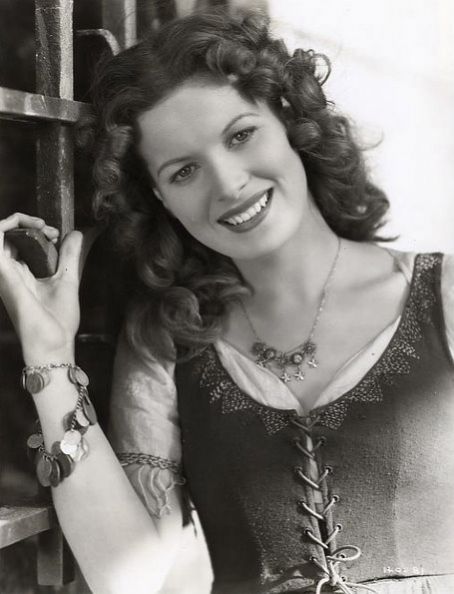
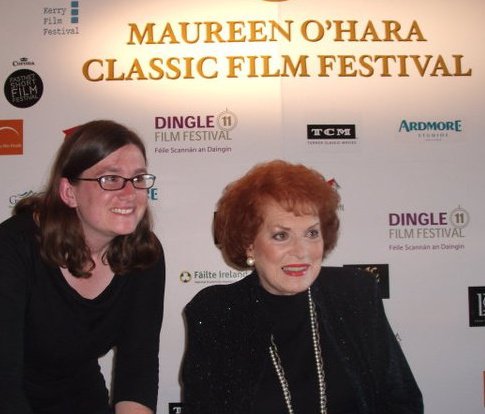
Happy birthday Maureen O’Hara!

Me with Maureen O’Hara in Ireland, June 2011.

Star of the Week: Rosalind Russell

As my beloved aging MacBook seems to be having an issue with the internet lately, I was relegated to hold off on the Star of the Week post until today. Sorry for the delay–I am currently using my mom’s PC to make this post. I don’t know PCs very well and I hate using them, so I beg you to bear with me–please forgive any typos or emotional outbursts that may occur.

I am very excited for this week’s Star of the Week, because I have chosen to profile one of my all-time favorite ladies, the divine and incomparable Rosalind Russell. The star of such comedy favorites as The Women and His Girl Friday, Russell’s later career saw her early screwball roles gracefully evolve into chic fabulosity, as evidenced in Gypsy and Auntie Mame. She is truly one of film’s comedic treasures, and a magnificent star who remains one of my personal idols!

She was born in Waterbury, Connecticut on June 4, 1907, one of 7 children born to wealthy parents Clara and James Russell. Her father was a trial lawyer and her mother was a fashion editor for Vogue magazine. She had a comfortable and happy childhood in Waterbury and departed for the American Academy for the Dramatic Arts after a brief college stint at Marymount College. She then became a fashion model and appeared as such in a number of shows on Broadway, before moving to the west coast to try her luck in Hollywood.

She first signed a contract with Universal Studios in the early 1930s, but after a bad experience with the studio she managed to get out of her Universal contract in favor of MGM Studios. Her big break with MGM came in 1935 when she costarred with Robert Young in West Point of the Air, and quickly rose to stardom. By 1939 she was sharing top billing with MGM veterans Norma Shearer and Joan Crawford in The Women.

In 1940 she starred in what may be her best-known and best-loved film, His Girl Friday. The story of Hildy Johnson (Russell) and Walter Burns (Cary Grant), a formerly married couple working together at a newspaper company is, in my opinion, one of the best comedies ever made. The script contains over 190 pages of dialogue, enough for a 3-hour film, but the dialogue is so rapid fire that the film runs at exactly 92 minutes.

These roles cemented her status as a comedienne, and throughout the 1940’s she continued to act in mostly comedic roles. In the early 1950’s she began a successful stage career when she appeared in Wonderful Town, the stage version of her hit film My Sister Eileen, which had earned her an Academy Award nomination. Wonderful Town, in turn, earned Russell the Tony Award for Best Actress at the 1953 ceremonies.

“Ohio,” from Wonderful Town.

Over the span of her movie career she was nominated 4 times for an Academy Award, for her roles in My Sister Eileen (1942) Sister Kenny (1946) Mourning Becomes Electra (1947) and Auntie Mame (1958). Her role in Auntie Mame came about after a very successful Broadway run of the play, which led to her being cast in the same role in the film. Of Auntie Mame, Russell recalls in her autobiography Life is a Banquet that the role was very easy for her to play, as Auntie Mame was basically the incarnation of her older sister Clara, whom she called “The Duchess.” She writes that when she first read the Patrick Dennis novel, on which the play was based, she became entranced with it because “someone has written The Duchess.” Along with her Academy Award nomination for the film, Russell also received a Tony Award nomination for her role in the play. On a personal note, Auntie Mame is in the top 10 list of my all-time favorite movies.

Russell’s marriage to producer Freddie Brisson is one of the great Hollywood marriage success stories. They married in 1941 and their marriage lasted for 35 years, ending only with Russell’s death in 1976. Her autobiography was published a year after her death from breast cancer, and Brisson wrote a beautiful foreword to the book, showing just how much they meant to each other. They had a son, Lance Brisson, in 1943, to whom Russell was devoted.

Rosalind Russell with her son, Lance.

To close, here is what I consider to be one of the all-time best guest contestant spots on the TV show “What’s My Line,” done during Russell’s rehearsals for Wonderful Town in 1953.

Stay tuned for more Rosalind Russell posts this week! Thanks for reading!

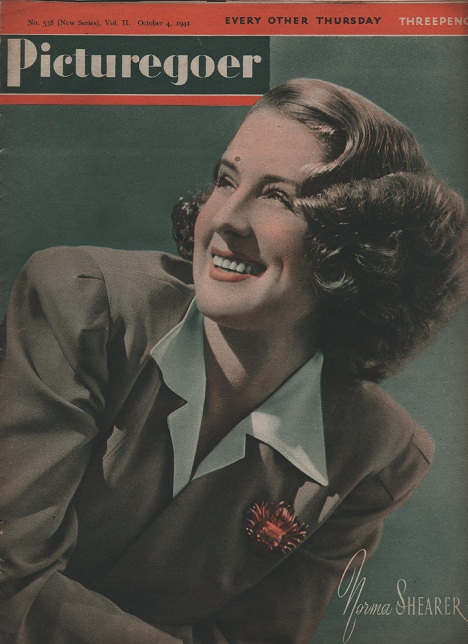
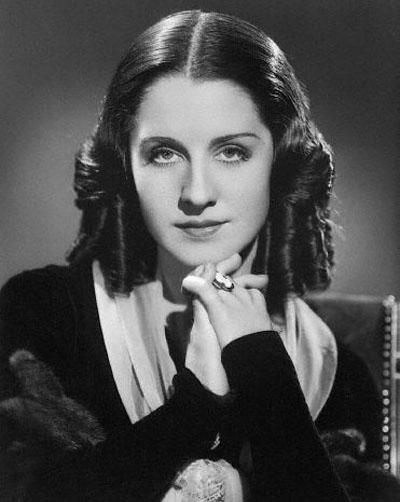
Norma Shearer in Magazines

Happy birthday Norma Shearer!

Today is what would have been the 109th birthday of Backlots’ Star of the Week, Norma Shearer! One of the great stars of both the silent and sound eras, her birthday deserves to be celebrated.

One very sad thing I don’t understand is how her name seems to be lost on those not interested in classic film. She made so many incredible, high quality movies, and is horribly underrated in modern culture. I guess since she retired relatively early, and her films don’t tend to be shown on television outside of TCM, her visibility is limited these days. However, the love and appreciation of her within the classic film community more than makes up for the lack of it outside. Silent film fans basically bow to her, and she is universally hailed by critics as one of the finest actresses of her time. Her films are frequently shown on TCM because the powers that be know that their demographic WILL watch her. I just think it’s a shame that more people aren’t aware of her brilliance as an actress.

A question for readers: What is your favorite Norma Shearer movie?

Here is a photographic and video tribute. Happy birthday Norma!

With fan mail, 1925

The Women, 1939

Part 1 of The Divorcée. Norma Shearer was pitted against herself at the 1929-1930 Academy Awards–nominated twice in the same category. She won for The Divorcée. The entire movie is youtube for your viewing pleasure!


A Tribute to Movie Dogs

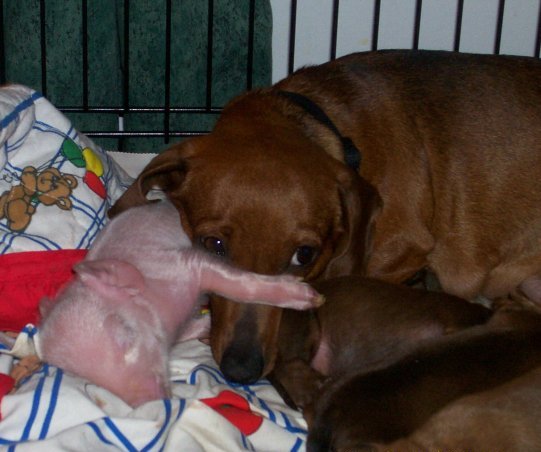
I am writing this in a state of distress, because the dog I was looking after has just died. She was very old, and seemed to have died in her sleep. It’s a real reminder of how fleeting life can be, and this was the most alive, sweet dog you could ever imagine. As a tribute to Weasy, and as sort of a healing for myself, I am doing a post on dogs in the movies.

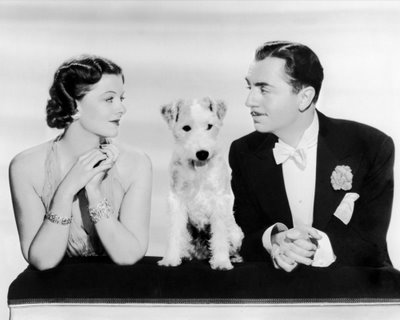
ASTA

Asta was the dog in the Thin Man movies, who also had a good career in films like The Women, Bringing Up Baby, and The Awful Truth. Originally named Skippy, his was a very comedic dog, whose name was changed to Asta after his popularity in the Thin Man movies. His trainers were Henry East and Frank Weatherwax.

TOTO

Terry, a female Cairn Terrier, was cast to play Toto in The Wizard of Oz in 1938. She was paid $125 per week, which was more than the Munchkins were paid. Because of the popularity of the role, and because this was the role she was most known for, Terry’s trainer Carl Spitz officially changed her name to Toto. She died in 1945, after a career that spanned 13 films.

LASSIE

Lassie was actually played by a number of dogs, all male. The first of these was Pal, who appeared in seven films at MGM between 1943 and 1951, and the future Lassies, in film and on television, were all descendants of his–Lassie Junior, Spook, Baby, Mire, Hey Hey, Boy, The Old Man, and Howard played the dog until the late 1990’s. In 1997 the company producing the Lassie series got a new, non-Pal descended dog, but due to fan outrage, Hey Hey II was employed instead. Lassie has continued to be a fan favorite, ever since the first Lassie movies in the early 1940’s. Most of the Lassies were trained by Frank Weatherwax.

OLD YELLER

Old Yeller, whose real name was Spike, was a dog who was found at the Van Nuys animal shelter, and whom Frank Weatherwax rescued for $3 as his personal dog. When he learned that Disney was casting Old Yeller, he urged Disney to accept him for the role of the titular dog, and he was accepted. Spike has the distinction of being a dog in one of what is called the most tearful scenes in movie history. I myself can never watch Old Yeller because of what happens to him at the end.

This post is a tribute to Weasy, the best dachshund I have ever met. RIP Weasy, you are missed.

STAR OF THE WEEK: Norma Shearer

As we seem to be on somewhat of a birthday kick here at Backlots (so many stars were born in August!), this week we are celebrating the August 10 birthday of Norma Shearer, an actress personifying, for me, what it truly means to be a star. She began her career in silents, and unlike many of her contemporaries, eased seamlessly into talking pictures without blinking an eye. Her soothing, gentle voice was a real asset to her in making that transition, and her charming demeanor appealed to audiences both in the silent era and after movies began to talk.

She was born Edith Norma Shearer in Montréal, Quebec to a financially stable but emotionally volatile family. Her father had his own construction company, but struggled with what is now termed bipolar disorder, which would also affect Norma’s older sister Athole. Her mother Edith was a flamboyant socialite who encouraged her daughter to become a concert pianist–but when Norma showed more interest in becoming an actress, her mother was not opposed. She was concerned, however, about what she thought to be Norma’s lack of beauty–shoulders too broad, hands too big, and a lazy right eye–and this was something that Norma noticed, too. Despite her reservations, she became determined to overcome these obstacles in her appearance, moved to New York, and landed a small role in a picture called The Stealers at Universal in 1921. She eventually made the trip to Hollywood, and having undergone treatment for her eye, she managed to procure a contract with Mayer Studios (soon to become MGM), headed by Louis B. Mayer and vice-president Irving Thalberg.

In "Pleasure Mad" (1923)

After a rocky start there, she was cast in Pleasure Mad, and when the company became MGM Studios in 1924, she was already becoming a big star. She was cast in their first official production, entitled He Who Gets Slapped (see Backlots’ review of this film here), and soon afterward she fell in love with MGM’s vice president, Irving Thalberg. They were married in 1927, and remained so until his death in 1936.

With new husband Irving Thalberg. Shearer converted to Judaism to marry him.

Shearer began in talking pictures in 1929, two years after The Jazz Singer (credited as the first “talking picture”) was released. The picture, The Trial of Mary Dugan, was a tremendous success, and Shearer’s career in talking pictures was assured. In 1930 she convinced her husband to allow her to play the lead role in a new film entitled The Divorcée, a racy piece about a woman who has an affair with her husband’s best friend. That film, too, was a hit, and Shearer won the Academy Award for Best Actress of 1930 for her role.

By this time, because of her success in films as well as her marriage to Thalberg, Shearer was known as “The Queen of MGM.” She was nominated 6 times for the Academy Award, and Joan Crawford, her MGM rival, famously complained that it was impossible to compete with her because “she’s sleeping with the boss.” Ironically enough, Crawford was Shearer’s stand-in during the filming of Lady of the Night (1925), in which Shearer played a dual role, when Crawford was an aspiring starlet.

Crawford, right, playing Norma Shearer's double in "Lady of the Night" (1925)

After her husband’s death in 1936, Shearer began to cut back on film roles. She starred in Idiot’s Delight with Clark Gable in 1939, followed by The Women, a hilarious comedy starring an all-female cast, also in 1939. She retired for good in 1942, and married a second husband, Martin Arrougé. She lived a secluded life after retirement, and died in 1983 following a battle with Alzheimer’s disease.

Norma Shearer is one of the great ladies of the early motion picture years. I am always happy when I see her movies playing at the classic movie theaters around my house, because it means that her glamor, acting talent, and beauty (and yes, she WAS beautiful, despite all she thought to the contrary) are not forgotten.

Here are some clips. Happy birthday, Norma!

Lady of the Night, 1925

The Women, 1939

Idiot’s Delight (1939) had two endings. Here are both of them. For those who haven’t seen the movie, I won’t say which is the real one!

Happy birthday to Billie Burke!

What a birthday weekend! Yesterday was, of course, the 100th birthday of Lucille Ball, for which a brilliant blogathon was organized over at True Classics, and today marks what would have been the 127th birthday (whew!) of one of the truly underrated character actresses of the 1930’s, the marvelous Billie Burke.

Mary William Ethelbert Appleton Burke (whose name was probably longer than she was) is primarily known for being the kindly Glinda in The Wizard of Oz. She was also featured prominently in such comedies as Dinner at Eight and Everybody Sing, and became known for her birdlike voice and for playing dizzy, scatterbrained characters. She was nominated for an Academy Award in 1938 for Merrily We Live,  and another of her claims to fame is that she was, at one point, married to Florenz Ziegfeld.

It’s a shame that Billie Burke is not so well-remembered today as some of her contemporaries. If people know her at all, it is for her role as Glinda, and though we can’t really be surprised, many of her other roles are just as good, if not even better (and better suited to her talent), than Glinda.

Here is a small tribute. Happy birthday, Billie Burke!

Dinner at Eight, 1933

Topper, 1937

Everybody Sing, 1938

Merrily We Live, 1938

The Wizard of Oz, 1939

With husband Florenz Ziegfeld.

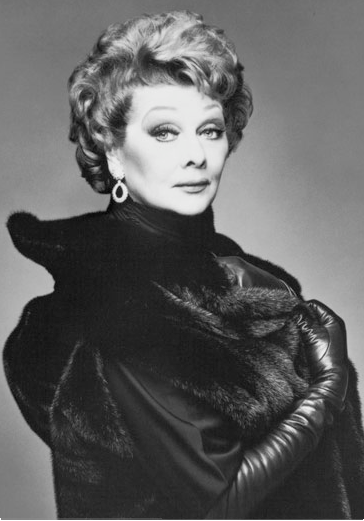
LOVING LUCY BLOGATHON–Lucy’s Lasting Legacy

Lucille Ball is one of entertainment’s most enduring icons. She has been visible for nearly 80 years, and I would venture to say that there are very few people alive today who have not known and loved Lucy for the better part of their entire lives.

I myself discovered Lucille Ball when I was in early elementary school. My best friend and I became obsessed with “I Love Lucy” around the 2nd grade, and we subsequently watched every episode of the series, then moved on to the “Lucy/Desi Comedy Hour” and “The Lucy Show.” We just couldn’t get enough of her. And I think we weren’t alone in this–my dad also seemed to know a good deal about Lucille Ball as a person (he was the one who taught me, at the age of 7, that she had been a starlet and a model, and that at one point had gone by the name Dianne Belmont), so it was evident that he was in love with Lucy, too. She just had a certain something that resonated with people. And I don’t think it was just her comedic genius–there was something about HER that attracted people to her.

Since its series finale in 1957, “I Love Lucy” has proven to be a mainstay in syndication, and has essentially never gone off the air. 54 years after the show ended, it is shown in dozens of languages across the world and continues to get stellar ratings (in fact, the Hallmark Channel is so confident in the ratings of “I Love Lucy” that they are hosting an entire weekend-long marathon of the show in honor of Lucille Ball’s 100th birthday today). Can you imagine a show today still playing in 50 + years, broadcast in different languages all over the world? I can’t think of ANY modern show that will stand the test of time like “I Love Lucy” has.

Since this is a classic film blog, I would like to talk a little bit about Lucille Ball’s early film roles. Alas, they have been somewhat obscured by her absolutely blinding success with “I Love Lucy,” enough that whenever I see a film with Lucille Ball on the big screen, I hear mutterings from the audience “Is that Lucille Ball???” People are surprised that she had any career at all before “I Love Lucy,” and I think it’s a shame, because some of those early roles are very noteworthy and she could have had a monumental success in films had “I Love Lucy” not come along–in my opinion, she would probably have remained a character actress, because of that Eve Arden-esque wit and backtalk at which she was so clever. She did, however, have some good starring success in her early years with Dance, Girl, Dance, the film she made in 1940 with Maureen O’Hara, Du Barry Was a Lady in 1943, and in a number of other quality films at MGM.

Dancing “The Jitterbug Bite” in Dance, Girl, Dance.

She also had a good deal of success in radio, which is not surprising given that unique voice we all know so well. The character of Lucy Ricardo was, in fact, inspired by Lucy’s character on a radio program called “My Favorite Husband,” done in 1948 with Richard Denning.

It’s interesting to note that her voice essentially never changed, from her first moment on the screen straight through the 1960’s. It was then that the smoking caught up to her and gave her the distinctive smoker’s voice that became a trademark of Lucy’s later career. The uniqueness of her voice is something that people don’t often comment on, yet I would imagine that if people closed their eyes and watched an early Lucille Ball film, even if they didn’t know she was in it, they would be able to identify her instantly.

This interview, done in 1973, shows her not only as a lovely human being, but also her immense intelligence. She responds to each question carefully and thoroughly, and knows exactly what she is saying and why she is saying it. The thoroughness, perfectionism and business-savvy qualities in Lucille Ball are legendary. It is said that on the set of “I Love Lucy,” if she found a scene to not be funny, she she would often tell the director so, and proceed to argue with him until she got her way. She knew what was funny and what was not, and she was not about to sacrifice the show to an unfunny scene. Obviously, Lucy’s way always got huge laughs.

The famous scene from the episode “Lucy Does the Tango.” This scene contains the longest studio laugh in the history of the show, and one of the longest in the history of television.

Lucille Ball’s legacy has been strong for many decades, and it shows no sign of stopping now. With the huge amounts of “I Love Lucy” memorabilia being sold at high prices, with the show frequently on in syndication, the plethora of Lucy impersonators and the millions of fans devoted to her, I think we’re going to have Lucy for a long, long time to come.

Thank you to the people over at True Classics for hosting this wonderful blogathon.

Backlots is on the LAMB!


Thank you to the Large Association of Movie Blogs for deeming Backlots quality enough for inclusion in the association! We’re movin’ on up!

Necessary video: